
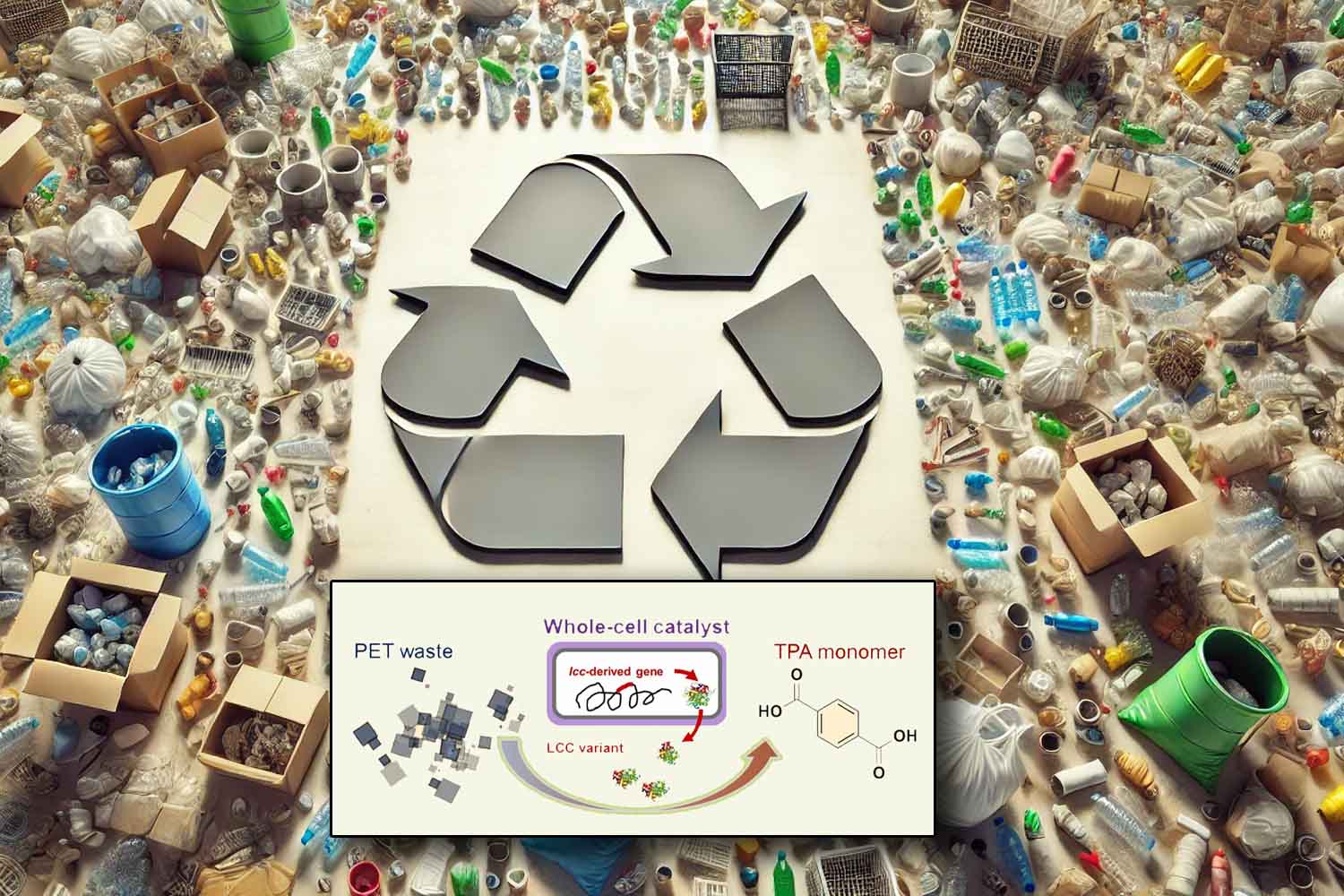
A group of scientists introduced an innovative approach to the DePolimerization of Tereftolato Polyethylene (PET)using a whole cell bioceryizer based on the thermophile bacterium Clostridium Thermocellum. The results, published in the magazine Journal of Hazardous Materialsdemonstrate a Pet conversion rate of 96.7%highlighting the potential of this technology in counteracting plastic pollution and promoting a circular economy.
The pet, one of the most common plastic polymers and derived from fossil fuels, represents a significant environmental challenge Due to his resistance to degradation and accumulation in landfills. For this reason, Optimizing the recycling of the pet is essential To reduce dependence on oil, lower carbon emissions and limit the impact of plastic waste on the ecosystem.
Advantages of full -cell biocatalysis for plastic recycling
Research on recycling of the pet He has so far focused mainly on the development of degrading enzymesbut the whole cell biocalisi He is emerging as a promising solution. This approach offers numerous advantages, including enzymatic production in situ, simplified processes and high efficiency on an industrial scale.
The new study is based on previous research published in Microbial Biotechnologyin which the team had demonstrated the possibility of depolize the PET at high temperatures through Clostridium Thermocellum genetically modified to express the Cupinasi of the leaf compost (LCC) through a plasmid.
In the current work, scientists have perfected the approach integrating the LCC gene directly into the bacterium chromosomeguaranteeing greater stability of enzymatic expression. Also, they introduced variants of the LCC and co-express hydrophobic modules to further improve the efficiency of the process.
Optimizing the reaction conditions and checking precisely the pHthe team managed to minimize the accumulation of the by -product Mono (2-hydroxietil) Tereftolato (Mhet)significantly increasing the surrender of dePolimerization.
Towards a sustainable and efficient recycling of the PET
Undergoing Pretained pets particles At the trial, scientists got one 97% conversion in Terephtalic acid (TPA)a fundamental monomer for the production of new plastics or chemicals with high added value. This level of efficiency demonstrates the potential of technology such as Advanced ecological solution for the recycling of the pet.
A further advantage of the system is the natural capacity of Clostridium Thermocellum Of degrade the cellulosemaking it an ideal candidate also for the treatment of Mixed textile waste containing cotton and pet fibers.
The study was conducted in collaboration between the Qingdao Institute of Bioenergy and Bioprocess Technology of the Chinese Academy of Sciences, the Nanjing Tech University and the Greifswald Universitymarking a significant step towards a more sustainable future.
