
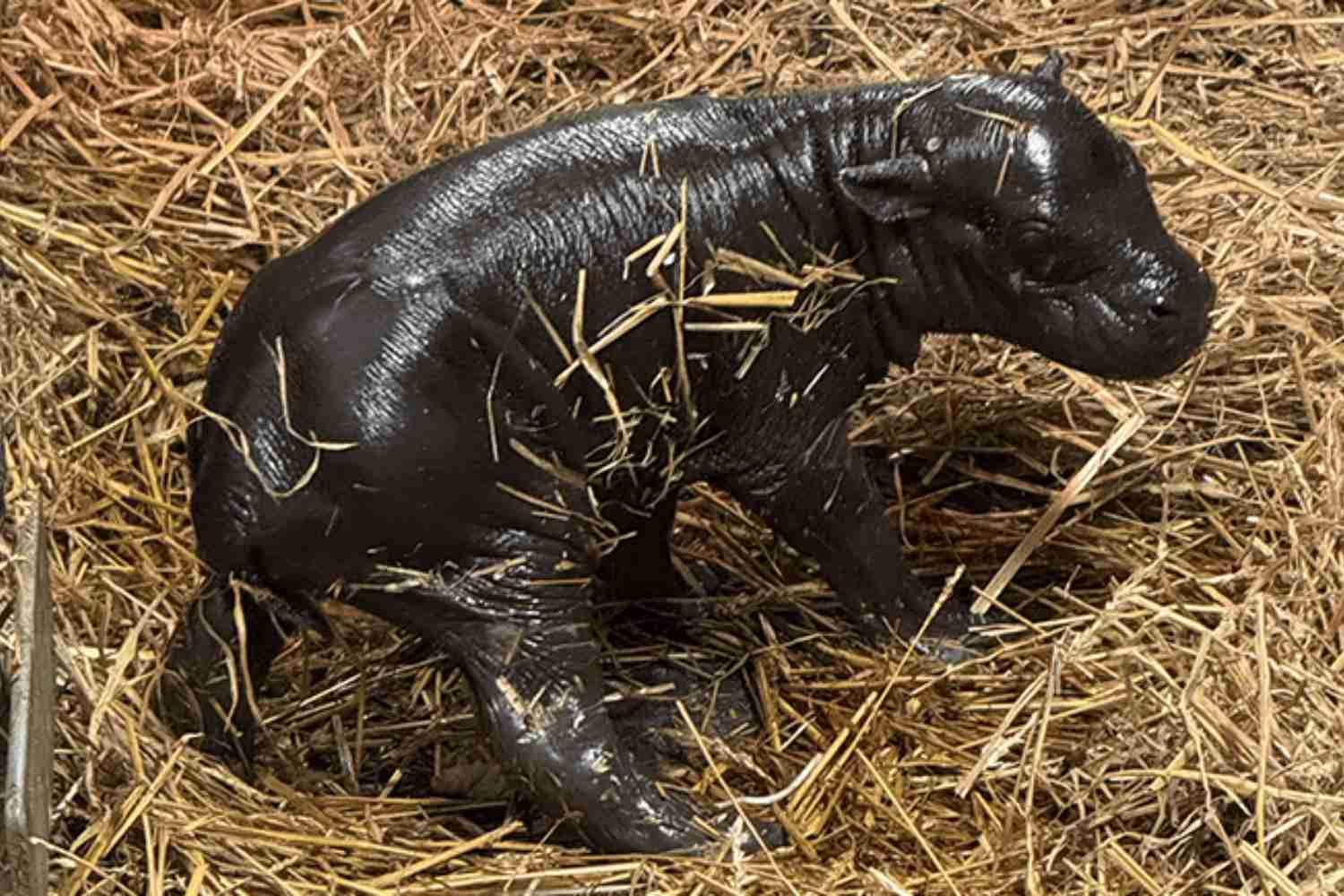
In the early hours of Sunday, August 2, 2026, a baby female pygmy hippopotamus was born at the Toronto Zoo. Twenty-year-old mother Kindia showed the first signs of labor at around 8.15am, culminating in the baby’s expulsion four hours later. Within fifteen minutes the puppy was already trying to stand on its legs, until it was able to successfully breastfeed about four and a half hours later. The father is Harvey, a 31-year-old who joined Kindia for just eight days last January. The birth is part of the international Pygmy Hippo Species Survival Plan program coordinated by the Association of Zoos and Aquariums, aimed at preserving genetic variability in controlled environments.
The threat of extinction in West African forests
The arrival of this puppy puts the spotlight back on the critical state the animal finds itself in in nature. Classified as critically endangered on the IUCN Red List, the pygmy hippopotamus has a remaining wild population estimated at between 2,000 and 3,000 individuals. Native to the rainforests and wetlands of West Africa, particularly Côte d’Ivoire, these elusive mammals suffer systematic habitat destruction caused by logging, mining and agricultural expansion. Organizations like IBREAM and the CSRS employ camera traps and search dogs to track the last free specimens, supported financially by the Toronto Zoo Endangered Species Reserve Fund through the Ivory Coast Pygmy Hippo Program.
The treatment protocol and continuous monitoring
To ensure the survival of the newborn, whose first weeks of life are biologically delicate, the zoo management isolated mother and daughter in the reserved area called Little Hippo Hollow. 24-hour surveillance cameras allow veterinarians to monitor interactions without causing stress. This is the third birth for Kindia, who had already weaned her daughter Penelope in 2018. At the same time, the Toronto Zoo Wildlife Conservancy opened donations to support the costs of maintaining the structure and related scientific projects.
The bitter reality of life in captivity
Despite the enthusiasm and the undoubted victory for the conservation of the species, the little one has already become a media phenomenon exposed loudly on social media and the media and is destined to become the main attraction of the structure as soon as it is visible to the public. However, behind the narrative of safeguarding the species, there remains the irrefutable reality of an animal born and raised in confined spaces. Although promoted as an ambassador for conservation, the newcomer will never know the humidity of the Ivorian forests nor the freedom of the African rivers that should be her habitat, remaining a star confined all her life behind the barriers of an artificial fence.
