
At 63°C Let’s set fire toeba cascadensis does something that no known eukaryote has ever been observed to do: it divides. At 64°C it still continues to move. By pushing higher it can even overcome a brief exposure to 70°C, entering a dormant form and becoming active again when the temperature drops.
The amoeba was isolated in the geothermal waters of Lassen Volcanic National Parkin Northern California, and described in the study published in Cell. The result brings the maximum known limit within which a eukaryotic organism can reproduce from 60 to 63°C. Three degrees seems like a small amount as long as membranes, proteins and DNA have to endure them.
The amoeba, it should be specified, . It is a unicellular organism belonging to the Amoebozoa, but it shares a fundamental characteristic with animals, plants and fungi: it is a eukaryote, therefore it has a nucleus and cellular structures delimited by membranes. Precisely this greater complexity makes heat a serious problem: high temperatures can destabilize membranes, deform proteins and damage genetic material.
From a boiling torrent to a record 63°C
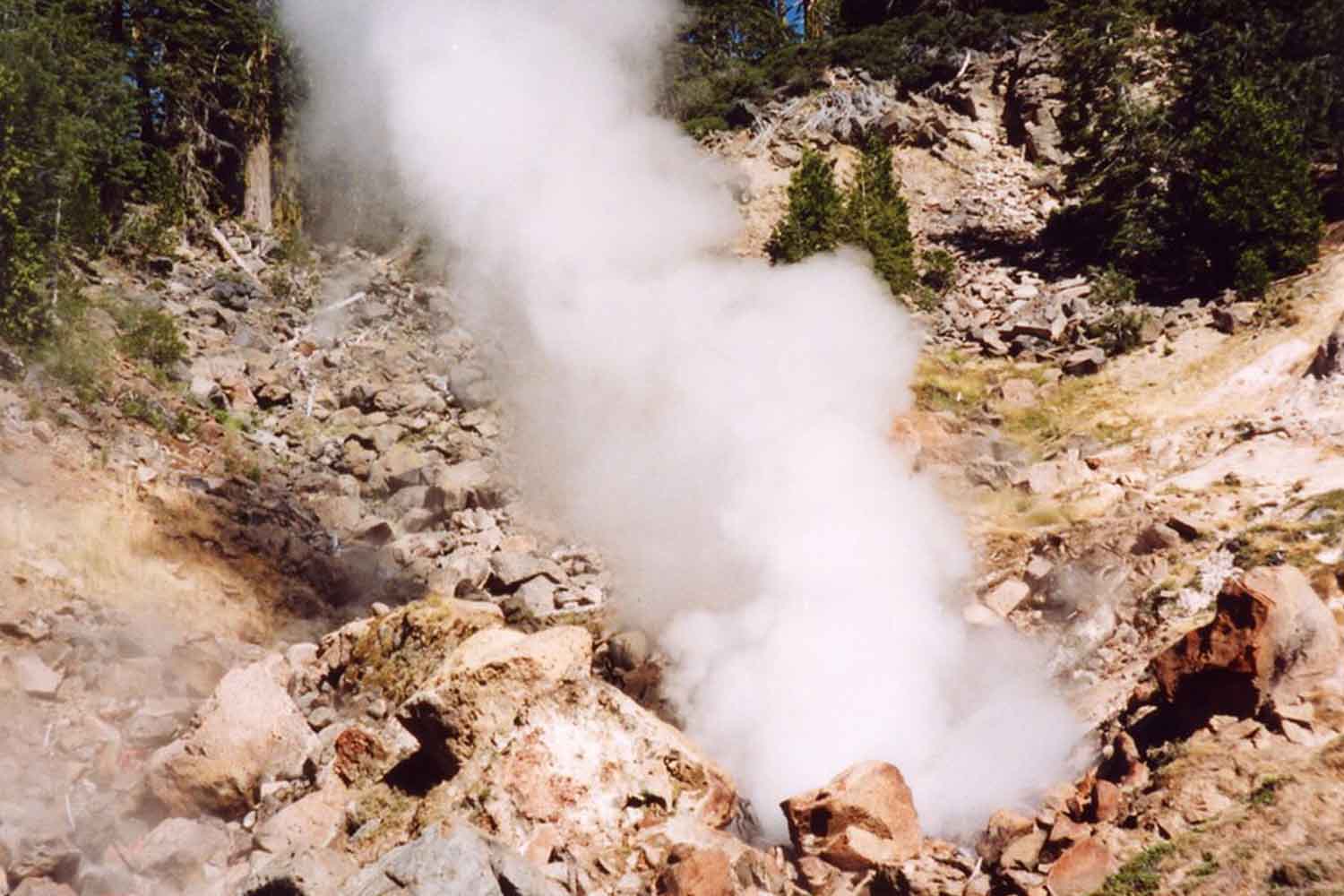
The discovery came during the research of the group led by Angela Oliverio of Syracuse University. The scientists were sampling several geothermal environments in Lassen when they recovered the organism in a small warm stream, decidedly less spectacular than the large acid pools for which the park is known.
Even the equipment had its moments of pragmatism: as Syracuse University says, to reach one of the narrowest points of the stream the group even used barbecue tongs. The frontier of cellular biology, every now and then, also passes through the kitchen department.
Once grown in the laboratory, the amoeba continued to grow as the temperature was progressively increased. TO 63°C the researchers directly observed mitosisdocumenting cell division also through microscopy techniques. At 64°C the organism was still able to move.
Above that threshold it stops reproducing. According to data summarized by NASA, it can retain some activity up to about 66°C and recover after a five-minute exposure to 70°C. At those temperatures it forms a cyst, a dormant structure that allows it to wait out less hostile conditions. At 80°C, in the experiments, it was no longer able to recover.
It’s an important distinction: the record is about the ability to reproduce at 63°Cnot simply surviving for a few minutes at higher temperatures.
How does it not “cook”
The team sequenced the genome of Let’s set fire toeba cascadensis and compared its response to heat with that of other amoebae. Several clues have emerged, without yet reducing everything to a single “heat gene”.
Genes linked to proteostasisthat is, the systems that keep proteins in the correct shape, the stability of the genome and the ability to perceive the environment. When the temperature increases, some mechanisms involved in DNA repair, protein maintenance and cell membrane trafficking also become more active.
Then there is a characteristic of proteins that has attracted the attention of researchers. Many have a greater quantity of on the surface positively charged residuesa property also observed in bacteria and archaea adapted to very high temperatures. The authors hypothesize that it may help keep proteins stable by limiting heat-induced misfolding and aggregation.
Interesting similarities, especially because bacteria, archaea and eukaryotes belong to very different branches of the tree of life: faced with the same thermal problem, evolution may have found some comparable biochemical solutions.
Bacteria do much worse, but the amoeba’s record counts
At first glance, 63°C pales in comparison to certain extremophile microorganisms. Bacteria and especially archaea can live at much higher temperatures: some reach over 100°C. The comparison, however, brings together cells constructed in profoundly different ways.
Eukaryotes must maintain a functioning nucleus, internal membranes, and numerous organelles. For decades no one had been able to document their reproduction above 60°C. Let’s set fire toeba cascadensis shifts that limit and suggests that at least some microscopic eukaryotes may be much more resistant than previous observations indicated.
The work also involves astrobiology. Knowing the limits of temperature, acidity, pressure and water availability within which a cell can function serves to delimit the environments in which to look for life outside the Earth. However, the researchers themselves urge caution: enduring the heat alone is not enough. The amoeba also needs water, oxygen, suitable chemical conditions and above all other organisms to feed on.
In Lassen, in fact, Let’s set fire toeba cascadensis it eats bacteria that are themselves adapted to high temperatures. Its little ecosystem must all work together.
The record remains this: cell division at 63°C, movement beyond that temperature and the possibility of becoming active again after a brief exposure to 70°C. At 80°C, however, not even the fire amoeba made it. Sixty-three, until recently, already seemed too many.
