
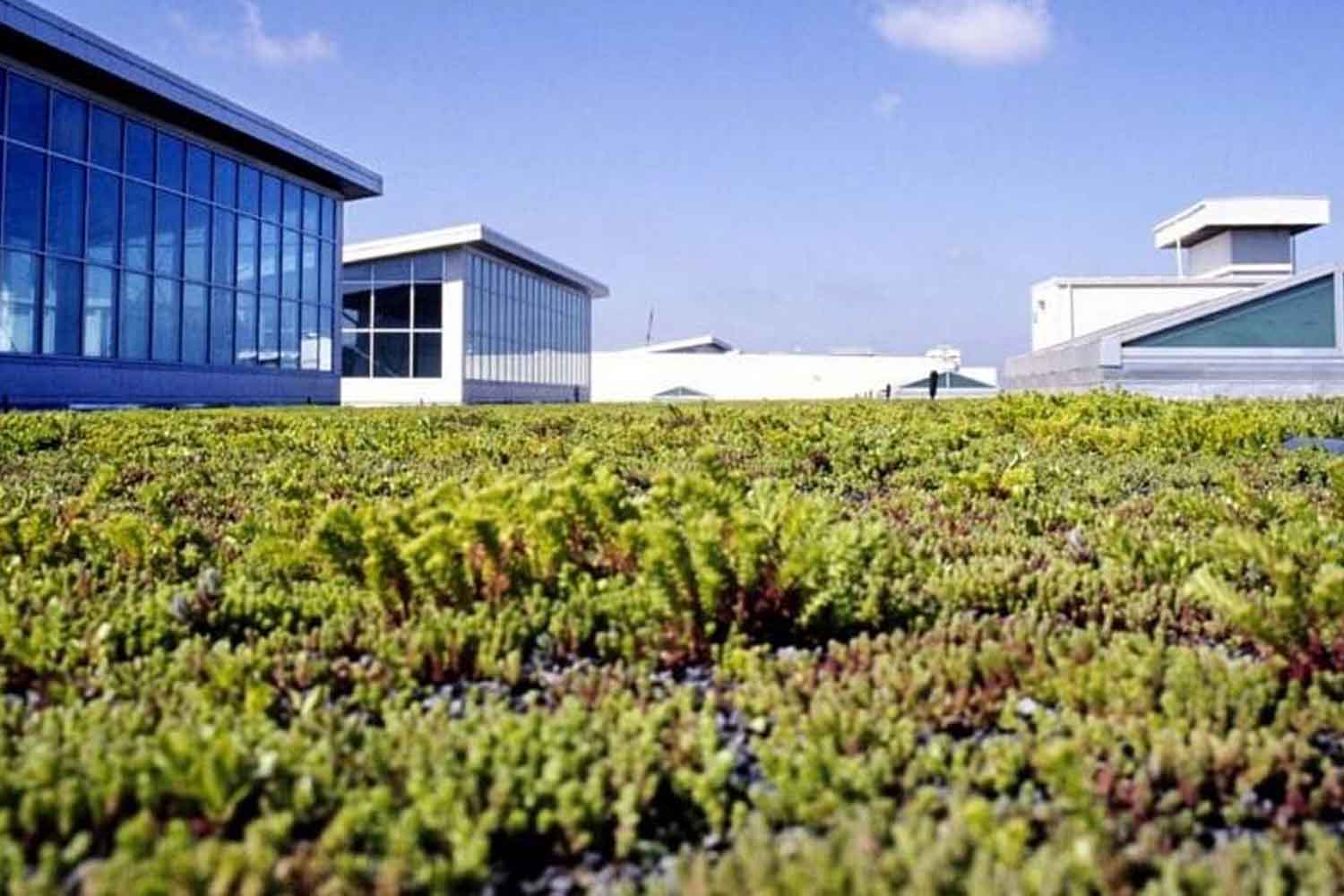
Below, the line assembles Ford F-150s. Above, among thousands of sedum plants, ducks, geese and others have also found space killdeersmall North American shorebirds. It happens in Dearborn, Michigan, on the roof of the gigantic Ford Rouge Complex: approximately 42 thousand square meters of vegetation spread over an automotive plant.
The most interesting detail is that this experiment was not born yesterday. Ford installed his living roof during the redevelopment of the plant in 2002; when the Rouge Center reopened to the public in 2004 it was, according to the company itself, the largest green roof in the world. More than twenty years later, it continues to function as part of the system that manages rainwater for the entire complex.
A sedum roof almost the size of six football fields
The surface measures 454 thousand square feet, approximately 4.2 hectares. The roof is covered mainly with sedums, succulent plants capable of withstanding periods of drought and therefore particularly suitable for being up there without turning into an enormous thirsty garden.
Green also does a much less decorative job. According to Ford, the roof collects and filters some of the rain before it reaches the drainage system. It works in conjunction with permeable pavements, underground basins, wetlands and vegetated ditches to slow water and reduce water discharge to the Rouge River. The U.S. Environmental Protection Agency estimates that your roof can retain about half of the precipitation it receives.
A kind of four-hectare sponge, in short. And this is precisely one of the most interesting uses of green roofs in large urbanized areas: an impervious expanse quickly transforms rain into runoff; soil and vegetation instead manage to retain at least part of it and return it more slowly.
Cooler in summer, warmer in winter
Then there’s what happens under the plants. Documentation from The Henry Ford indicates that the system helps keep the building up to 10 degrees cooler during the summer and 10 degrees warmer in the winter, thanks to the additional insulation provided by the roof layers.
The EPA also reports reduced energy costs and longer roof life compared to a conventional roof. The advantage, therefore, comes from multiple directions: less water to manage during rains, a surface less exposed to temperature changes and a building that requires less energy to maintain stable internal conditions.
Of course, those 42 thousand square meters do not erase the environmental impact of a huge industrial site and the car production that continues below. The roof does a much more precise job: it reduces some local impacts of a surface that would otherwise be completely impervious. Enough work already for a little sedum.
In the meantime the birds have also arrived
The least programmable part appeared on its own. The Henry Ford has documented nests of geese, ducks and killdeer among roof plants over the years. Vegetated areas have also been created around the plant that provide habitat for other animals.
The story also has a little twist. When Henry Ford began purchasing land along the Rouge River in 1915, he briefly considered turning it into a bird sanctuary. The industry won: the place would become one of the symbols of American automotive production. A century later, some of the birds arrived anyway. Only several meters higher.
Bees also made their appearance in the renaturalization project. Beehives were introduced in the mid-2000s and in 2013 The Henry Ford reported over 50,000 bees in three hives. It is a historical fact, not a photograph of the current population, but it shows how the intervention has progressively moved beyond the confines of the roof alone to involve the surrounding spaces.
The Rouge remains a factory, with trucks, assembly lines and thousands of cars. Above part of all this, however, for more than twenty years it has rained on sedum rather than on an expanse of sheathing and concrete. And some bird apparently decided that was enough to set up home.
