
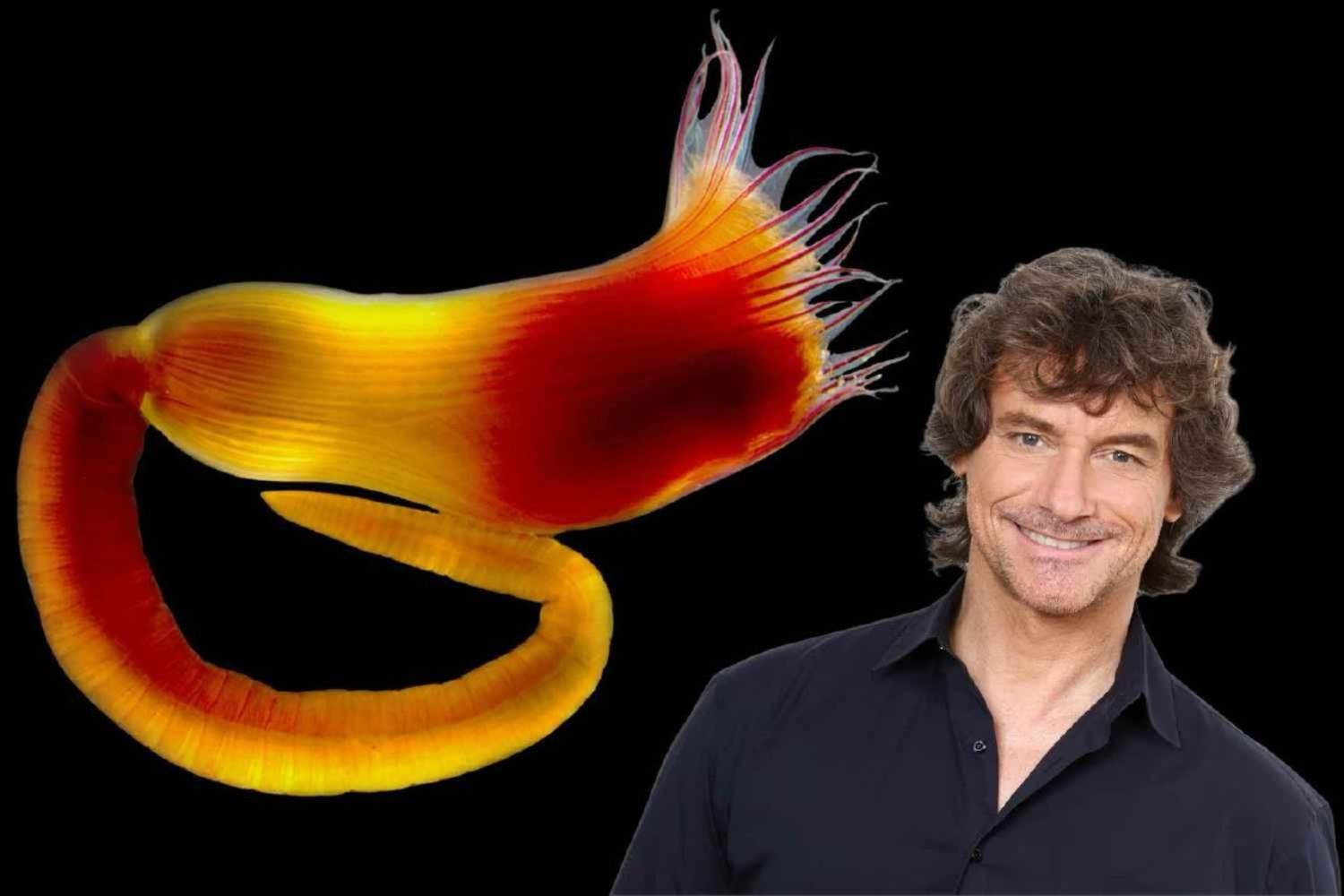
In the stretch of sea of Salento, off the coast of Santa Caterina di Nardò in Puglia, researchers have identified a new marine species never described before. It is an organism belonging to the genus Myxicolarenamed Myxicola albertoangelai, in homage to the scientific popularizer Alberto Angela.
The discovery comes from an international study published in Zoological Journal of the Linnean Society and coordinated by a team from the University of Salento and which confirms for the umpteenth time how even one of the most studied seas in the world can still hide unknown forms of life.
View this post on Instagram
A name that tells a story of scientific inspiration
The choice to dedicate the species to Alberto Angela is not accidental. The researchers involved in the study explained that the popular communicator’s programs had a direct impact on their careers, bringing them closer to marine biology and scientific research. According to the authors, the name represents a recognition of Angela’s contribution to the diffusion of scientific culture and the ability to make complex topics such as nature, history and research accessible to the general public.
The identikit of the new marine organism
The new organism is a polychaete annelid belonging to the Sabellidae family, also known as “ciliated worms” due to the particular structure of their tentacles. These animals have a fan-shaped gill apparatus, used to filter nutrient particles in the water.
The species was identified as part of a revision of the genus Myxicolawhich led to the description of four new entities. The typical sample was found in the seabed of the northern Ionian Sea, in an area characterized by high biodiversity.
The science that looks beneath the surface of the sea
The study underlying the discovery is based on the so-called integrative taxonomy, an approach that combines traditional morphological analysis with modern genetic techniques. This method allows us to distinguish species that are similar to each other but genetically different, expanding our knowledge of marine biodiversity.
The results highlight a fundamental aspect: even in the Mediterranean, a basin studied for centuries, unknown or incorrectly classified organisms still exist, demonstrating the enormous complexity of marine ecosystems and the need to continue their exploration.
The discovery of new species is not just an academic achievement, but has direct implications for environmental conservation. Giving a name to an organism means recognizing its existence and inserting it into the framework of global biodiversity. According to researchers from the University of Salento, each new identification represents a fundamental step towards understanding the distribution of the species, evaluating their health and defining more effective protection strategies.
You might also be interested in:
