
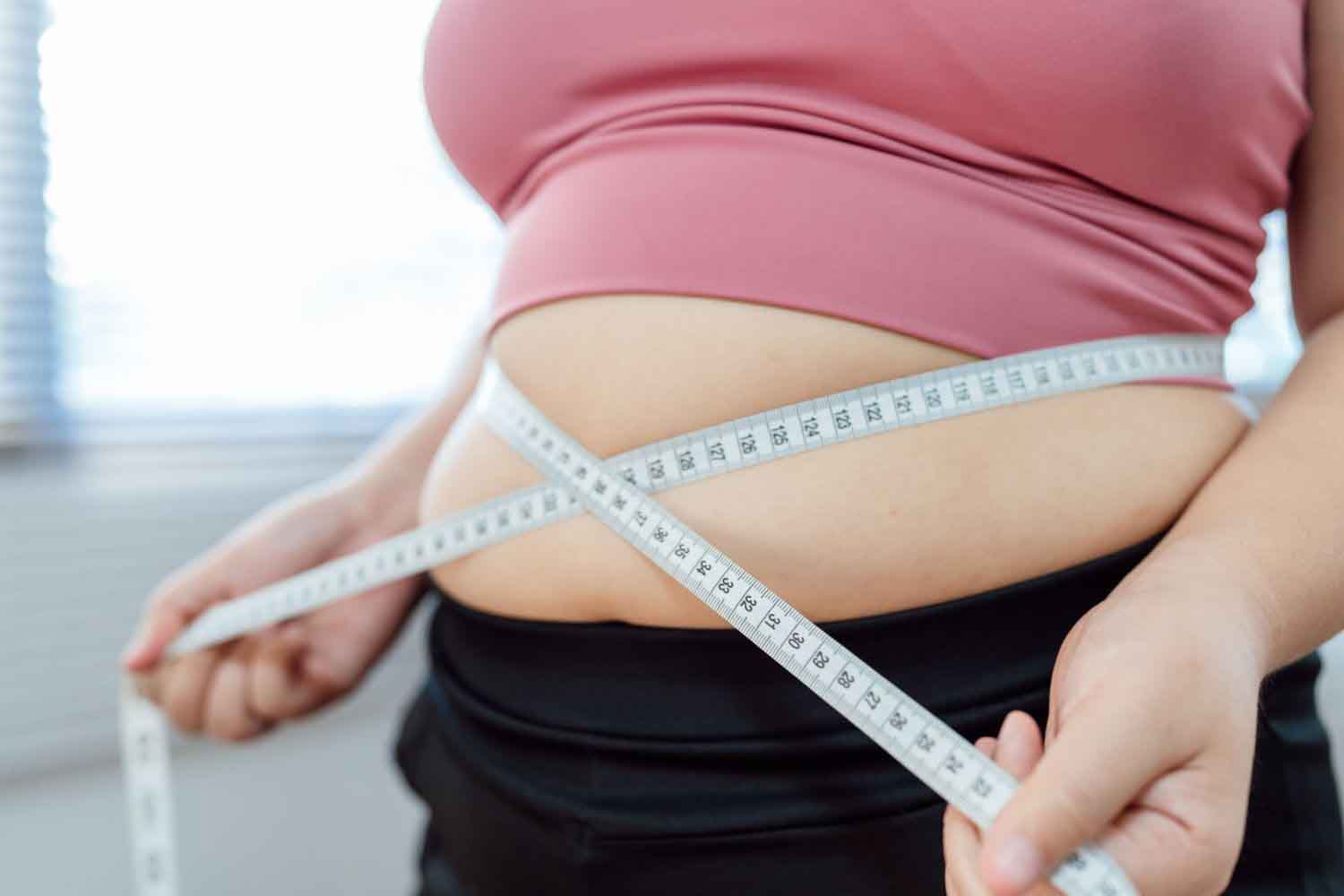
There comes an age when trousers seem to have their own personal opinion. We eat more or less as before, the weight on the scales changes little, yet the waistline begins to take up space. The explanation, as often happens when the body decides to act as a specialized technician without notifying anyone, could be much lower than the calories counted at the end of the day: inside the adipose tissue, between cells that change their rhythm, function and ambitions over the years.
An American research team has identified a possible biological switch of abdominal fat with age: a population of adipose tissue progenitor cells that appears mainly in middle age and seems very efficient at producing new fat cells. The study published on Science analyzed the phenomenon at a cellular level and compared it with human samples, opening an interesting path to understand why the belly tends to increase even when the total weight remains almost unchanged. The work was relaunched in June 2026, but the scientific publication dates back to 2025.
Meanwhile, even more recent research published on Obesity added an important piece: visceral fat, the deeper fat, deposited in the abdomen around the organs, is associated with an acceleration of biological aging. Researchers analyzed nearly 4,800 people aged 45 to 69 as part of the Busselton Healthy Aging Study, one of the longest running population health research programs in Australia, and observed that higher levels of visceral fat were linked to markers of faster aging, even after taking into account weight, body mass index, waist circumference and lifestyle factors.
Your waist size changes before the scales
Abdominal fat is often dismissed as an aesthetic issue, with all the usual social grace reserved for changing bodies. But here the matter is more serious. Accumulation of fat around the waist, especially visceral, deep fat near organs, is linked to a greater risk of type 2 diabetes, high blood pressure, cardiovascular disease, metabolic syndrome and other chronic conditions. The NIDDK, an American institute that deals with diabetes and digestive and kidney diseases, reminds us that excess weight becomes particularly relevant when fat is concentrated around the waist.
For years we have thought above all about the fat cells already present, imagining them as small deposits which, with age, enlarge. A kind of wardrobe where you keep putting stuff until the door stops closing. The new work also shifts the focus elsewhere: adipose tissue could grow because it produces new fat cells, through a process called adipogenesis. In practice, the problem could also concern the birth of new adipocytes, i.e. cells specialized in the accumulation of energy in the form of fat.
These starting cells are called APCs, adipocyte progenitor cells. They are a sort of raw material of adipose tissue: they can remain silent or mature and become real fat cells. According to the study, as we age some of these cells change their behavior and become more active in the formation of new adipose tissue, especially in the abdominal area.
Those cells that wake up late
The most curious part of the study concerns a cell population identified as CP-A, committed preadipocyte age-enriched. Translated without pretending to be at an endocrinology conference: age-related preadipose cells, more present in middle age and very good at becoming fat. According to published data, these cells emerge precisely in this phase of life and show a strong ability to proliferate and transform into adipocytes.
The body, therefore, would appear to bring out a specialized team when metabolic aging begins. A team that, instead of slowing down like many other adult cells, becomes familiar with the craft and works harder. Hence the strong hypothesis: abdominal fat with age could also depend on an increase in the production of new adipose cells, as well as on the enlargement of those already present.
A signaling pathway called LIFR, leukemia inhibitory factor receptor, also enters the mechanism. The name sounds like something to be left to white coats, and in part it is, but the meaning is quite clear: LIFR works like a cellular communication line. In the models studied, this pathway was found to be important for CP-A activity and visceral fat expansion, indicating a possible target for future therapies.
Visceral fat also affects biological age
Australian research published in Obesity helps to understand why the issue is not just about jeans size. Researchers observed that a greater amount of visceral fat is associated with older biological age in both men and women. Furthermore, in women, higher levels of visceral fat were also linked to shorter telomeres, i.e. those structures that protect the ends of chromosomes and are often considered an indicator of cellular aging.
The interesting fact is that the association remains significant even after considering elements widely used in clinical evaluations, such as body mass index, total body fat, waist circumference and lifestyle habits. In other words: visceral fat seems to tell something more specific than just “extra weight”. It is metabolically active, produces pro-inflammatory molecules, and can contribute to systemic inflammation and metabolic stress, two conditions that take a toll on overall health over time.
This doesn’t mean that every increase in waist size is automatically a red alert, nor that the body should be treated as a project to be optimized to the point of exhaustion. But it means that deep abdominal fat deserves attention, because it talks to your metabolism much more than you thought. And often he does it quietly, without obvious symptoms, while we are still there arguing with the zip.
What changes for us today
The human part must be read with the right caution. The identification of CP-A cells makes the result more interesting, because it suggests a plausible biological process also in humans. However, we are still in the field of basic research: no shortcuts, no ready-made pills, no promises to sell together with the swimsuit.
The discovery helps above all to move the story forward. The increase in waist size over the years is often reduced to will, diet, laziness, personal control. All elements that can count, of course, along with sleep, stress, hormones, menopause, sedentary lifestyle, loss of muscle mass and individual history. These studies add a less visible piece: with age, adipose tissue can change its behavior from the inside, while visceral fat can affect profound processes linked to aging.
Even lifestyle remains within the question, without turning into the usual sermon. Another analysis conducted on data from the German NAKO cohort, also published in Obesity, observed that regular physical activity, a balanced diet, moderate alcohol and no smoking are associated with a lower amount of visceral fat. The strongest relationship, in that study, concerned movement. Being a cross-sectional analysis, it is not enough to establish a cause-effect relationship, but it confirms something quite concrete: the distribution of body fat does not only depend on how much we weigh.
The therapeutic perspective concerns the future. Understanding how these cells arise, how they behave in humans and how the LIFR pathway can be intervened could open up new tools against age-related obesity and associated metabolic diseases. First we will need longer, broader studies, closer to people’s real lives. It’s one thing to block a mechanism in the laboratory, it’s another to transform it into a safe, effective and sustainable treatment.
Meanwhile, a fairly concrete lesson remains: the belly that comes with the years also tells of biology, cells that change jobs, internal signals that light up when no one invited them. The body also ages like this, making noise where for years we have only looked at the zip of our jeans.
You might also be interested in:
