
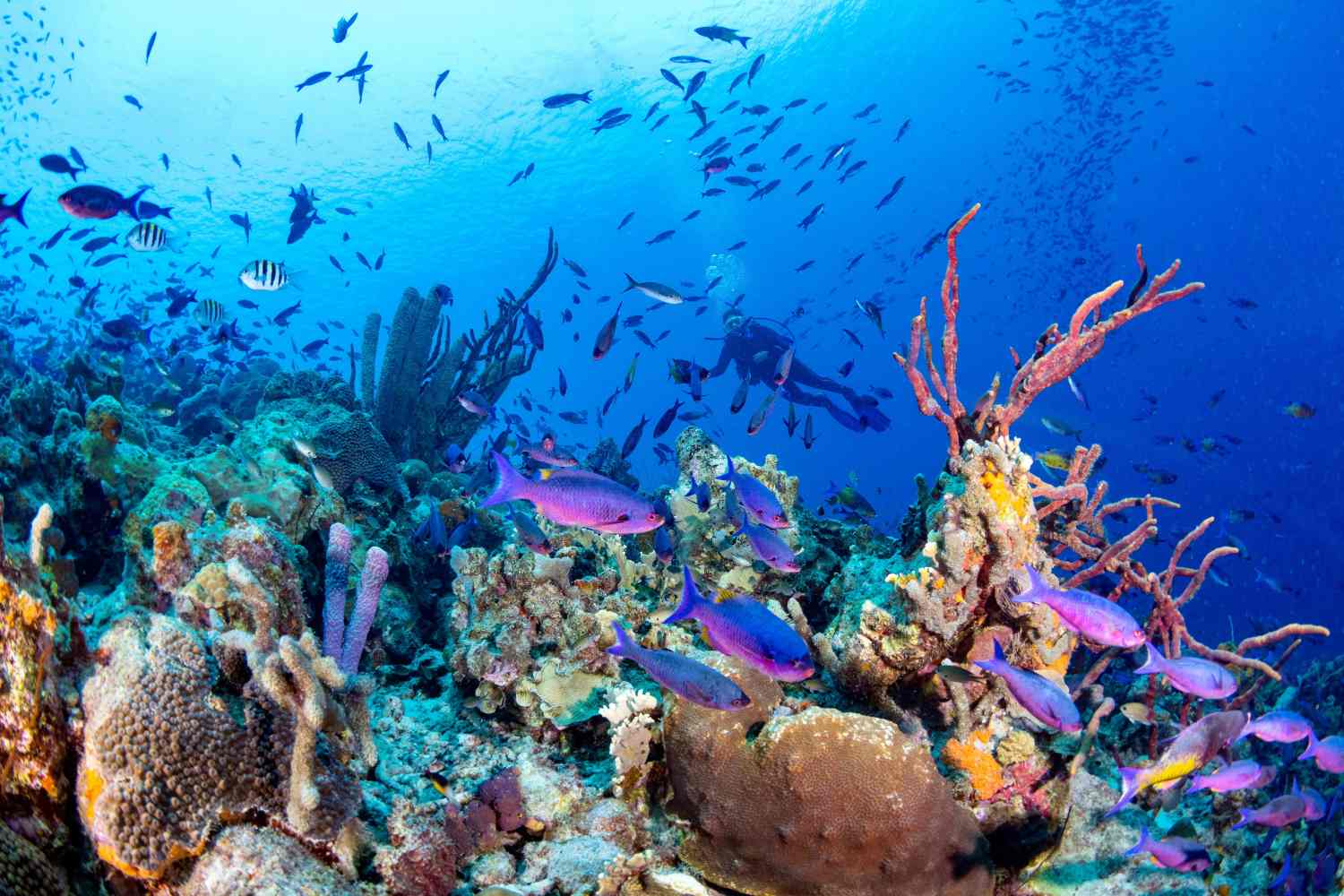
A signature expected for almost two decades that marks an indelible page in the history of international law and environmental protection. With the ratification by Morocco and Sierra Leone, on September 19, 2025 the minimum number of 60 countries necessary for the entry into force of the Treaty on the Upper Sea was reached. A legally binding agreement that, starting from January 17, 2026, will extend for the first time a protection network on those two thirds of Ocean who are beyond national jurisdictions.
It is a moment called “a historical success for the oceans and multilateralism” by the UN secretary general Antonio Guterres, who fills a huge regulatory void. So far, these immense marine areas, equal to about 64% of the ocean surface, have been a sort of “no man’s land”, exposed to an exploitation without rules, from excessive fishing (overfishing) to the risks of new industries, such as mining extraction in deep waters.
The Marine Biodiversity Treaty Has Reached the REQUARRE THREHOLD OF RATIFICATIONS FOR ENTRY INTRY INTRY INTRY.
The Welcome This Historic Achievement for the Ocean & Multilateralism.
In Two Years, States Have Turned Commitment Intation, Showing What’s Possible When Nations United. … pic.twitter.com/ekarpp7i9h
– António Guterres (@antononioguterres) September 19, 2025
What does the Treaty foresee
The agreement, formally known as BBNJ (Biodiversity Beyond National Jurisdiction), is the third implementation arm of the United Nations Convention on the 1982 sea law. His beating heart is the creation of a mechanism to establish large -scale protected marine areas. This tool is essential to achieve the global objective, set by the Kunming-Montréal agreement, to protect at least 30% of the oceans by 2030.
For the first time, moreover, the obligation to carry out an environmental impact assessment (via) for the economic and human activities planned on the high seas is introduced, increasing transparency and providing a picture to mitigate the negative effects. Another pillar is the principle of fairness. The Treaty aims to correct historical inequalities, promoting a right distribution of the benefits, monetary and non -monetary, deriving from marine genetic resources (MGR). These are marine organisms with enormous potential for scientific research and for the development of new drugs and cosmetics. The agreement favors the development of research skills and the transfer of marine technology to developing countries.
A road still uphill
Despite the enthusiasm, the path for full effectiveness of the treaty has several critical issues. Some observers underline how, on the pretext of protection, the agreement can actually organize a new framework for the exploitation of marine resources. Complex issues remain unresolved, such as the definition of the legal status of marine genetic resources and the management of patents on living organisms.
The decision -making mechanism to create new protected areas must also coordinate with a dense network of existing international and regional organizations, from the Atlantic to Antarctica, a process that promises to be complex. Another great unknown concerns funding. Although a special fund is foreseen, its operation depends on future acts and on the will of developed countries and private entities to contribute to you. The absence of great powers as the United States (who have never ratified the mother convention on the right of the sea), Russia and China, due to the current geopolitical tensions, could also limit its scope.
Italy, together with the European Union, actively supported the agreement. Its entry into force represents a decisive step. Without it, a large half of the earth’s surface would remain without control, at the mercy of the states with greater technical and financial skills. The road is still long, but the route for a global governance of the oceans is finally traced.
