
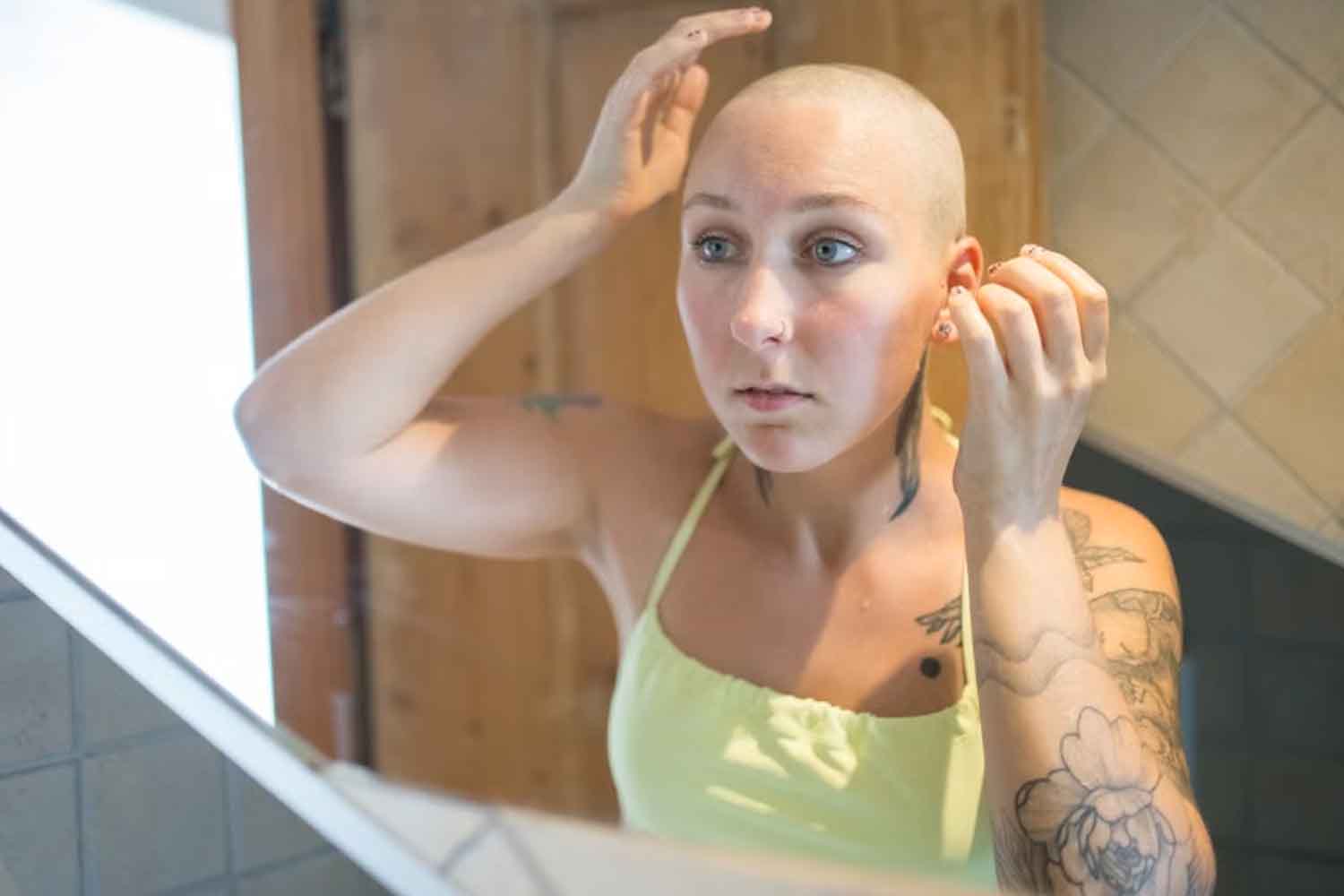
There are those who, after six months of treatment, have gone from having very extensive hair loss to no longer having bald areas on their scalp. It is one of the most interesting results of two large clinical studies on upadacitinib, a drug already used against several inflammatory diseases, including rheumatoid arthritis, and now also authorized in Europe against severe alopecia areata.
In the two phase 3 trials, published on JAMA Dermatology1,399 people between 12 and 64 years old were involved. They all started from an important situation: they had lost at least half of the hair on their scalp and, on average, the loss exceeded 80%.
After 24 weeks the hair had returned to most of my head
The participants were divided into three groups: some received 15 milligrams of upadacitinib each day, others 30 milligrams and a third group a placebo.
After 24 weeks the result was quite visible. With the 15 milligram dose, about 45% of patients had recovered at least 80% of scalp coverage. With the 30 milligram one it rose to 54-55%. In the placebo group, however, the result was achieved by only 1.5-3.4% of participants. The first major differences had already appeared after eight weeks.
Then there’s the fact that raises eyebrows a little more. Literally, since those have grown back too. Among those taking 30 milligrams, 20.3 percent of participants in the first study and 22.5 percent in the second achieved complete regrowth of scalp hair. With the lowest dose this happened at 14.1% and 13.1%. In the placebo group practically none.
Eyelashes and eyebrows also improved in a substantial portion of patients who had lost them. With the highest dose, approximately six in ten people achieved near-to-complete coverage of their eyebrows, and similar results were seen for their eyelashes.
Why can an arthritis drug regrow hair?
The explanation lies in the way alopecia areata works. It is an autoimmune disease: the immune system, which should normally protect us, begins to attack the hair follicles by mistake. The hair thus stops growing and can fall out in patches or, in the most severe forms, almost completely.
Upadacitinib belongs to the family of so-called JAK inhibitors. Simply put, it affects some of the signals used by immune system cells to fuel inflammation. It is the same reason why this type of drug is used against other inflammatory and autoimmune diseases.
The researchers then tried to turn off part of that immune response in alopecia areata as well. And, at least for a significant portion of the patients studied, the follicles have started doing their job again. The clinical program, also registered on ClinicalTrials.gov, continues to follow adults and adolescents with severe alopecia areata to collect longer data on the effectiveness and safety of the treatment.
In Europe the drug is already authorized for severe alopecia areata
In the meantime, the research has already passed an important stage. Since 2026, upadacitinib, marketed as Rinvoq, has been authorized in the European Union for the treatment of severe alopecia areata in adults and adolescents from 12 years of age. The Committee for Medicinal Products for Human Use of the European Medicines Agency had expressed a positive opinion on 25 June 2026 and today the indication appears in the official sheet of the EMA. The medicine can only be prescribed under medical supervision.
In studies the most frequent side effects were upper respiratory tract infections, acne, nasopharyngitis and an increase in a muscle enzyme called creatine phosphokinase. Serious adverse events remained infrequent and no new safety signals emerged compared to those already known for the drug.
The most concrete fact remains before our eyes: at the beginning of the study these people had lost on average more than four out of five hairs on their scalp. Six months later, with the highest dose, more than half had recovered at least 80% of coverage, and up to about one in five people had recovered it completely. For an illness capable of making looking at the mirror a very difficult daily event, it is a very concrete result.
