

THE’artificial intelligence can recognize if a food has expired or contains the most common allergens: a new electronic nose, baptized Schnozand developed by a research group led byUniversity of California at Berkeley (UC Berkeley, USA) is able to detect the odors associated with spoiled food with much more precision than the human nose and can also detect the presence of substances such as nuts and peanuts, considered among the big killer allergenic.
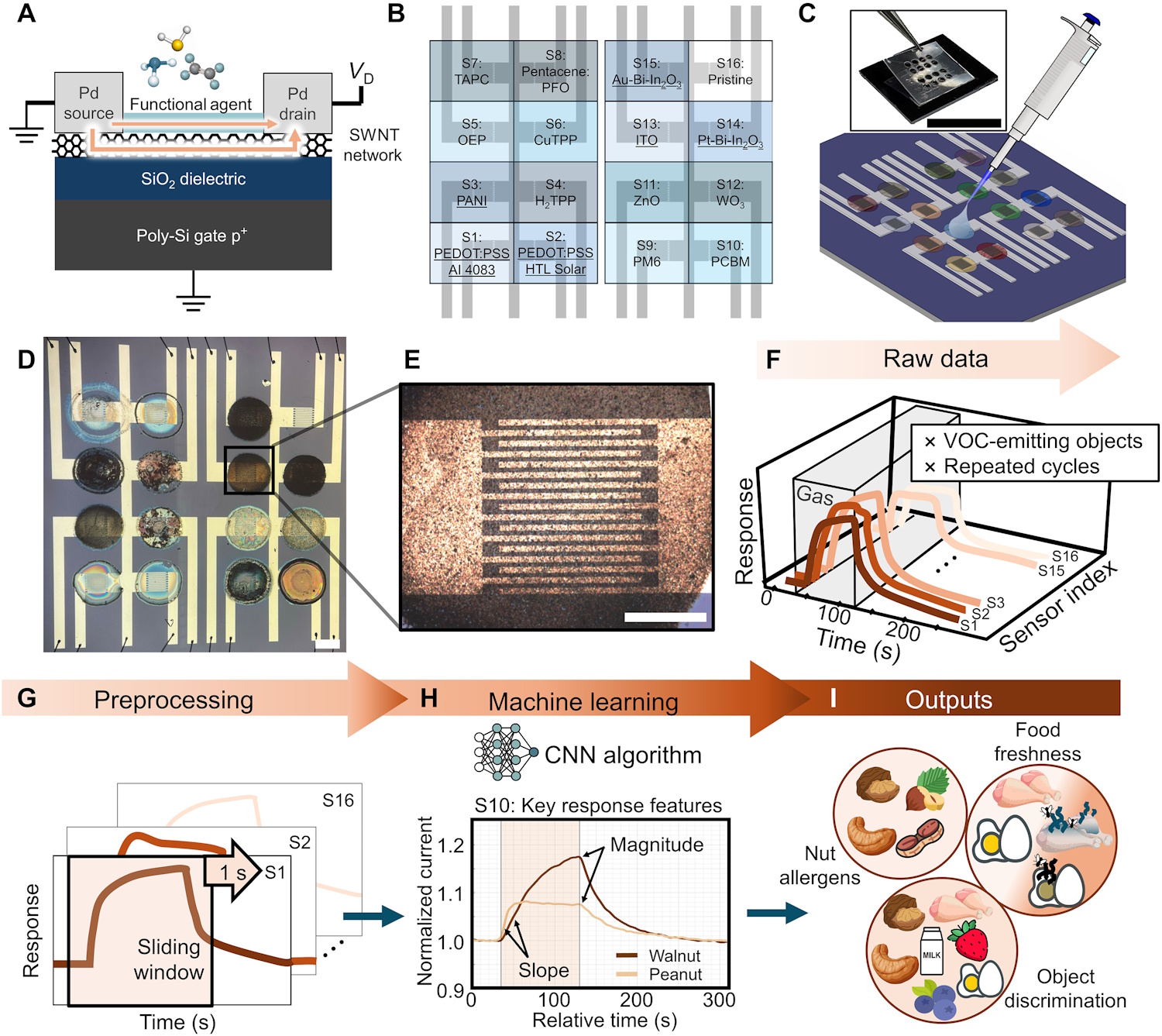
The device, in particular, is composed of a series of 16 tiny gas sensorseach of which is sensitive to a slightly different combination of gaseous compounds.
It can be imagined as a set of digital taste buds, where each sensor on this chip responds uniquely to different gas molecules presented to it – explains Carla Bassil, lead author of the study – Each of these 16 sensors has a different sensitive film and works by converting chemical reactions between the sensor surface and the gas molecule into electrical signals
©UC Berkeley
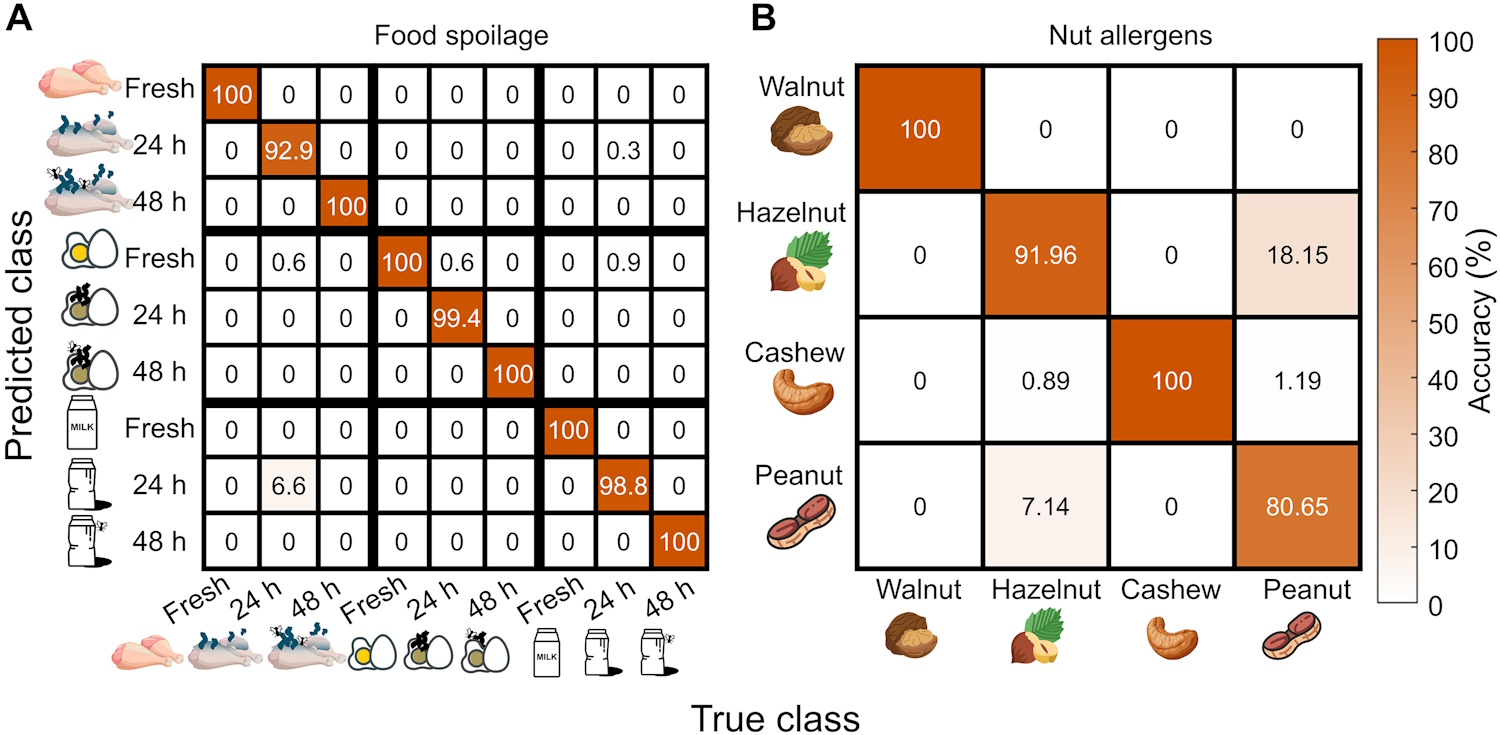
Using themachine learningthe researchers trained a model to recognize the sensor response profiles associated with seven different foods, strawberry, blueberry, banana, walnut, hazelnut, cashew and peanut, but also the odor of raw chicken, milk and eggs, both fresh and left at room temperature for 24 and 48 hours.
After quite a few modifications, the nose was found to be capable of perceive the odor of 0.05 grams of isolated walnutabout one hundredth of a medium-sized shelled walnut. However, it has yet to test the device’s sensitivity in environments where other gases are present, such as when nuts are in a salad or cake, or when spoiled food is in the refrigerator with other foods.
The idea is to be able to use the relative selectivity of gas sensors, combined with the pattern recognition capabilities of machine learning, to identify which gas signature is associated with each food. The result is a sensor chip that is far more sensitive and objective than any human nose
©Science Advances
Although the concept of the electronic nose has been around since the 1980s, its implementation has proven complex. In fact, individual gas sensors, such as those found in home carbon monoxide detectors, are relatively simple to produce, but integrate a number of different sensitive films onto a single chip it’s much more difficult.
Many of these difficulties have been overcome by using conductive material as a material carbon nanotubes (instead of metal oxides), which can form layers a few nanometers thick, fifty to one hundred thousand times thinner than a human hairand whose large surface area gives them numerous special qualities, including ahigh sensitivity at room temperature.
Using a device structure that operates at room temperature, rather than at elevated temperatures, allowed the researchers to choose a wider variety of gas-sensitive materialsincluding those that could degrade at high temperatures, such as polymers, as well as to manufacture the chip sensor using a simple process called drop castingrather than requiring more complex techniques.
The truly scalable aspect of my electronic nose is the ability to use all these different types of sensitive materials by depositing them in one step
©Science Advances
Researchers have now developed one portable version of the electronic nose which can be used with an iPhone app, which they plan to test in a wider variety of environments, continuing to improve its sensitivity and reliability.
I believe that smart refrigerators, those equipped with sensors that can be controlled via smartphone, would be an excellent application for this type of technology. How awesome would it be if your refrigerator could warn you by writing things like “Hey, the broccoli is about to go bad, so maybe it’s best to eat it,” or “The chicken is on its last day of storage”?
The work was published on Science Advances.
Sources: UC Berkeley / UC Berkeley/Youtube / Science Advances
