
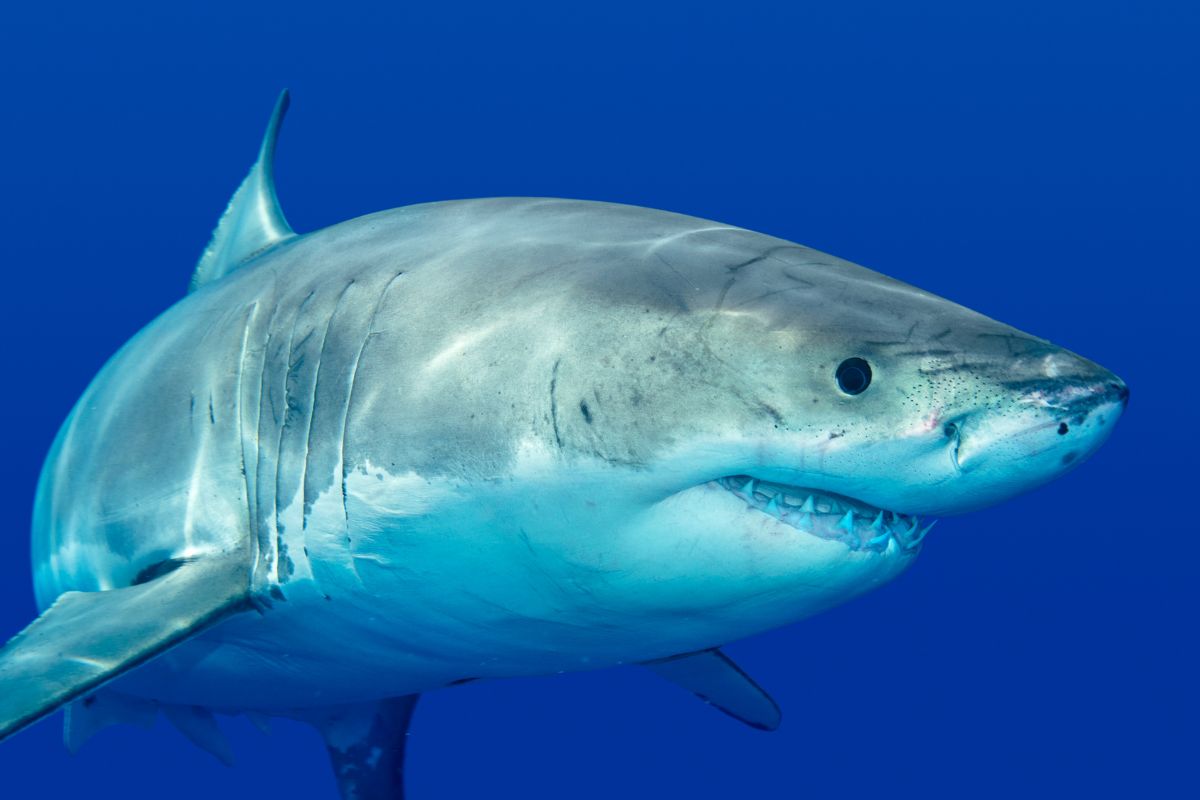
The waters of the Mediterranean hide a presence that has always fascinated and frightened: that of the sharks. In the Italian seas 48 different species of these predators have been cataloged, a number that could surprise many swimmers accustomed to considering our sea as relatively safe. The reality is more complex and in recent years the sightings have multiplied, getting closer and closer to the coasts frequented by tourists.
The species present in our seas
The biodiversity of sharks in the Mediterranean is remarkable, even if most species do not represent any danger to man. Only about fifteen could theoretically attack a human being, but even in these cases the event remains exceptional. The reason is simple: we are not part of their natural diet.
The Verdesca, also known as the blue shark for its characteristic coloring, dominates the statistics of the sightings. This species, although not aggressive, is paradoxically at risk of extinction in the Mediterranean precisely because of accidental catches. The fox shark, recognizable for its elongated caudal fin that recalls a whisk, maintains the distances from man and rarely approaches the coasts.
Among the species considered potentially dangerous, the Mako shark stands out, famous for being one of the fastest fish in the world. More rare but much more feared is the white shark, the protagonist of collective nightmares fed by cinema which however remains a sporadic presence in our waters.
Recent sightings
The first months of 2025 recorded several episodes that captured the attention of the media. On May 1, a group of tourists filmed a shark off Metaponto, in Basilicata, creating a certain ferment among the bathers of the area. A few days later, another sighting was reported in Lazio, precisely between Lavinio and Lido dei Pini, in the municipality of Anzio.
These episodes are part of a trend that has been going on for some time. In June 2023, Sardinia recorded the presence of a verde of about two meters on the beach of Cann’e Sisa, near Torre delle Stelle. In the same period, Calabria saw a shark of the same species skirt the docks of the port of diamond.
Particularly significant was the episode of 1 May 2023 in Lido di Classe, near Ravenna, where a pregnant female from Verdesca was found almost cunned while began to give birth to her puppies. This event provided experts with important information on the reproductive behavior of the species.
What are the most at risk areas
The distribution of sightings is not accidental and follows precise sea dynamics. Sicily, in particular the Sicily channel, represents the area with the greater concentration of sharks, especially white ones that prefer deep waters rich in prey. Scholars believe that this area works as a natural nursery, an ideal area for the reproduction and growth of young specimens.
Calabria and Sardinia follow in statistics, but also Tuscany, Puglia, Campania and Marche have recorded significant sightings in recent years. The Adriatic Sea frequently hosts whale sharks, kind giants who despite their 12 meters in length feed exclusively by Placton.
Liguria is not immune from the phenomenon, with several sightings documented especially in the deepest waters off the coast. Even Lazio, as demonstrated by the recent episodes of Anzio, is part of the areas where the presence of sharks has become more frequent.
Because they approach the coasts
The behavior of the sharks that go towards Riva has precise explanations linked to their biological cycles. The coastal waters, warmer and less profound, offer ideal conditions for the birth and growth of puppies. The greater availability of prey, from sardines to small pelagic fish, represents another factor of attraction.
Changes in marine currents and the variation of temperatures can also push these predators to modify their usual routes, bringing them to areas normally little frequented. The increase in maritime traffic and fishing activities can finally alter natural behaviors, causing unexpected movements.
Is there risk of attacks?
Despite the growing presence of sharks in Italian waters, the risk to bathers remains statistically irrelevant. From 1900 to today just 40 attacks have been recorded, of which less than ten mortals. The last fatal attack dates back to February 2, 1989, when in the Gulf of Baratti, near Piombino, a white shark killed a diver under the eyes of his son and a friend. The victim’s body was never recovered.
This episode, which took place 36 years ago, represents a statistical anomaly considering that white sharks usually prefer Sicilian waters rather than the Tuscan waters. The rarity of the attacks is explained by the fact that humans do not fall into the natural diet of these predators, who often attack by mistake by exchanging man for their usual prey.
Cohabitation is possible
The growing presence of sharks in Italian seas must not turn into unjustified alarmism. These animals play a fundamental role in the balance of marine ecosystems and their presence often indicates the good health of the waters. The key lies in correct information and in compliance with marine safety standards.
Bagnants can continue to enjoy the beach holidays while maintaining some basic precautions: avoid swimming at sunset or dawn when many species are more active, do not enter the water with bleeding wounds, and pay attention to the notices of local authorities. Cohabitation with these ancient inhabitants of the sea is possible, provided that it is based on knowledge and mutual respect.
Don’t you want to lose our news?
