
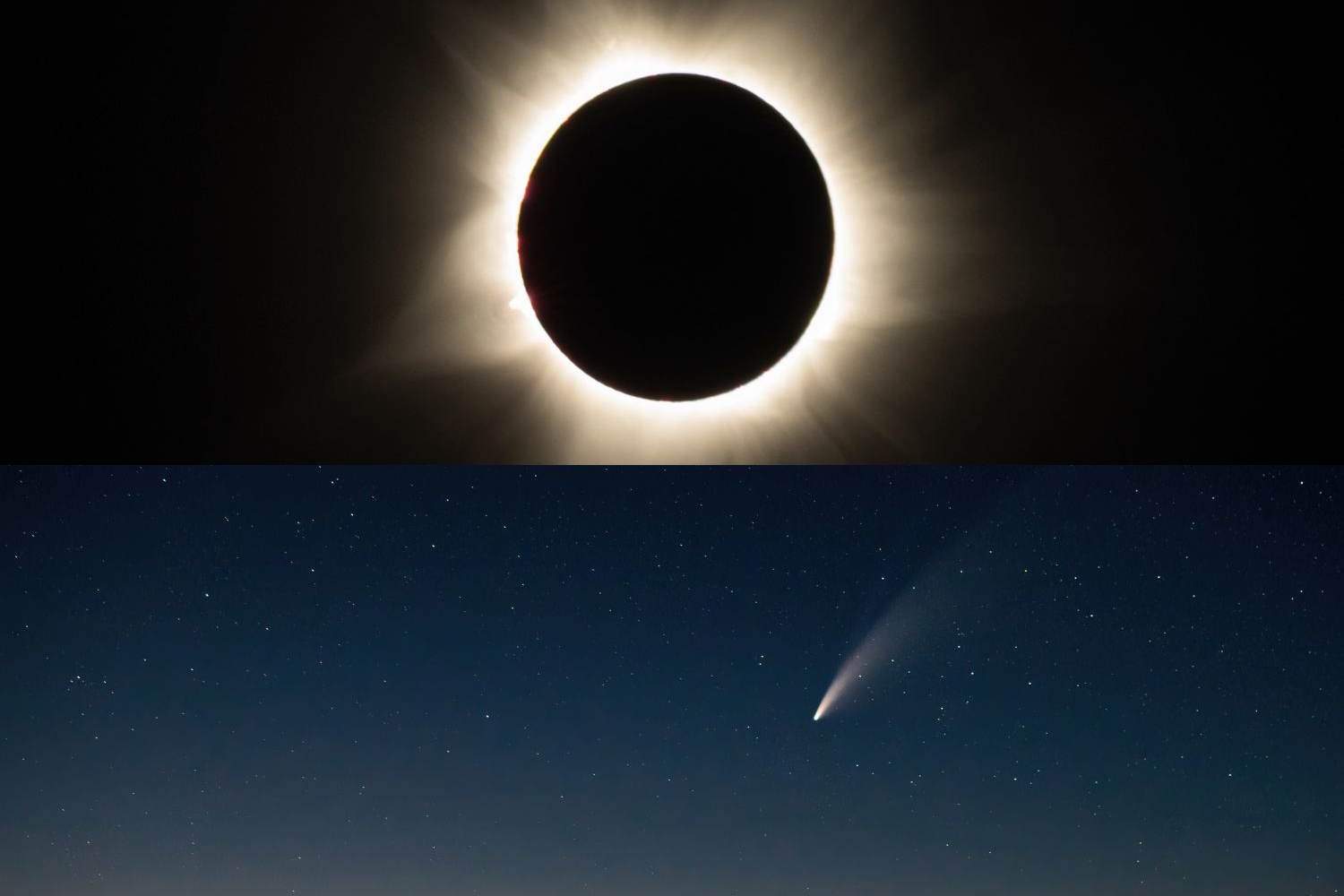
The August 12th, what a show! Indeed, what shows! In the afternoon the sky will give us thetotal solar eclipse (partially visible in Italy) and the inevitable night Perseid peakthe most beautiful shooting stars of the year.
But it doesn’t end there: because this peak will also happen coinciding with the New Moonin the total absence of our satellite and therefore in practically perfect visibility conditions (weather permitting).
What is the total solar eclipse
As NASA explainswhen the Sun, Moon and Earth are perfectly aligned in this order, our satellite “covers” our star, which will therefore appear completely obscured for a few minutes.
The phenomenon is actually due to theshadow of the Moon projected on the Earthwhich generates a cone of darkness on our planet, from which the phenomenon is observed. It is therefore not the Moon per se that obscures the Sun as is sometimes mistakenly believed.
If, however, the alignment is not perfect, it is called partial solar eclipse and our star appears partially “eaten”.
The solar eclipse of August 12, 2026
©Timeanddate
The spectacular phenomenon will return in Europe after 27 yearsthat is, after the unforgettable solar eclipse of 11 August 1999. In several countries of our continent (as well as in several areas of north-west Africa and North America) the totality, from Spain to Icelandwith a potential number of observers equal to 15,200,000 (0.19% of the world population).
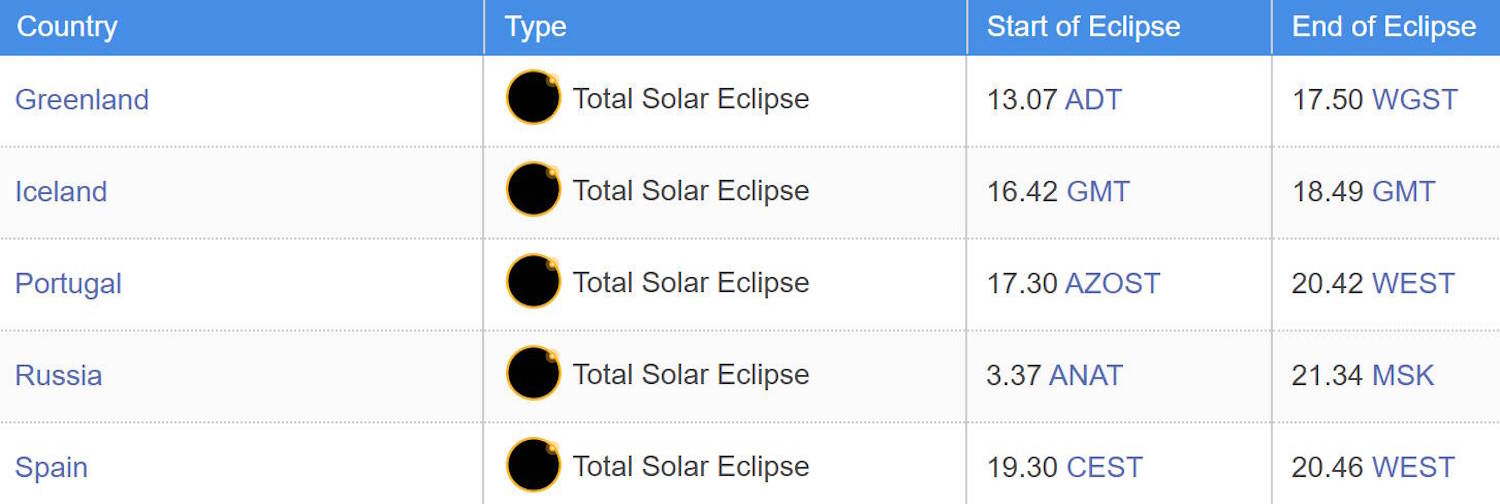
©Timeanddate
The phenomenon will begin when it is around 5.35pm in Italy and will last a total of about 3 hours.
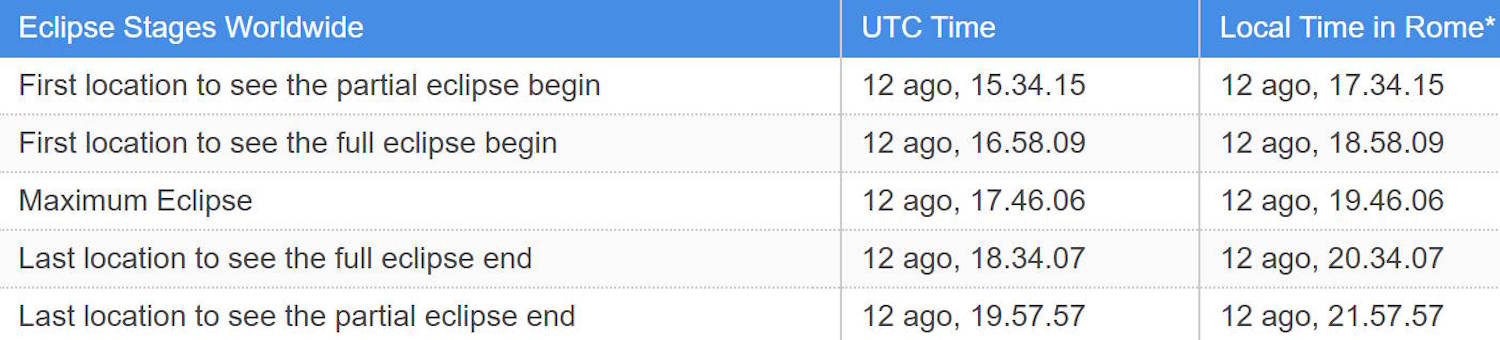
©Timeanddate
In Italy the event will only be partially visiblewith better coverage percentages in the North-West regions and in Sardinia, where coverage will exceed 90%.
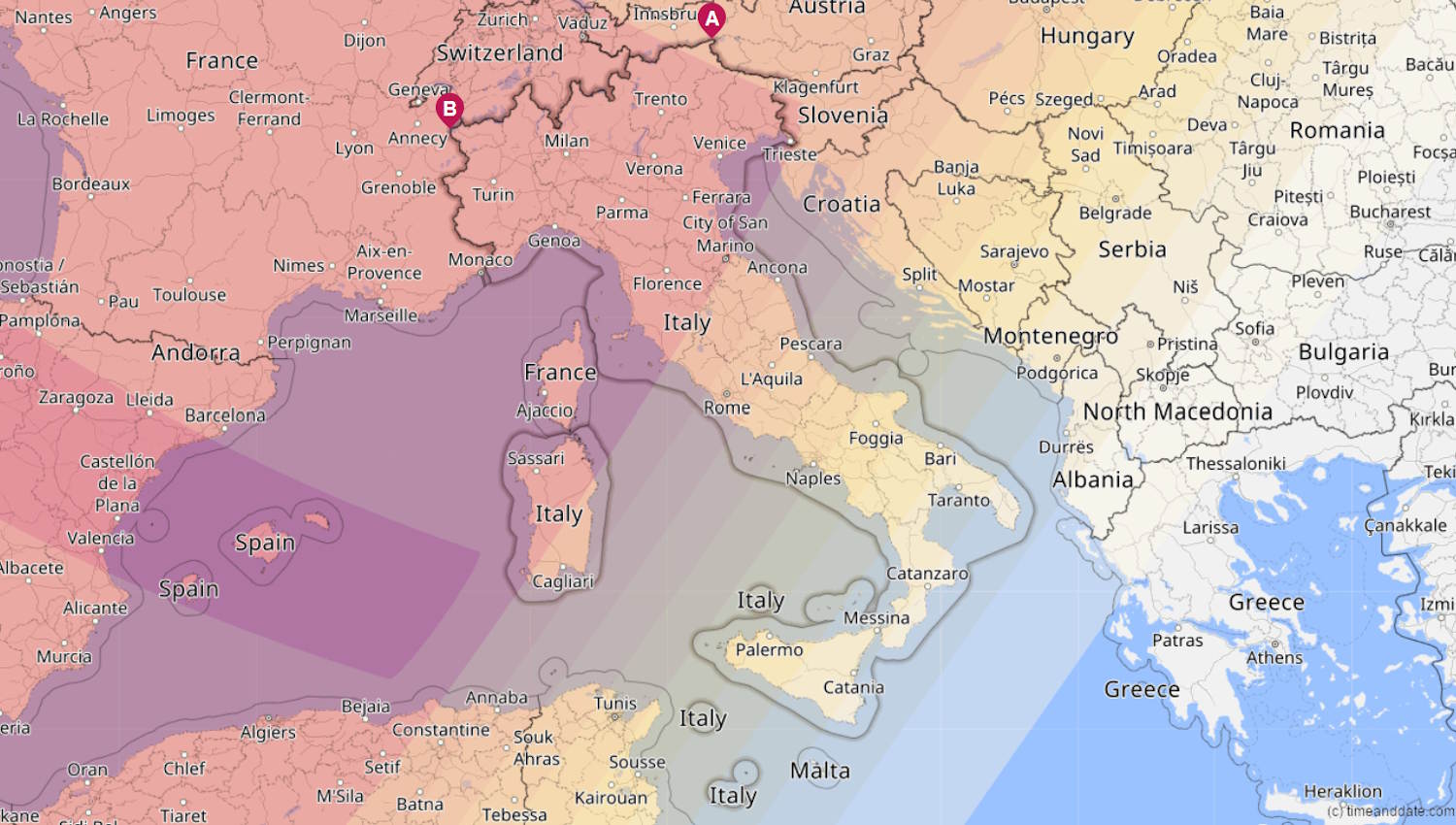
©Timeanddate
As the UAI reports, the event:
The maximum coverage will be in Liguria: in Ventimiglia, in fact, the eclipse begins at 7.30 pm and reaches the maximum % of solar diameter covered by 94.8% at 8.23pm with the Sun 1.6° above the horizon.
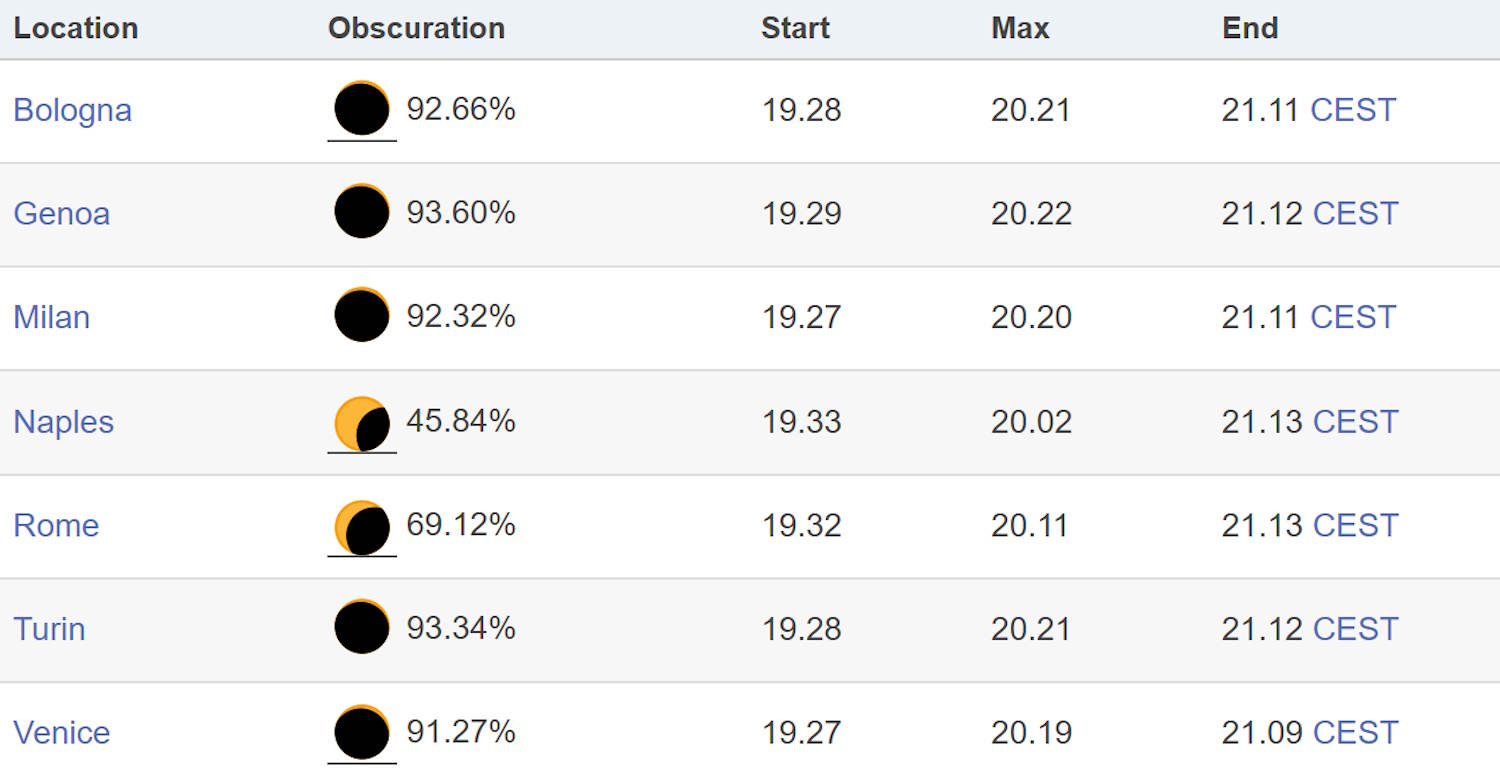
©Timeanddate
However, let’s remember that the solar eclipse (whether partial or total), nor with ordinary sunglasses, and not even those used in 1999 are good. It is essential that the filter is in fact designed for direct observation of the sun.
We are wary of those that do not contain the manufacturer’s name and do not refer to the ISO 12312-2:2015 standardthe international standard for filters intended for direct observation of the Sun without magnification.
The peak of the Perseids (and how to observe them)
But it doesn’t end here, because after the spectacle of the eclipse, the night sky will give us the Perseid peakthe most beautiful shooting stars of the year. For a long time, in fact, the peak of the most beautiful swarm of the year has not been August 10th: this is due to the slow evolution of Earth’s orbits and of precession of the equinoxeswhich moved the maximum two or three days forward in time.
As the UAI explains, the Perseids represent one of the great annual meteor showers together with Quadrantids of January and at Geminids of December. Their period of activity extends from the second half of July until after August 20th, while the maximum is expected in the night between August 12th and 13th, when their frequency will reach approximately 100 meteors per hour under ideal observing conditions.
This year such conditions could really come true: the Moon will in fact be in the New phase on August 12thin the same hours in which the swarm will be close to maximum activity (on the map the sky of August 12, 2026 at approximately 11.00 pm).
Let us therefore turn our gaze towards the North – North-East, in the direction of constellation of Perseus from which the meteors seem to start and from which, for this reason, they take their name. And let’s not forget to prepare one long wish list.
Next August 12th will be a truly unforgettable day, let’s not miss it!
Sources: UAI / Timeanddate/total solar eclipse 12 August 2026 / Timeanddate/partial solar eclipse Italy 12 August 2026
