
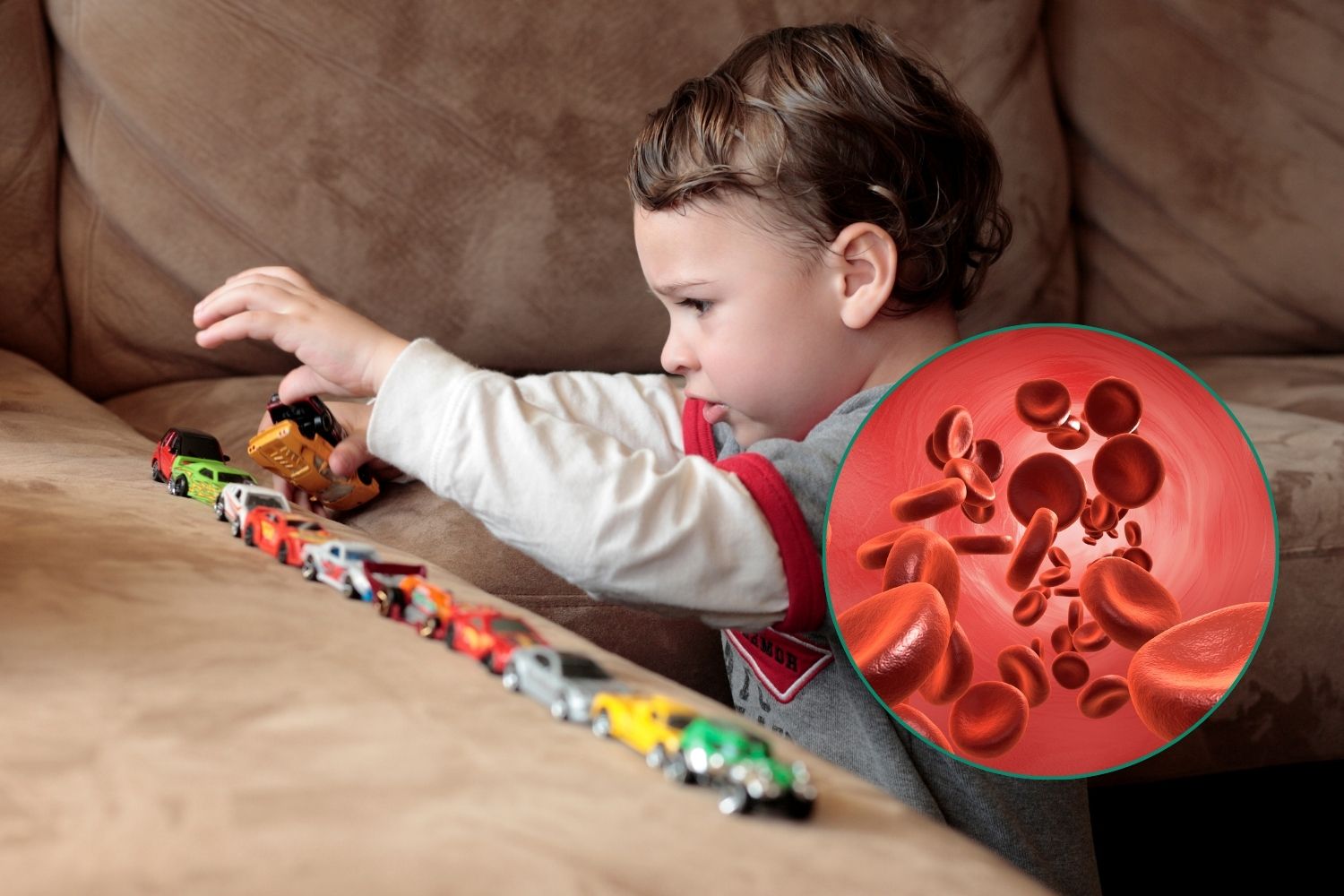
A simple drop of blood could one day help detect the risk of developing an autism spectrum disorder early.
This is the perspective opened up by an Italian study coordinated by the National Research Council (CNR), which has developed an innovative technique capable of recognizing specific biological alterations associated with autism with an accuracy of over 93%.
But be careful: this does not mean that a “test for autism” has been discovered. The research is still in its early stages and further confirmation on much larger samples will be needed before a clinical application can be imagined.
The research
The study, published in the scientific journal Nature Communications Medicinewas conducted by the Institute for organic synthesis and photoreactivity of the CNR of Bologna together with Villa Santa Maria, a center specialized in child neuropsychiatry.
The researchers analyzed blood samples from 58 children, including 27 diagnosed with autism spectrum disorder and 31 neurotypical. The objective was to identify the signs of a biological condition often associated with this condition: oxidative stress, an imbalance between the production of free radicals and the body’s ability to neutralize them and which numerous studies suggest can influence some manifestations and their severity.
The key to the discovery lies in the red blood cells: according to the authors of the study, in fact, the membrane that covers them preserves a sort of “memory” of the organism’s exposure to oxidative stress. By analyzing its molecular structure it is therefore possible to obtain valuable information on the biological state of the individual.
To do this, the team used a technology called Hyperspectral Imaging (HSI), a hyperspectral imaging technique derived from systems used for satellite monitoring and geological research. In practice, this technology allows us to observe fresh blood cells without dyes, fluorescent markers or invasive procedures, recording a sort of “spectral fingerprint” of the cells.
Subsequently, an artificial intelligence system analyzed this information and identified patterns associated with oxidative stress.
In the samples examined, the algorithm managed to distinguish children with autism from neurotypical ones with an accuracy of 93.2%: according to the scholars, this is a very promising result, but one that must be interpreted correctly.
@Nature Communications Medicine
The study Not in fact, it demonstrates that autism can be diagnosed with certainty through a blood test, but rather it shows that there are specific biological signatures associated with oxidative stress which, in this limited group of children, were found to be correlated with the presence of the disorder. The authors themselves underline the need to validate the method on much larger and more diverse populations.
Why this discovery could be important
If confirmed by future studies, the technique could become a useful tool for early identifying children with a greater probability of developing neurodevelopmental alterations. According to Carla Ferreri, CNR researcher and coordinator of the study, in the future we could even imagine integrating this analysis into normal neonatal screening carried out at birth through heel sampling.
The objective would not be to label a newborn as autistic, but to promptly recognize any biological risk signals and encourage personalized monitoring and support paths.
The one developed by Italian researchers is not a diagnosis of autism in a drop of blood, as some headlines might suggest. Rather, it is a promising open window into the biological mechanisms that accompany neurodevelopment and which, one day, could help to identify earlier who needs attention and support.
A step forward in research, in short. Important, but still far from becoming a test available in clinical practice.
