
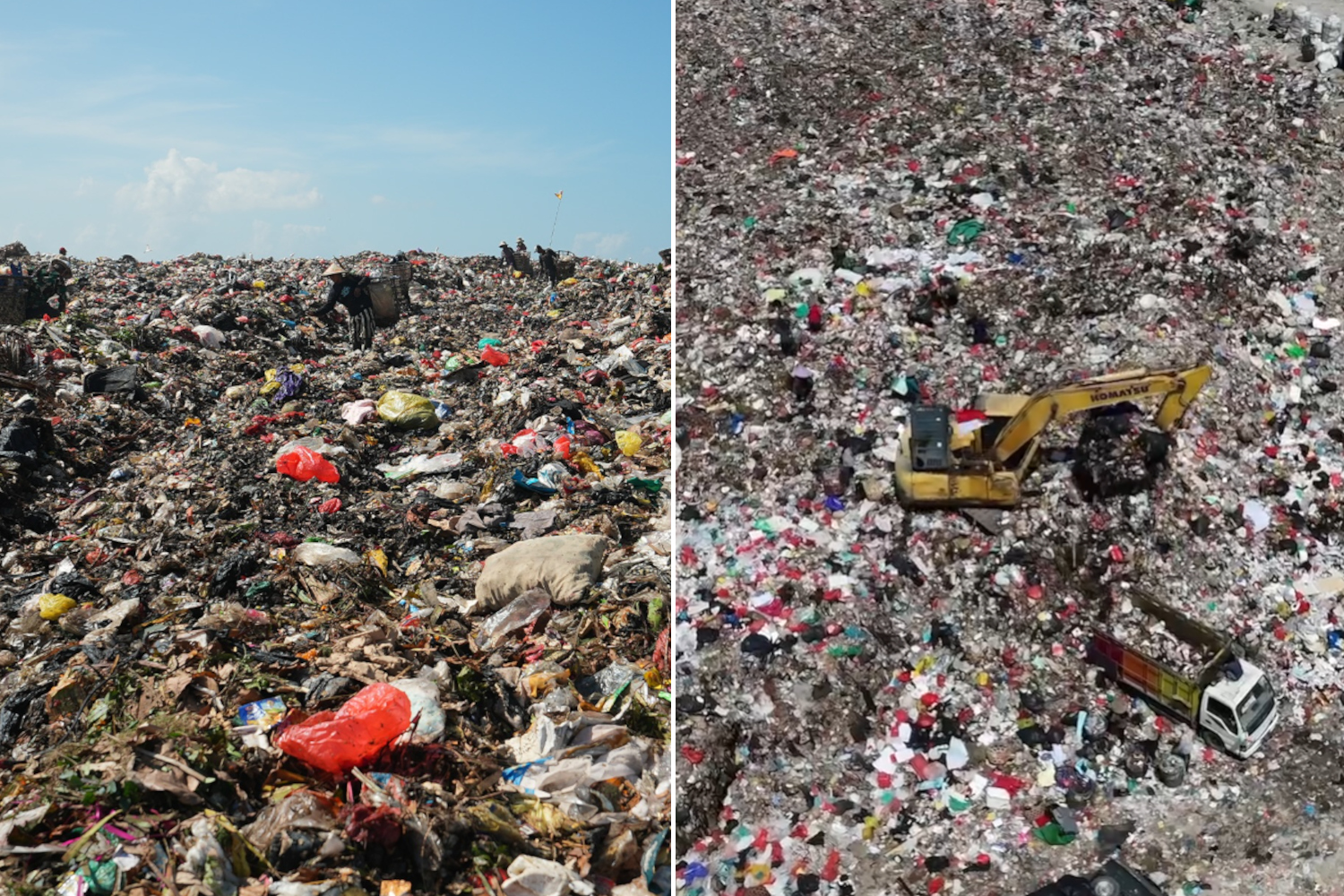
After more than forty years of activity, the Suwung landfill, located in the south of Bali, starts at the definitive closure. From 1 August 2025 it has no more organic waste, but only non -recyclable and residual materials. By December the system will be completely abandoned, ending a long season of waste management based on open dumping, a practice now prohibited throughout Indonesia.
Because the closure cannot be postponed
The decision comes after years of delays and postponements, linked to the enormous weight of the waste produced by the urban and tourist areas of Denpasar, Badung, Gianyar and Tabanan. Suwung’s mountains of waste had reached 35 meters high, causing recurring fires, bad smells and leaks of leachate. The pressure of the Ministry of the Environment made the closure inevitable, aligning Bali to the new national rules that impose the stop on open -air landfills.
The node of organic waste
The real problem now concerns organic waste, which represent a large part of the garbage produced on the island. With Suwung out of the game, citizens, families and tourist facilities must learn to manage waste at the source. Local authorities are promoting domestic composting and distribute dedicated bins for those who adhere to the new collection systems. Community sorting centers (TPS3R) are also growing, flanked by larger treatment plants in urban areas.
Towards a new management model
The government’s strategy focuses on a multi -level approach: small systems for neighborhoods, integrated stations (TPST) for cities and, from 2027, modern thermovalousness capable of transforming residual waste into energy. Already from 2026 it is expected that half of the organic waste of Denpasar and Badung will be treated through advanced composting systems.
What changes for residents and tourists
For the inhabitants of the island, the closure of Suwung marks a radical change: it will be necessary to separate waste, compost and respect more severe rules. The tourism sector, from large hotels to small restaurants, will have to adapt to increasingly stringent environmental standards. Visitors will also notice the differences, with less disposable plastic and more sustainable practices in resorts and clubs. The disposal of Suwung is not only the closure of a landfill: it represents Bali’s challenge to build a more sustainable future, transforming an environmental emergency into an opportunity for change.
View this post on Instagram
Don’t you want to lose our news?
You may also be interested in:
