
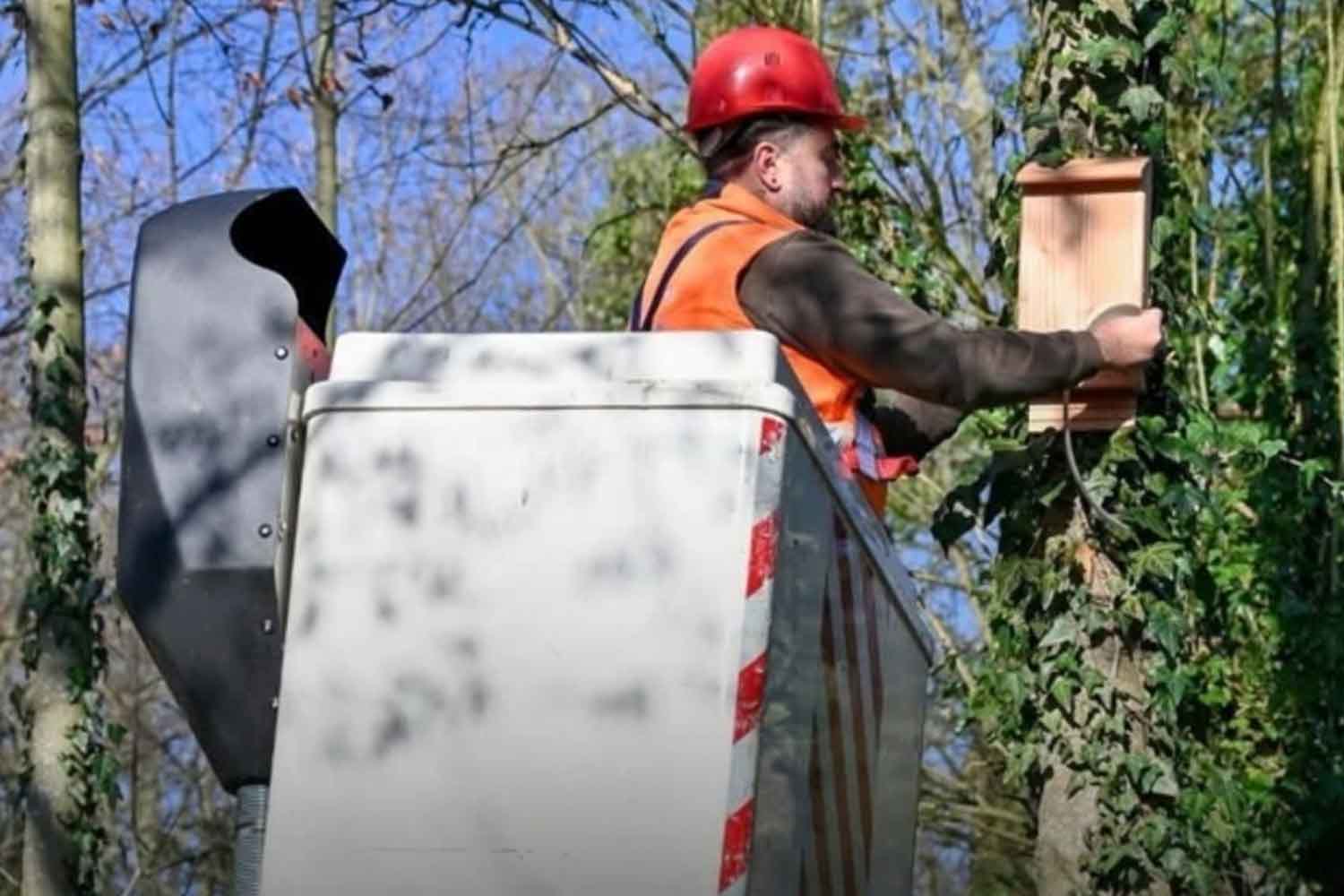
Nine bat boxes set up in parks, a bat census divided into two seasons and a very concrete objective: to understand if these small nocturnal predators can help Suresnes, a municipality on the western outskirts of Paris, keep mosquitoes under control. The project started from a citizen, Charles Seck, was chosen by the inhabitants through the 2025 participatory budget and in February it went from ballots to trees. The city of Suresnes has installed the first five shelters in the Parc du Château, the Square Léon Bourgeois, the Square Ferrié and the Parc des Landes.
By the end of the same month, the number of shelters provided increased to nine. Meanwhile, the Municipality has entrusted bat specialists with an inventory to understand which species really frequent the area, how many specimens there are and which urban spaces can favor their presence. The first phase took place between June and August, during the birth period; the second is expected in autumn, during reproduction. At the end of the year the data should also be used to decide on any new interventions. The program published by the Municipality includes four monitoring areas, from the banks of the Seine to Mont-Valérien.
Bats eat mosquitoes, the difficult thing is knowing how many
The idea has a very simple basis: insectivorous European bats also eat mosquitoes. On the number, however, it is better to lower the volume a little. In the Suresnes communication there appears the rather inviting figure of 600 mosquitoes devoured by a bat in an hour. The scientific literature tells something less tidy.
A study published in PLOS ONEfor example, analyzed the diet of five species of Australian bats through DNA contained in feces. Mosquitoes appeared above all in the feeding of the smaller species. The researchers calculated that these animals would have had to ingest around 600-660 mosquitoes per night to meet their energy needs if their diet had been composed only of mosquitoes. So they weren’t looking at 600 catches every sixty minutes.
However, other works confirm that the predator-prey relationship exists. In 2018, research conducted in Wisconsin found mosquito DNA in 71.9% of small brown bat samples and 33.3% of large brown bat samples. Another study, carried out in an urban river area of Australia and dedicated to bat boxes, instead found mosquitoes in 11% of the fecal samples analyzed. Species change, environments change and the menu also changes a lot. The same authors urge caution when moving from eating mosquitoes to effectively reducing their populations. The study on bat boxes concludes that these roosts are useful for bat conservation and general insect control, while the specific effect on mosquitoes still requires more solid data.
Suresnes, at least, chose to measure it. First the shelters, then the census, then the results. A less spectacular sequence than the famous ten mosquitoes per minute bat, but decidedly more useful.
Why France is looking for new weapons against the tiger mosquito
In the meantime, the problem has grown considerably. According to the French Ministry of Health, as of January 1, 2026, the tiger mosquito, Aedes albopictuswas permanently established in 83 of the 96 departments of metropolitan France. It can transmit dengue, chikungunya and Zika when it comes into contact with circulating viruses. In 2025, France also recorded 81 outbreaks of local transmission of chikungunya and 809 indigenous cases, the highest value since the start of enhanced surveillance.
Bat boxes can therefore become an interesting piece especially in parks, along waterways and in urban green spaces, where they simultaneously help fauna that easily lose natural refuges in the city. However, they will hardly be able to do the dirty work alone.
The tiger mosquito uses tiny amounts of water to reproduce. Saucers, buckets, manhole covers, garden toys and containers left outdoors can become larval breeding grounds. This is why French health authorities continue to put the removal of stagnant water first. The same principle applies in Italy: the Istituto Superiore di Sanità considers Aedes albopictus one of the main invasive species present in the country and recommends intervening especially on small stagnant waters that allow the larvae to develop.
In Suresnes they have added nine small boxes on the trees and are waiting for the data to tell how much they can help. If they work, the bats will have gained a home and the inhabitants will have a few fewer bites. Already a pretty decent contract.
