
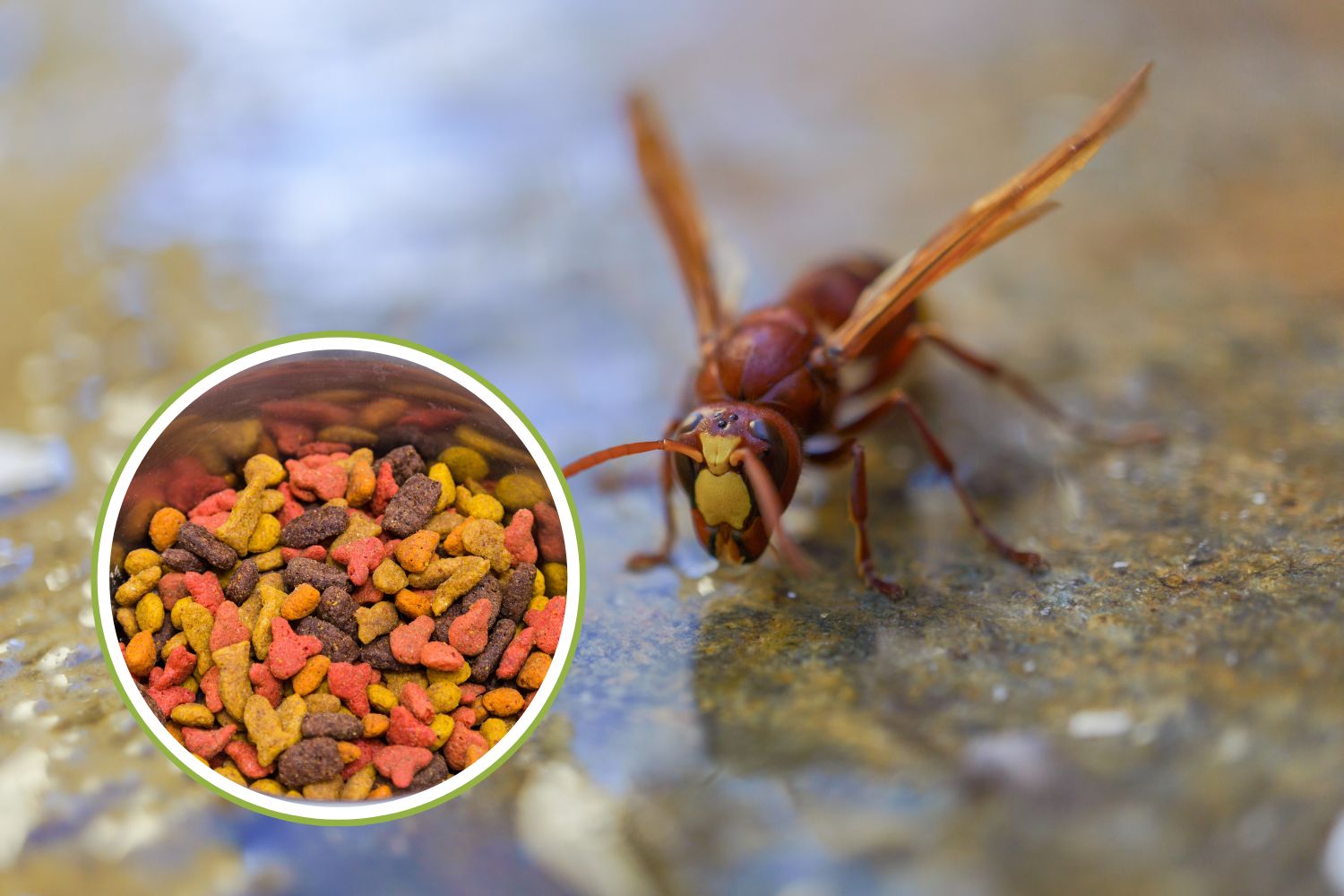
Small pieces of kibble appeared under a nest hidden in the cavity of a building. According to the ethologist Andrea Lunerti, they had been the workers of Vespa orientalis to collect them and transport them to the colony together with the captured insects, and then drop the waste. The same behavior would have been observed on windowsills and around the bowls placed in the street for free cats.
Lunerti, involved in various safety interventions in Rome, therefore invites us not to leave kibble unattended for hours on pavements, walls, courtyards and windows. The advice makes sense. The idea that these foods have become a sort of irresistible passion of oriental wasps, however, requires a few more measures. A kibble can be a handy resource; the available studies do not demonstrate that it alone favors the spread of the species. In the video published by the ethologist, the insects are filmed reaching for food left outdoors.
Kibble works, without necessarily being a favorite food
There Vespa orientalisalso called the eastern hornet, is an opportunistic predator. Adults mainly look for sugary substances, such as nectar, fruit and honeydew; the workers collect insects, meat and other protein sources intended for the larvae. In a city full of organic waste, open containers and animal food, the canteen can remain set for a long time.
In 2025, a group from the universities of Bologna and Malta studied specimens collected in four Maltese locations, distinguishing those observed preying on bees from those feeding on cat food scraps. The research, published on Animal Microbiomeconfirms the dietary flexibility of the species: kibble is among the sources of human origin that these insects are able to exploit in urban environments. The study mainly concerned the intestinal microbiome and the possible carriage of bee pathogens; did not measure the effect of cat food on colony growth.
Even more direct work was published in March 2026 in the journal Insects. Researchers from the Federico II University of Naples and the Campania Region placed traps with beer, peaches in syrup and fish-based wet cat food in 15 apiaries and ten urban areas, between September and October 2025. A total of 419 hornets belonging to the species were captured Vespa orientalis And Vespa crabro.
The European hornet showed a clear preference for beer. For the Vespa orientalisHowever, none of the three baits was statistically preferred, even though the greatest number of catches occurred in protein traps. Oriental specimens were also more frequent in urban sites. The kibble can therefore attract them and offer food material, without automatically turning into their favorite magnet. The research did not evaluate whether the bowls increase the number of nests or expand the species’ range.
A Mediterranean species that has found its place in cities
Define the Vespa orientalis simply “invasive” in Italy can create confusion. The species is native to the south-eastern Mediterranean and also includes Southern Italy in its historical range. In recent years, however, it has expanded its presence northwards, appearing permanently in new cities and exploiting cracks in walls, roofs, shutter boxes, underground cavities and other man-made shelters.
A review published on Frontiers in Insect Science describes an omnivorous insect, capable of feeding on fruit, sap, invertebrates and carcasses, and nesting both in the ground and in artificial structures. Climate models indicate large areas potentially suitable for its expansion. Heat, availability of shelter and abundance of concentrated food make the urban environment particularly hospitable. The cities, from this point of view, have prepared a buffet with several covers.
The problem also affects bees. The workers of Vespa orientalis they can guard hive entrances, capture foragers and subject colonies to significant pressure. Urban expansion also increases the opportunities for contact with people, especially when the nest is located in a shutter, in a cavity or near a busy passage.
What to do with bowls, shutters and nests
Those who leave food for free cats can continue to do so without turning the bowl into a permanent reserve. It is best to offer quantities that can be consumed quickly, collect leftovers, wash the container and store the packages in closed containers. The same attention applies to waste bins, meat, fish, very ripe fruit and sugary residues.
Upon returning from holidays, Lunerti recommends raising the shutters, initially keeping the window closed and observing any movements of insects around the bin. If wasps or hornets regularly enter and exit a cavity, plugging the hole may prompt them to seek an alternative route into the home.
When faced with a nursery, do-it-yourself remains the worst choice. The Fire Brigade specifies that removal is part of public assistance only in the presence of a concrete risk, for example when the premises cannot be isolated, vulnerable people are involved or the nursery is located in a difficult to access position. In other cases, especially in private properties and condominiums, a specialized company is needed. For public areas you must follow the instructions of your municipality.
The croquette alone does not explain the expansion of the Vespa orientalis. Left for hours on the windowsill or next to a dumpster, however, it looks a lot like a 24-hour supply.
