

In the heat the body does a very concrete thing: it sweats. It seems trivial, until that continuous loss of fluids and mineral salts begins to be felt in the legs, in the head, in the muscles, even in the mood. You wake up already tired, you arrive halfway through the day with the sensation of having a battery level of 12%, you sleep worse, you drink perhaps even more, but your body continues to ask for something resembling a minimum of internal order. In this context, taking a magnesium supplement during the hottest periods can be a good idea, especially when sweating, physical activity and a slightly unbalanced diet start to take their toll.
Magnesium participates in hundreds of reactions in the body and contributes to the normal functioning of muscles and nervous system, energy metabolism and electrolyte balance. It is precisely these functions that make it interesting in summer, when the heat forces the body to work harder to maintain a stable internal temperature. Sweating helps to disperse heat, but it also takes away liquids and salts. When the loss becomes abundant, the result can be that soft and annoying tiredness that we know all too well: heavy body, ballerina concentration, more tired muscles, slower recovery after a day spent in the heat, public transport, the office, training or errands under the sun.
Because the heat changes everything
Intense heat puts pressure on the thermoregulation system. The body sweats more to cool down and, if the exposure lasts a long time or the physical effort is significant, the loss of salts can become more pronounced. Heat cramps, for example, are linked to the loss of water and salts through sweat, especially during physical activities or work carried out in hot environments. For this reason, on the hardest days, drinking water remains essential and it can also be useful to think about electrolytes, i.e. those minerals that help muscles, nerves and cells to function in an orderly manner.
Magnesium falls into this balance. It works together with sodium, potassium, calcium and correct hydration, supporting some functions that become more delicate in summer. In the European Register of Nutritional and Health Claims, magnesium is associated with normal energy metabolism; other authorized indications concern normal muscle function, reduction of tiredness and fatigue and electrolyte balance. Simply put: When the heat is drying, magnesium can help the body handle the load better.
Tiredness, muscles and sweat
The first reason many people think about magnesium in the summer is tiredness. That constant feeling of sluggishness that in July and August seems to live inside your bones. The heat can worsen the quality of sleep, reduce appetite, make meals less regular and increase the consumption of cold drinks, coffee, quick snacks and fruit on the go. All understandable things. Except that the body, while we improvise survival lunches in front of the open refrigerator, continues to need real nutrients.
Food sources of magnesium exist and should always be put first: dried fruit, seeds, legumes, whole grains, green leafy vegetables, bitter cocoa and some mineral waters can contribute to the daily intake. The supplement becomes useful when the diet alone struggles to cover the needs, or when sweating and physical activity increase the demand perceived by the body. A sachet or tablet, in these cases, can be a practical solution. It remains a support, to be used wisely.
Which magnesium to choose
On the shelves you can find everything: magnesium citrate, carbonate, oxide, bisglycinate, chloride, lactate. The differences matter, especially for tolerability and absorption. Magnesium citrate, very common in soluble powders, is a form that is generally well absorbed, however it can cause intestinal discomfort in some people. Magnesium oxide contains a lot of elemental magnesium, but tends to have lower bioavailability. Bisglycinate is often chosen by those looking for a more delicate formulation on the gastrointestinal level. The best choice depends on how your body reacts, the dose, and why you take it.
Offer
Natural Point Magnesium Supremo 300 – Soluble Magnesium Supplement in Powder – Against Tiredness and Fatigue – Vegan, Gluten Free – for athletes
In the case of soluble powders, it is best to look at the label with a minimum of attention. The really important quantity is elemental magnesium, i.e. the magnesium actually available in the product, in addition to the total weight of the compound. Two supplements may look similar in the package and behave differently when dissolved in water. Even taste matters less than it seems: citrus fruits, lemon, orange, nice sachet, reassuring jar. Then the intestine votes, and often votes without great diplomacy.
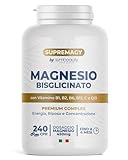
SUPREMAGY MAGNESIUM BISGLYCINATE 450mg (4 Month Supply) 240 CPR – Complete Magnesium | Vitamin B12, B1, B2, B6, C and Coenzyme Q10 | Physical and Mental Tiredness Supplement – Vegan and Made in Italy
Watch out for the doses
Magnesium taken from food is better managed by the body in healthy people. The situation changes with supplements, especially if several products are added in the same period. The National Institutes of Health lists a tolerable upper limit of 350 mg per day for magnesium from supplements or medications for adults, unless otherwise medically indicated. The UK NHS reports that 400mg or less per day from supplements is unlikely to cause problems in most people. The most prudent choice remains to stick to the dose recommended on the label and ask for advice from the pharmacy or your doctor when there are doubts.
The most common sign of an overdose is the bowels speeding up. Diarrhoea, nausea, abdominal cramps and stomach discomfort are possible effects, especially with some forms and with higher dosages. In case of kidney problems, particular caution is needed, because the kidneys have a fundamental role in eliminating excess magnesium. Here do-it-yourself becomes an unwise choice disguised as well-being.
When you need to ask for advice
Those taking medications should check before adding magnesium to their summer routine. Magnesium can interfere with the absorption of some antibiotics, such as tetracyclines and quinolones, and with drugs used for osteoporosis, such as bisphosphonates. Prolonged use of reflux drugs belonging to the proton pump inhibitor class is also associated, in some cases, with low magnesium levels. Some diuretics can affect the balance in the body. These are inconspicuous details, but they make the difference between a sensible integration and a choice made on the fly in front of the online shopping cart.
Magnesium can also be useful for those who play sports in the heat, for those who walk a lot, for those who work in hot environments, for those who sweat a lot or feel their muscles more tired than usual. It must be included in a reasonable routine: water, complete meals, fruit and vegetables, breaks in the shade, physical activity during the cooler hours, light clothing, attention to the body’s signals. The strong heat can be faced with a small daily strategy, even a very simple one, as long as it is real.
How to take it in summer
For beginners, it may make sense to start from a lower dose than the maximum indicated, especially with soluble powders, and evaluate tolerance in the first few days. Better to take it during or after a meal if it tends to upset the stomach. In case of diarrhea or abdominal cramps, the dose should be reduced or suspended, seeking advice from a professional if the disorder continues. The rule of thumb is simple: the supplement must help, avoiding turning the day into a negotiation with the bathroom.
In the heat, magnesium can therefore be a concrete ally to support energy, muscles and the balance of mineral salts, especially when sweat and stuffiness become a permanent presence. It works better if it stays in place: within a routine of water, decent nutrition and a minimum of prudence. The rest is done by the body, which already has enough work to do in the summer.
You might also be interested in:
