
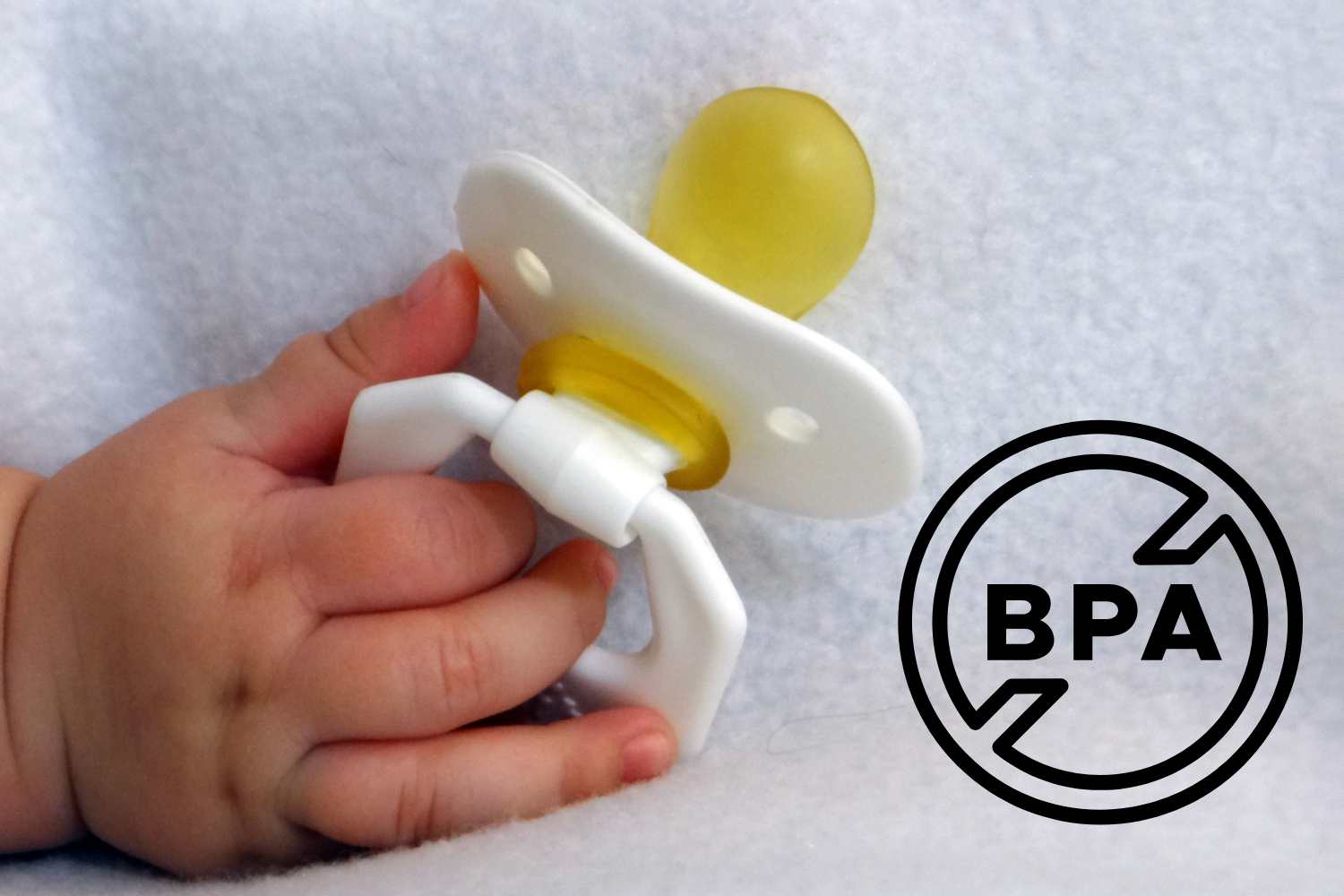
A new study casts a disturbing shadow on an object that accompanies the daily life of millions of children around the world: the pacifier. The research, published in the journal Environmental Science and Pollution Research, detected the presence of bisphenol A in all the pacifiers analyzed, including those that proudly declare on the label that they are free of it. The most worrying fact? The sample with the highest release of this chemical substance was one of those sold as “BPA free”.
The deception of the “BPA-free” label
The researchers examined 7 pacifiers from different origins – Germany, China and India – using a sophisticated analysis technique called HPLC-FLD. Each product has been disassembled and tested component by component. The results showed bisphenol A levels ranging from 33 to 26,536 nanograms per pacifier. Most of the models were below 1,000 nanograms, but one recorded significantly off-scale values.
The bitterest surprise concerns the reliability of the labels. The product with the highest BPA migration carried the wording “BPA free”, demonstrating how these voluntary indications offer no real guarantee for consumers. This is a serious problem, considering that many parents specifically choose these products believing they are protecting their children.
However, it should be noted that the study did not analyze pacifiers on sale in Italy, so it is not possible to know whether the situation is also comparable to the products on our market.
Where does the contamination come from?
Contrary to what you might think, the silicone or latex teat is not the main source of contamination. The culprit is the rigid plastic shield, that colored part that remains in contact with the child’s face for hours every day. It is precisely this component, often made of polycarbonate or other rigid plastics, that releases the most significant quantities of bisphenol A.
The mechanism is simple: prolonged contact with saliva favors the migration of the chemical substance from the plastic material. And considering that children can keep a pacifier in their mouth for several hours throughout the day, for months or even years, the cumulative exposure becomes anything but negligible.
Exceeded the new European limits up to 1,900 times
To understand the extent of the problem we need to look at the numbers established by the European Food Safety Authority. In 2023, EFSA dramatically reduced the tolerable daily intake of BPA from 4 micrograms to 0.2 nanograms per kilogram of body weight per day. A reduction of 20,000 times, motivated by new scientific evidence on the immunotoxic effects of the substance. However, these are scientific reference values, not yet translated into legally binding limits, but used to evaluate the safety of exposure.
With these new parameters, even the pacifier with the lowest migration exceeds the safety threshold by approximately 50 times for newborns and 25 times for older children. In the worst case, we are talking about exceedances of 1,900 times for newborns and 900 times for young children. Numbers that make us reflect on the urgency of more incisive regulatory interventions.
Why Bisphenol A is dangerous
Bisphenol A belongs to the category of endocrine disruptors, substances capable of altering the delicate hormonal balance of the body even at minimal doses. In the first months and years of life, this vulnerability amplifies for several reasons.
Newborns’ livers and kidneys have not yet fully developed the ability to metabolize and eliminate chemicals. Glucuronidation, the main detoxification mechanism of BPA, is particularly inefficient in early childhood. This means that young children maintain higher concentrations of bioactive BPA in their bodies than adults exposed to the same amount.
Scientific research has linked early exposure to bisphenol A to a variety of health effects: memory and learning problems, increased risk of obesity and type 2 diabetes, cardiovascular disorders and interference with reproductive development.
The legislation
The current regulatory situation presents evident contradictions. BPA is already banned in baby bottles and drink containers intended for children under three years of age, both in the European Union and the United States. The ban starts from the recognition that the substance can migrate into food and pose a health risk.
Yet pacifiers, which remain in babies’ mouths for hours every day and are often used from birth, remain in a gray area of regulation. Only Austria introduced a specific national ban in 2011. In other European countries, the “BPA free” label remains voluntary and without independent verification.
The authors of the research call for the introduction of harmonized standards at European level and mandatory independent verification of “BPA-free” claims. With safety thresholds constantly lowering and background exposure already considered problematic by EFSA, even small additional sources of contamination can make a difference.
The precautionary principle, in these cases, should not be an option but the rule. Especially when we talk about the health of younger children, in the most delicate moments of their development.
The problem of BPA substitutes
But even eliminating bisphenol A from products doesn’t automatically solve the problem. Many manufacturers have replaced BPA with other substances from the same chemical family, such as bisphenol S (BPS) or bisphenol F (BPF). Unfortunately, recent studies show that these compounds can have similar biological effects to BPA, defeating the purpose of the substitution.
There is also the problem of inadvertent contamination during the production process. Even when BPA is not intentionally added to the final product, traces of the substance can arise from machinery, molds or other materials used in the production chain.
What parents can do
While waiting for the legislation to adapt to new scientific knowledge, some precautions can help reduce children’s exposure to bisphenol A.
Avoid heating pacifiers and bottles in the microwave is an important first rule. In fact, heat favors the migration of chemical substances from plastic materials. Dishwashers on high-temperature cycles can also increase the release of BPA.
It is worth checking the condition of pacifiers regularly and replacing them when they show signs of wear, scratches or discolouration. Damaged plastics tend to release more chemicals. Preferring alternative materials such as high-quality medical silicone may be a safer choice.
More generally, limiting the use of plastic containers for food and drinks when possible, favoring glass and stainless steel, helps to reduce overall exposure to BPA which also comes from other sources: food packaging, internal linings of cans, household dust.
