
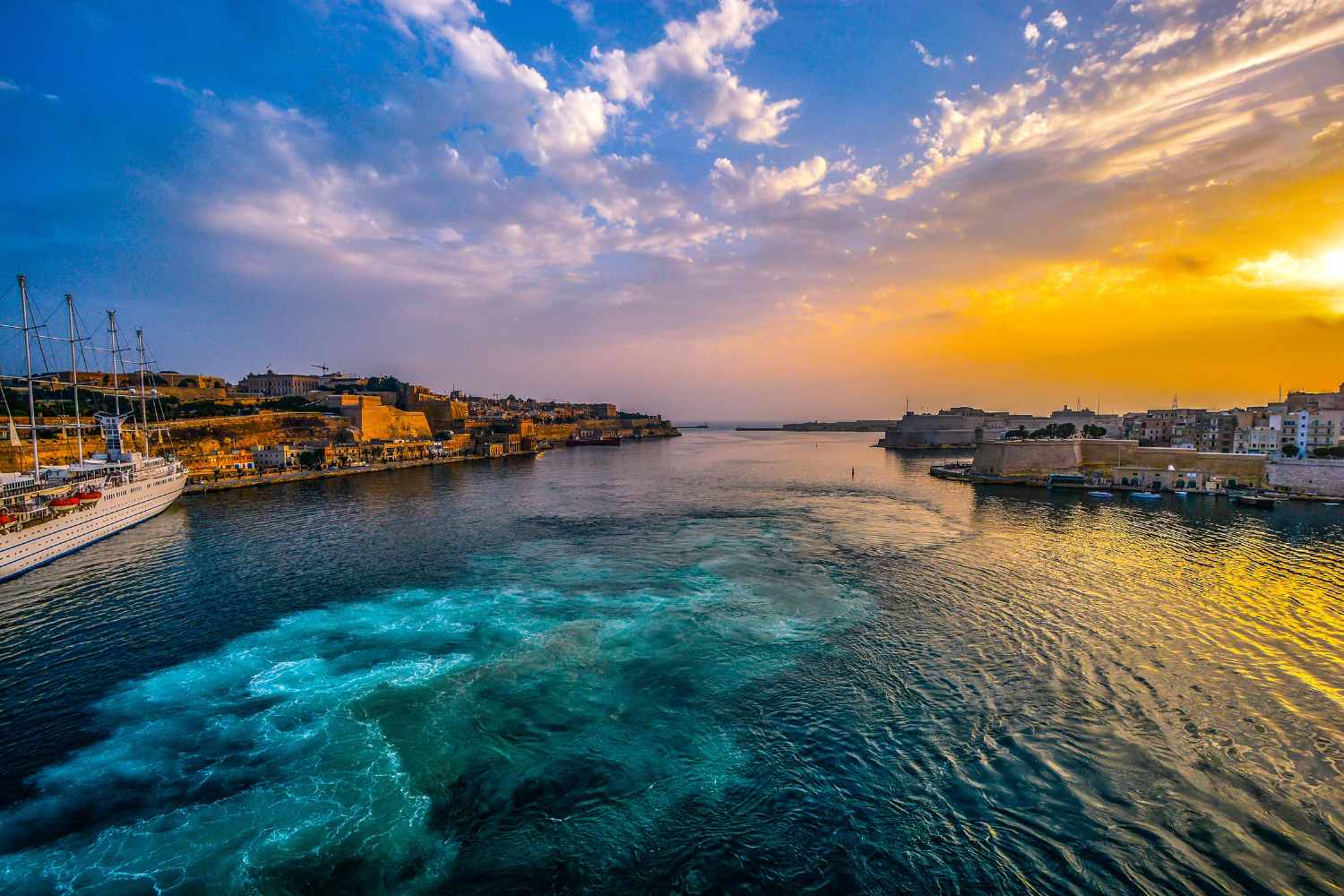
It is not only the heat that suffocates us in the city: even the Mediterranean, now, ribolle. The waves of sea heat, anomalous peaks of the surface temperature of the sea, have become more frequent and intense in recent decades. A new study published in Nature Geoscience and conducted by the Euro-Mediterranean Center on climate change (CMCC) has finally clarified which mechanism triggers them and, above all, has opened the way for more accurate forecasts.
The clue that came from the sky
The research, coordinated by Giulia Bonino together with an international team of oceanographers and meteorologists, analyzed 40 years of satellite data and atmospheric analysis, examining 123 major events recorded between 1982 and 2022. It emerged that the Mediterranean becomes four times more vulnerable to a heat wave when they coincide two conditions: the presence of persistent subtropical dorsals ( African anticyclones that we know well on the summer weather forecast) and weak winds.
“Our study identifies the favorable conditions that lead to marine heat waves and reveals that they are triggered by persistent subtropical backs that weaken the strong winds in the area”, explains Ronan McAdam, co -author of the research and researcher of the CMCC.
The role of the wind that is missing
It is not only the anticyclone that makes the sea a broth. When the African high pressure is placed on the Mediterranean for at least five consecutive days, the winds such as the Mistral or the etesio weaken or “turn off” completely. Without wind, the ocean loses less heat by evaporation: the sea stops “breathing” and the heat remains trapped on the surface. The study shows that over 70% of the increase in marine temperature during these waves is explained precisely by the reduction in latent heat dispersion.
The result is that surface waters can warm up to 3 ° C in a few days, with cascade effects on marine ecosystems: mass mortality of bentonic organisms, forced movements of species to fresher areas, damage to fishing and aquaculture. It is no coincidence that extreme events such as those of 2003, 2020 and 2022 have left ecological and economic scars that lasts years.
Because it concerns us up close
The Mediterranean is a “climatic hotspot”, that is, one of the areas of the world that heats up faster than the global average. This makes the pelvis even more exposed to extreme events. Knowing what triggers them means being able to predict more precision when and where they will hit, even if the time window remains short: less than ten days.
The authors point out that the new model does not solve the root problem, but allows you to improve early alert systems. Today the seasonal forecasts for marine heat waves in the Mediterranean are often unreliable because the models are unable to correctly represent the persistence of the subtropical dorsals.
The research indicates that combining the persistence index of the dorsal with that of the superficial winds can become an effective alarm indicator. A useful knowledge not only for scientists, but also for those who live and work on the sea: fishermen, tourism operators, managers of protected areas.
The effects of a sea too hot are not under water. In fact, the hot surface waters also feed atmospheric heat waves, those that invest our cities. It is a vicious circle: the more the sea warms the sea, the more the air becomes torrid.
Don’t you want to lose our news?
