
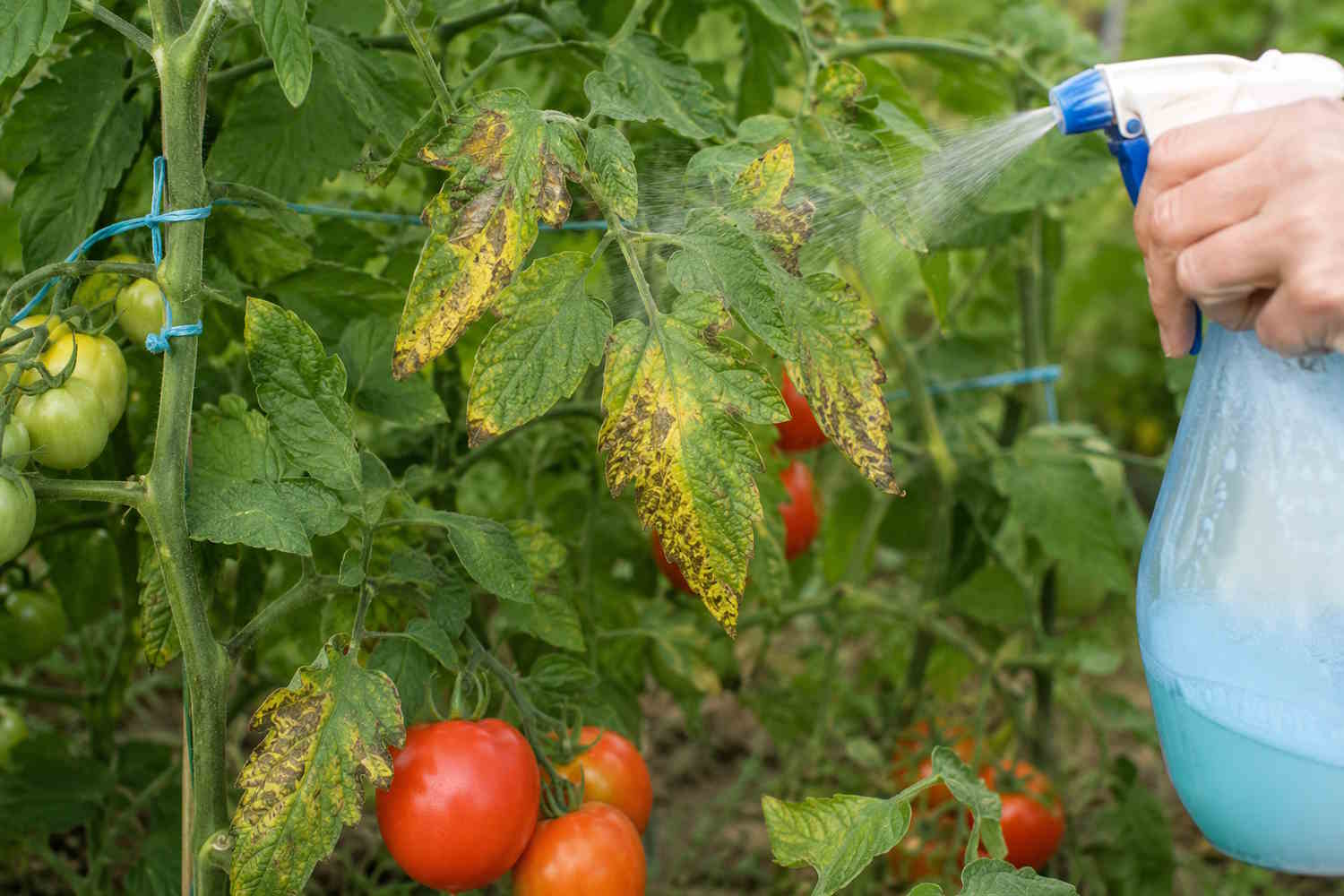
For those who grow tomatoes, downy mildew represents one of the most recurring nightmares. A sequence of hot days followed by rain or high humidity is enough to see the first signs appear: yellowing leaves, dark spots, compromised stems and fruit that rots quickly. In just a few days, weeks of work can be lost. Yet there is a remedy that crosses generations and which, over 150 years after its introduction, continues to be considered one of the most effective tools for preventing this disease: Bordeaux mixture.
Downy mildew, an ever-present threat
Tomato downy mildew develops in the conditions that our climate can generously offer: high humidity, poor ventilation, leaves that remain wet for hours. The pathogen’s spores spread through water with disarming ease, and the progression of the infection can be rapid enough to surprise even the most experienced growers. For this reason, agronomists agree on a point that is worth repeating: intervening when the disease is already underway is of little use. Prevention is everything.
Maintaining a good distance between plants, watering without wetting the vegetation, promoting air circulation and regularly checking the condition of the leaves are fundamental practices. But in the most at-risk periods, especially in late spring and summer when climatic conditions become more unstable, something more is needed. And this is where the old blue blend comes in.
The return of the “blue mixture”
Bordeaux mixture was born in France at the end of the 19th century and owes its name to the Bordeaux region, where it was initially used to protect vineyards. Its composition is simple: copper sulfate and lime, mixed in water. The mechanism by which it works is equally direct: it creates a protective barrier on the surface of the plants which prevents fungal spores from settling and developing, without penetrating the plant tissues.
For decades it has been a constant presence in family gardens and farms across Europe. Then it was progressively joined by more modern products and for a certain period it seemed destined to become just a memory. In recent years, however, it has experienced a new season of popularity, driven by the growing attention towards more sustainable agricultural practices and by the fact that it is authorized in organic farming within the limits established by law. A revaluation that does not surprise those who know its effectiveness.
How and when to use it
The first principle to keep in mind is that Bordeaux mixture only works if used preventatively. Once the disease has developed significantly, its ability to intervene is very limited. This means that the right time to treat plants is before symptoms appear, not after.
Generally it is diluted in water following the manufacturer’s instructions and applied by spraying on the aerial parts of the plants. The treatment must be repeated after heavy rainfall or at regular intervals during the periods most favorable to the development of downy mildew. It is important to intervene in the coolest hours of the day, avoid windy days and scrupulously respect the doses indicated on the label. Using more doesn’t mean you protect yourself better — on the contrary, it means exposing your land to unnecessary risks.
The copper knot in the ground
Despite being allowed in organic farming, Bordeaux mixture is not without environmental impacts and it would be incorrect to present it as such. Copper tends to accumulate in the soil over the years and, if used in excessive quantities, can negatively affect beneficial organisms present in the soil, including the invisible but essential microfauna that contribute to soil fertility. For this reason, moderate and targeted use is not just a recommendation from agronomists, but a concrete necessity for those who want to take care of their vegetable garden over time, not just in the current season.
A more resilient garden is built with more tools
The defense of tomatoes from downy mildew cannot be based on a single intervention, no matter how effective. The best results always come from a combination of agronomic techniques that support each other. Mulching reduces splashes of water from the soil to the leaves, nettle macerate supports the vitality of the plants, intercropping with aromatic species and useful flowers creates a more balanced ecosystem, and the choice of more disease-resistant varieties takes pressure off the entire system. In this context, Bordeaux mixture finds its natural place: not as a unique solution, but as a valuable tool within a broader strategy.
The success it continues to have more than 150 years after its introduction says something important. In an era in which climate change makes conditions favorable to fungal diseases increasingly frequent, recovering proven techniques is not nostalgia, it is common sense. The old blue mixture, after all this time, still has a lot to teach.
