
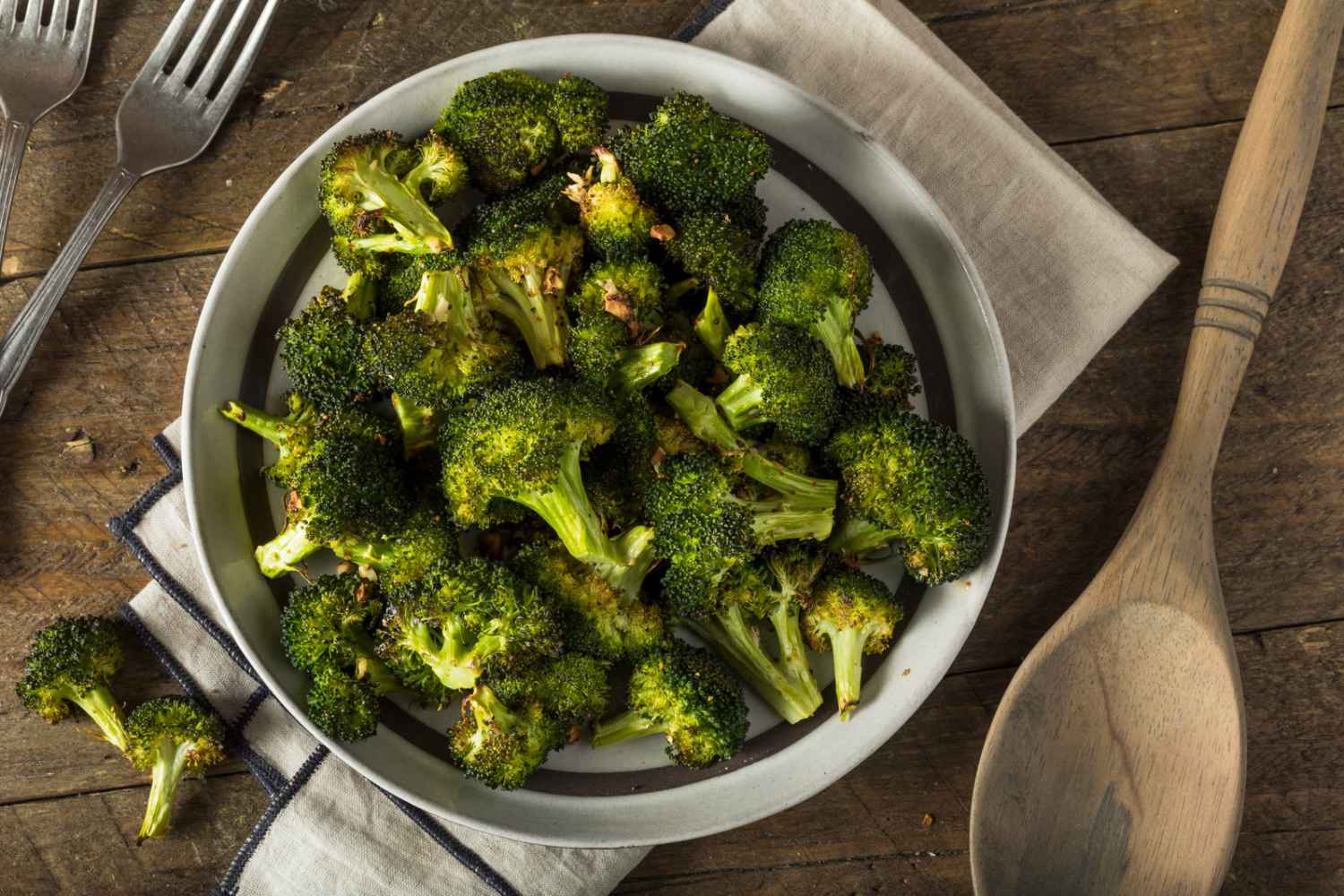
Boiled broccoli and cauliflower are not always the best in taste. They often become mushy, lose some of their flavor and end up being little appreciated, especially by children. Yet all it takes is a change of cooking method to transform these vegetables into a tasty, golden and irresistible side dish. The secret? Use the pan or the oven, taking advantage of a simple chemical process that completely changes the flavor of food.
Broccoli and cauliflower are among the protagonist vegetables of the autumn and winter seasons. They belong to the Brassicaceae family, are rich in fibre, vitamins and antioxidants and can be used to prepare many recipes.
The problem is often not the vegetables themselves, but the way they are cooked. Traditional boiling, in fact, tends to soften the florets a lot and can disperse part of the compounds responsible for their flavor in the water.
However, there is a very simple alternative, which does not require special ingredients and allows you to obtain a completely different result: cook the broccoli in a pan and the cauliflower in the oven, until you obtain a slightly golden surface.
How to cook broccoli in a pan to make it tastier
To prepare tasty and slightly crunchy broccoli you don’t necessarily need to boil it first. They can be cooked directly in a pan, using a little extra virgin olive oil.
The first step consists in dividing the broccoli into florets, trying to obtain pieces of similar size. Larger ones can be cut in half, to create a flat surface that will come into direct contact with the pan.
At this point, just heat a drizzle of extra virgin olive oil in a large pan and arrange the florets with the cut side facing downwards.
Cooking must take place over medium heat, allowing the surface time to brown without burning. When the underside has taken on a more intense colour, you can turn the florets and continue cooking.
If necessary, you can add very little water and cover with a lid for a few minutes, so as to also soften the internal part without losing the browning obtained.
The result will be a tastier broccoli, with a pleasant texture and a slightly toasted taste. To complete the dish you can add garlic, chilli pepper, lemon zest or a handful of chopped dried fruit.
Baked cauliflower: the trick to obtaining a golden crust
Cauliflower lends itself particularly well to cooking in the oven, because it develops a more intense flavor and a different consistency than the boiled version.
Even in this case the procedure is very simple. After having washed and dried the cauliflower, you need to divide it into florets and cut the larger ones into two or four parts. The important thing is not to leave excessively bulky pieces, because a larger surface favors browning.
The florets are then seasoned with extra virgin olive oil, salt and your favorite spices. Smoked paprika, turmeric, black pepper, rosemary and garlic powder are some of the possible combinations.
Place everything on a baking tray lined with baking paper, being careful not to overlap the pieces. This detail is fundamental: if the florets are too close together, the humidity produced during cooking risks causing them to steam instead of roast.
The cauliflower can then be cooked in a preheated oven at around 200°C for 25-30 minutes, turning it halfway through cooking. Times may vary depending on the size of the florets and the oven used.
Once ready, it will have a golden surface, slightly crunchy edges and a richer flavour, with notes reminiscent of toasted dried fruit.
Why do broccoli and cauliflower taste better with dry heat?
Behind this transformation there is not only a question of personal taste, but also a scientific explanation.
When we immerse broccoli and cauliflower in boiling water, the cooking temperature remains around 100°C. This allows you to soften the vegetables, but does not favor the formation of the typical golden crust that characterizes roasted foods.
In the pan and in the oven, however, when the surface moisture evaporates, some areas of the vegetables can reach higher temperatures.
It is precisely in these conditions that the Maillard reaction comes into play, a set of chemical transformations that involve reducing sugars and amino acids and contribute to creating new aromas and the characteristic golden color.
It is the same phenomenon that makes the crust of freshly baked bread or the surface of roasted potatoes appetising. At sufficiently high temperatures, caramelisation of the sugars can also occur, which contributes to the development of sweeter and toasted notes.
Furthermore, the loss of some of the water naturally contained in vegetables tends to concentrate the flavors. This is why roasted cauliflower can taste very different from boiled cauliflower, despite starting from exactly the same ingredient.
Is boiling vegetables really wrong?
Of course not. Boiling is not a cooking method to be demonized and can be useful for numerous preparations, from cream soups to vegetable purées.
However, it must be considered that some water-soluble vitamins, such as vitamin C, can degrade with heat or disperse in the cooking water. For this reason, when you decide to boil broccoli and cauliflower, it is preferable to avoid excessively long times and use little water.
Steaming is also a valid alternative, especially when you want to maintain a firmer consistency without adding fat. Cooking in the oven or in a pan, on the other hand, does not automatically guarantee better preservation of all the nutrients: a lot depends on the temperatures and times used.
The main difference therefore concerns taste and consistency, not absolute nutritional superiority.
A simple way to rediscover two often underestimated vegetables
Changing the cooking method can really make a difference, especially for those who consider broccoli and cauliflower unappealing vegetables.
All you need are a few ingredients, a pan or a baking tray and a few tricks to enhance its natural flavour, without resorting to elaborate sauces or excessive seasonings.
And there is also another advantage: making better use of the vegetables we have already purchased can help us reduce food waste. Even broccoli stems, once the more fibrous external part has been removed, can be cut into slices and cooked together with the florets.
So the next time you prepare broccoli or cauliflower, try not to put them directly into boiling water. A simple gilding could be enough to make you appreciate them much more.
