
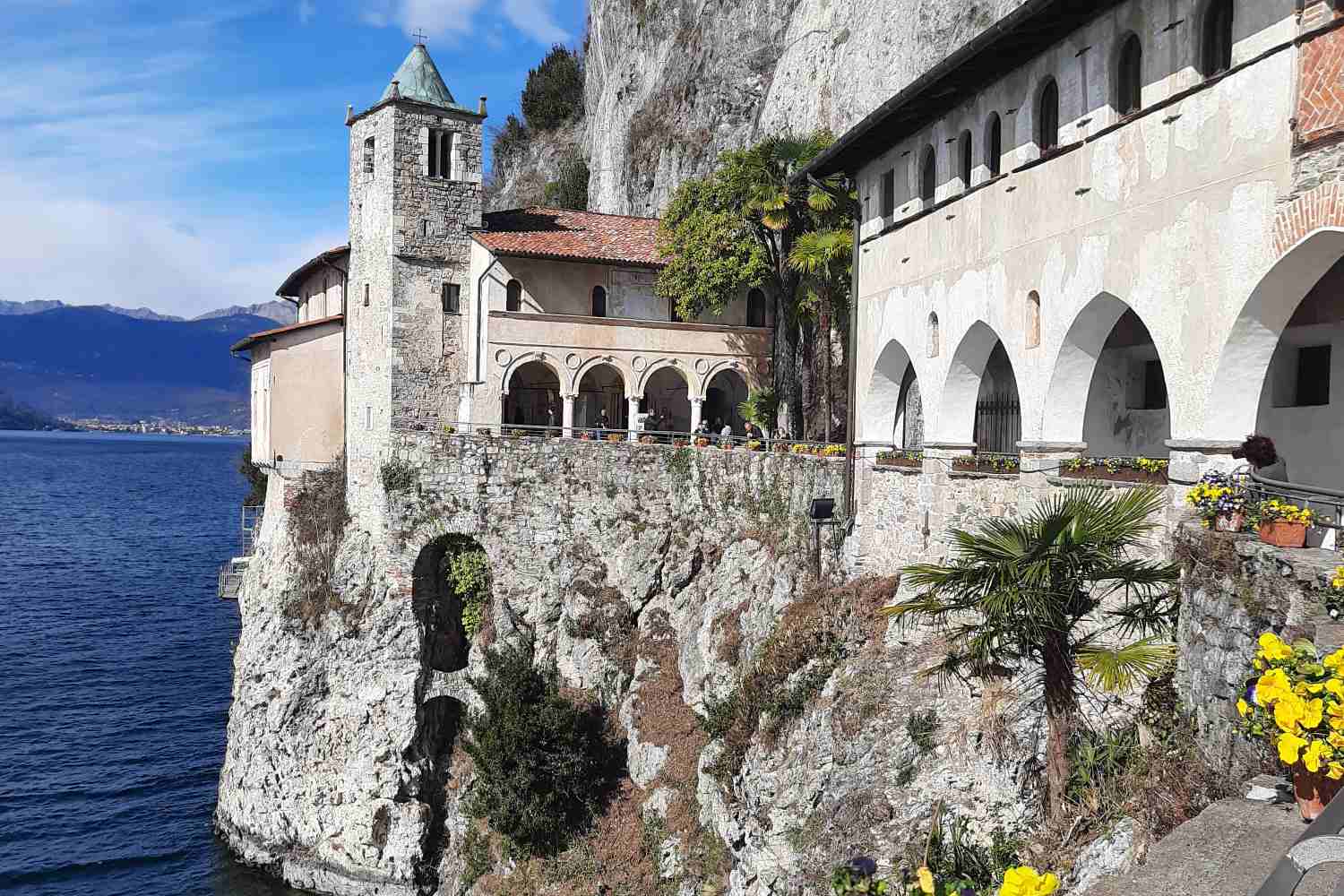
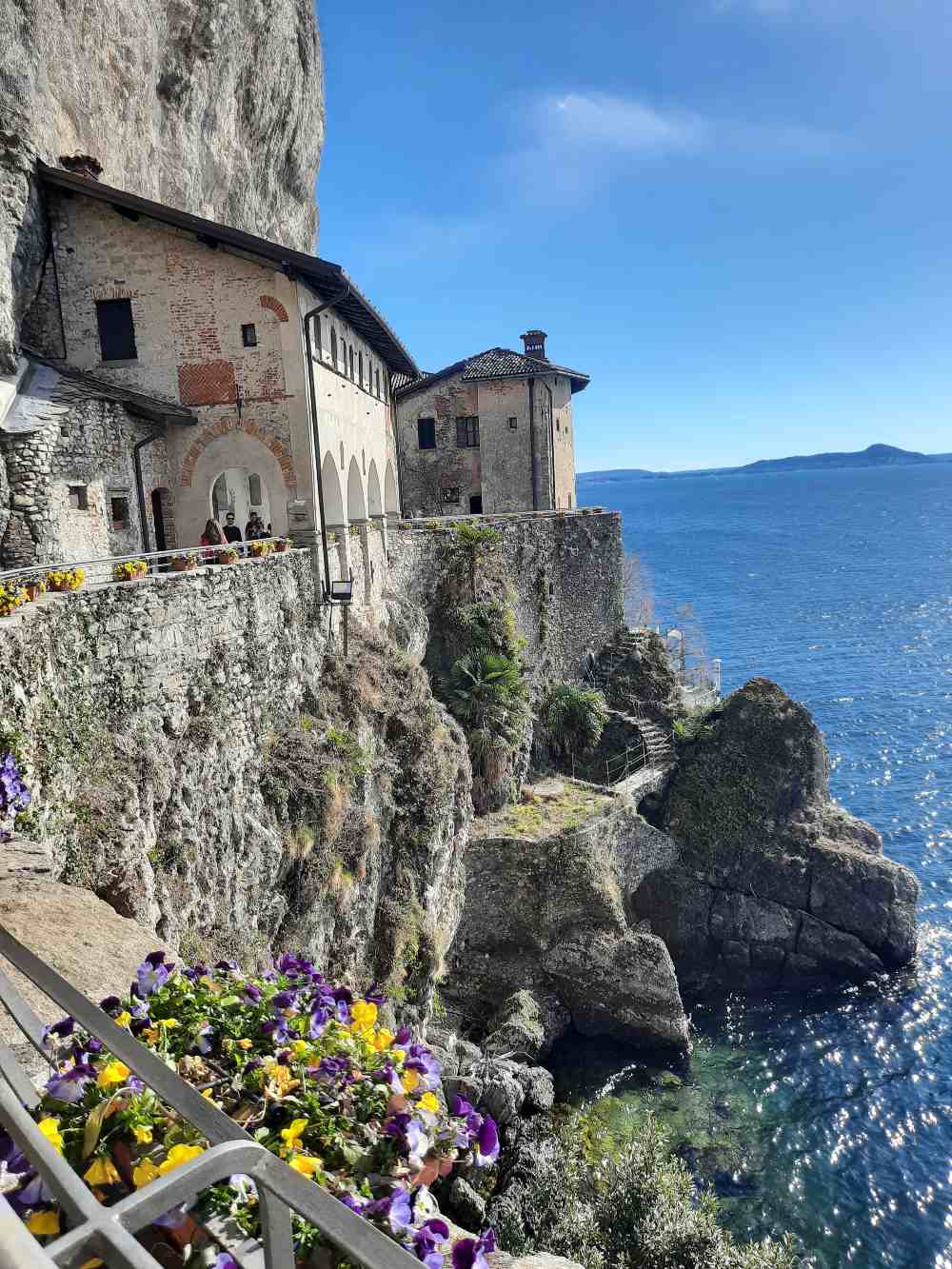
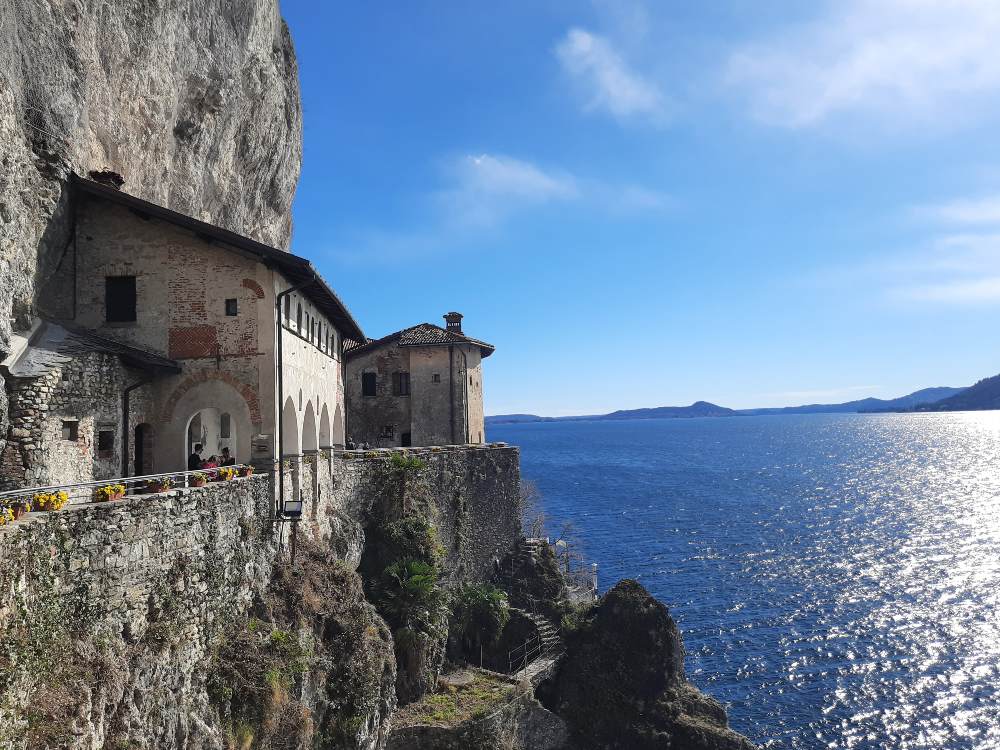
After many trips away from home, this time I’m taking you with me a few kilometers from where I live to explore a place where the stone seems to defy gravity and the lake water reflects centuries of devotion and silence. Arriving at the Hermitage of Santa Caterina del Sasso, in the municipality of Leggiuno, the immediate sensation is of penetrating an impossible architecture, clinging tooth and nail to a rocky wall overlooking Lake Maggiore. Looking at the complex from the boat, the structure appears like an eagle’s nest that houses stories of shipwrecks, suspended miracles and paintings of rare elegance.
@RebeccaManzi/GreenMe
By stairs or by lift, by boat for a unique magic
We talk about boats because there are different ways to reach the hermitage. Those traveling by car must take the A8/A26 exit at Sesto Calende, continue towards Laveno Mombello and reach Leggiuno, leaving the vehicle in the large free car park at the Cascine del Quiquio. From this point you can go down to the sanctuary by taking the panoramic staircase of 268 steps surrounded by vegetation (don’t underestimate the slope on the way back) or by using the lift carved into the rock. This engineering feat overcomes a height difference of 51 meters at the cost of one euro in coins and makes the area accessible to anyone, including elderly pilgrims or people in wheelchairs.
Another very fascinating option is to arrive by water using the Navigazione Lago Maggiore boats departing from Stresa or Laveno Mombello, disembarking at the small pier and climbing up the staircase of around 80 steps. The opening hours vary throughout the year: in spring and summer the hermitage is accessible every day from 9.30 am to 7.30 pm, while in the winter months the tourist opening is concentrated on weekends and holidays while on weekdays it is only in the afternoon. We recommend wearing comfortable shoes to tackle the sloping steps and respecting the sacredness of the place with appropriate clothing even in the warmer months.
@RebeccaManzi/GreenMe
Alberto Besozzi’s vote and the miracle of the boulders
The genesis of this unique sanctuary in the world has its roots in the 12th century. Tradition has it that Alberto Besozzi, a rich merchant and moneylender in the area, was surprised by a violent storm while crossing the lake. Gripped by the fear of dying, he made a solemn vow to Saint Catherine of Alexandria: if he had escaped the fury of the waters, he would have abandoned all material goods to dedicate the rest of his days to prayer and solitude. Having found shelter in a natural cave on this steep bank, the man kept his promise by building a small votive chapel. The relics of Blessed Alberto Besozzi still rest in the chapel built in 1195, visible inside a shrine next to the original chapel.
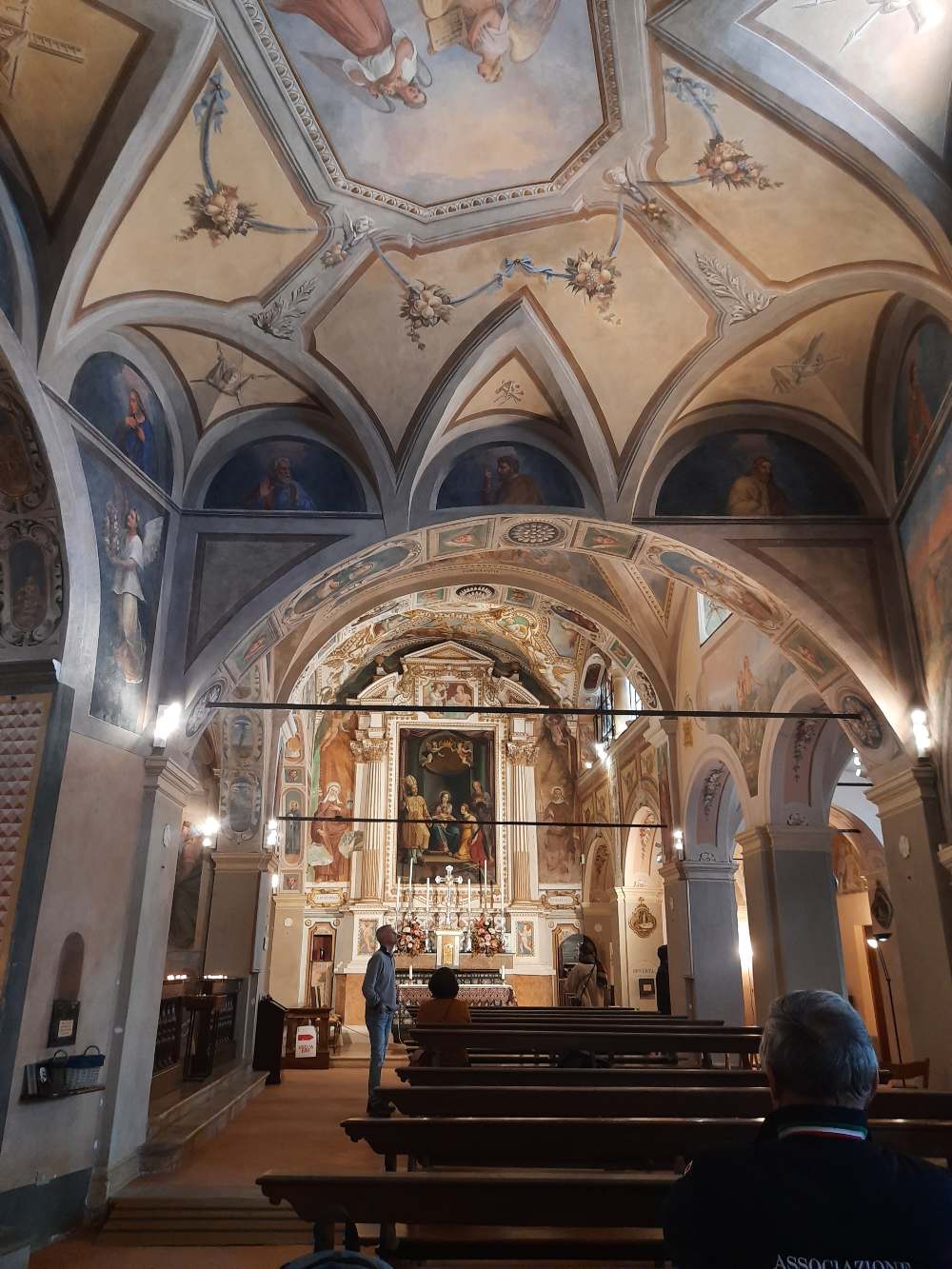
During the 14th century the structure expanded considerably thanks to the construction of the Church of San Nicola and the Church of Santa Maria Nova, passing over the years under the care of the Dominicans, the friars of Sant’Ambrogio ad Nemus and finally the Carmelites of Modena. At the beginning of the eighteenth century, the episode occurred that forever linked the name of the place to that of Santa Caterina del Sasso Ballaro. Five enormous rocky boulders broke away from the wall and fell onto the church. The boulders miraculously remained stuck in the vault of a chapel, remaining suspended right above the founder’s remains for almost two centuries, until 1910. Even today, looking up towards the ceiling of the church, you can see the large opening left by the landslide which testifies to that prodigious event.
@RebeccaManzi/GreenMe
In the heart of the rock between cloisters and bell towers
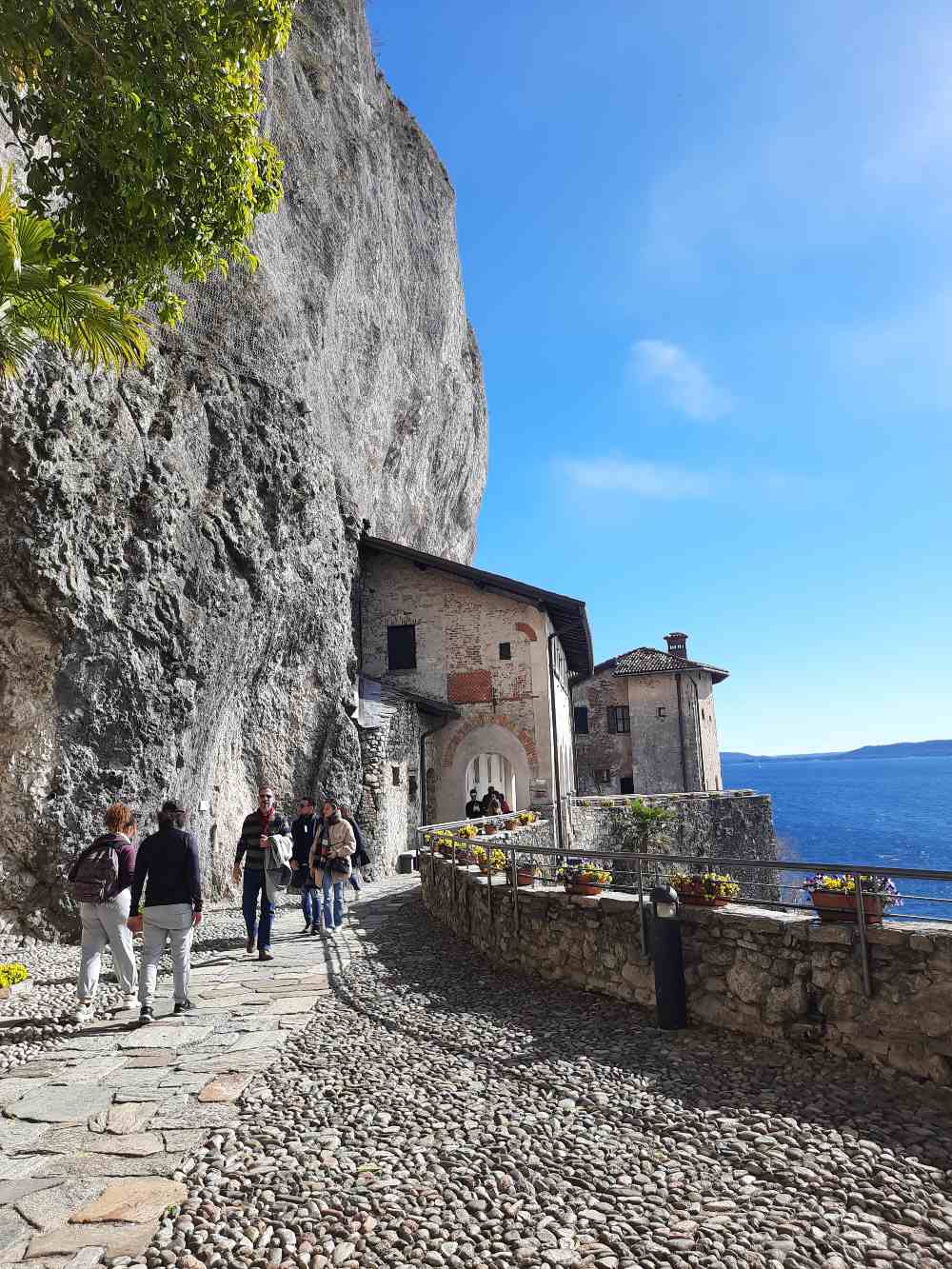
Walking along the terraces overlooking the water, the exploration of the monastery offers continuous glimpses of great beauty. The first building we encounter is the Southern Convent, a 14th century structure characterized by a long portico with seven arches and a chapter house inside which there is an ancient fireplace surrounded by well-preserved frescoes. Continuing beyond a small courtyard you come across the Conventino, a 13th century building where the kitchen, refectory and monks’ cells were once located. In the external courtyard, an imposing historic wooden press immediately catches your attention, while the internal walls show a cycle of seventeenth-century frescoes dedicated to the theme of the Danse Macabre.
@RebeccaManzi/GreenMe
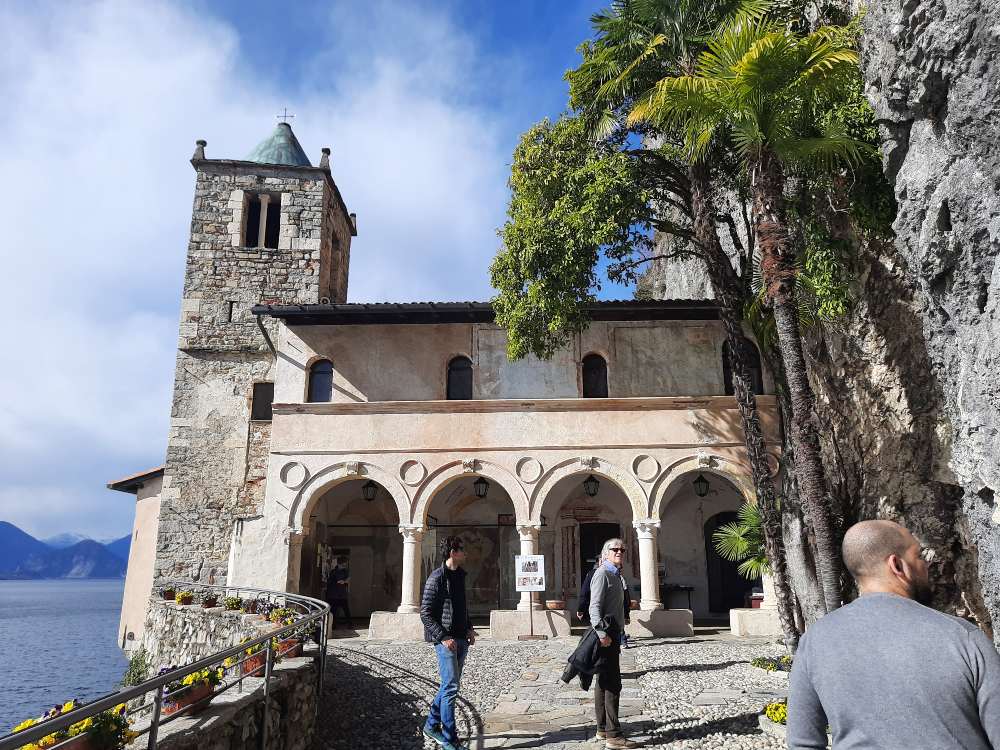
The route ends in front of the splendid façade of the Church of Santa Caterina, preceded by a Renaissance portico with four arches which protects beautiful wall paintings. The church was born from the fusion of three chapels built in different eras, an element that explains its irregular plan modeled on the shape of the rock below. Inside you can admire paintings created from the 14th to the 19th century, while outside the landscape is dominated by the 15 meter high stone bell tower, built in the 14th century and positioned directly on the edge of the rock face.
@RebeccaManzi/GreenMe
@RebeccaManzi/GreenMe
Property of the Province of Varese since 1970, the structure has seen the Benedictine oblates alternate after the restorations and, since 2019, the Franciscan Fraternity of Bethany. Leaving the Hermitage of Santa Caterina means taking with you the smell of fresh water mixed with that of damp stone, together with the indelible image of a corner of Lombardy where devotion and the majesty of nature have found a perfect synthesis.
