
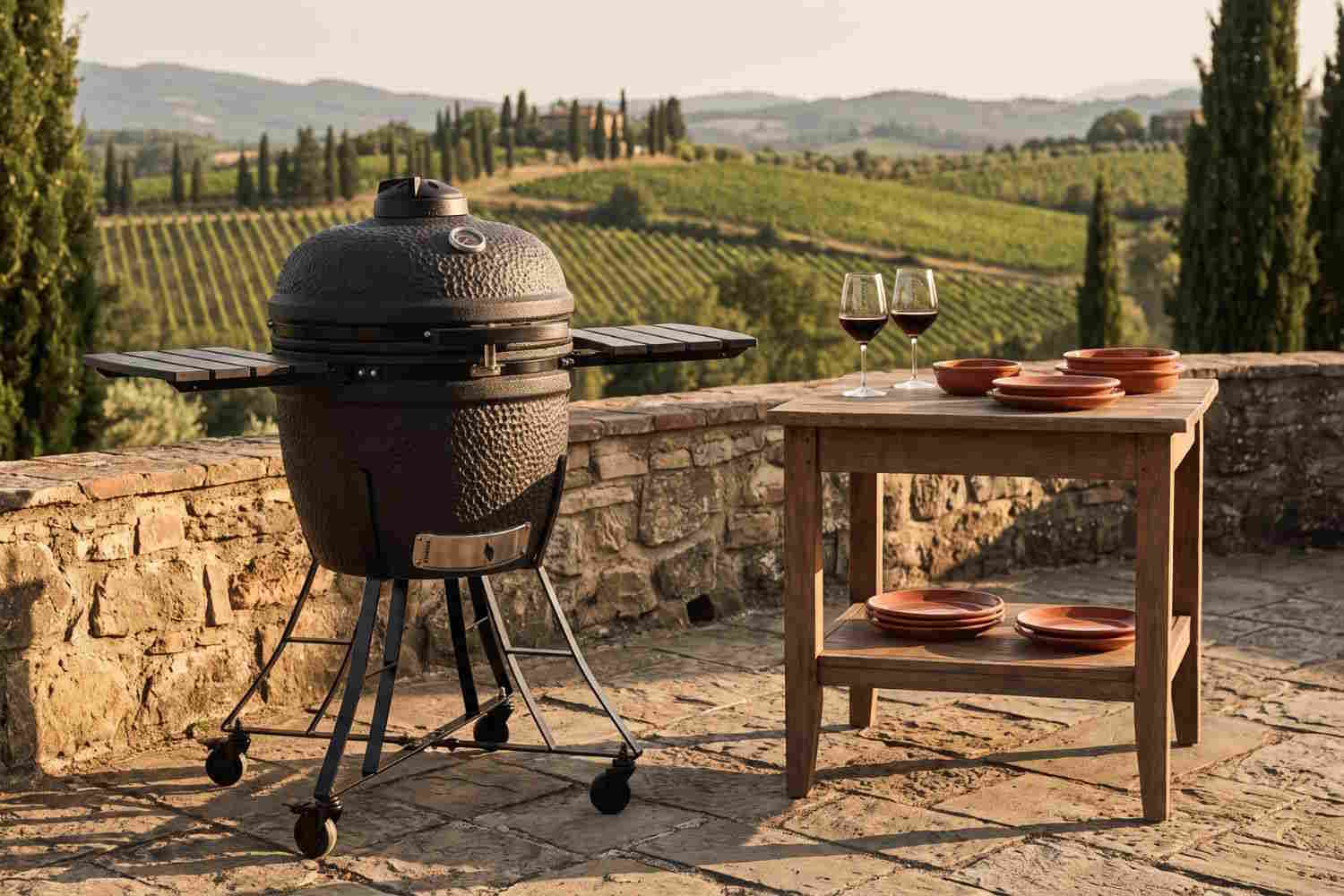
Often, however, the debate is reduced to a simplistic contrast between those who consider the grill a practice to be avoided and those who defend it as an indispensable tradition. The reality is more nuanced. The point is not to eliminate the barbecue, but to understand which factors really affect the quality of cooking.
From the choice of charcoal to temperature management, up to the design of the barbecue itself, every element can contribute to reducing smoke, fuel waste and charring. An approach that today interests not only those who cook meat, but also those who use the grill for vegetables, cheeses, fish or vegetable preparations.
What we know about the risks of overly aggressive cooking
When foods are exposed to very high temperatures or direct flames, compounds that scientific research has been studying for some time can develop. Among these are polycyclic aromatic hydrocarbons (PAHs), substances that form during incomplete combustion processes and which can deposit on foods through smoke.
The European Food Safety Authority (EFSA) considers some PAHs food contaminants to be monitored and has dedicated several assessments to their impact on health. The US National Cancer Institute also highlights how particularly high temperatures and charred parts of foods can encourage the formation of unwanted substances.
This is not alarmism, an occasional barbecue is not in itself a problem. The indications from the scientific community rather go in the direction of greater attention to cooking methods, limiting carbonization and better controlling the heat.
Sources:
The quality of the embers matters more than we imagine
When it comes to barbecue, the quality of the ingredients almost always comes first. Much less space is dedicated to fuel.
Yet charcoal is the starting point of all cooking. Stable embers allow you to work with more regular temperatures, reduce the need for continuous interventions and help limit sudden combustions that produce excess smoke.
For this reason, there is growing interest in natural vegetable carbons obtained without chemical additives. These include charcoal produced according to the traditional charcoal pit method, a technique that involves the slow transformation of wood into charcoal through a controlled carbonization process.
The goal is not only to achieve cleaner combustion, but also greater thermal consistency throughout the preparation.
Ignition is an often underestimated phase
The quality of combustion is built from the beginning, many barbecues are still lit with traditional firelighters which can generate persistent odors and make the initial cooking phase less pleasant. Alternatives such as bioethanol gel allow you to start the embers while avoiding solvents and petroleum derivatives.
This is a simple measure, but consistent with the idea of more controlled management of the barbecue. Reducing the substances used for ignition means limiting an element that does not contribute to the quality of the preparation.
The problem is not the fat, but where it goes
One of the most common phenomena in traditional grilling occurs when liquids, oils or fats reach the embers directly.
At that moment flames and a greater quantity of smoke develop. It is precisely this unwanted combustion that represents one of the most critical aspects of grilling.
For this reason, many new generation systems try to separate the food from the combustion source as much as possible, while still maintaining the typical characteristics of grilling.
The principle is simple: fewer sudden combustions mean greater control and more uniform cooking.
Instagrill: a barbecue designed to reduce smoke
Instagrill fits into this context, a barbecue designed to limit the direct combustion of liquids released from food.
The structure of the system aims to contain the formation of smoke and make the behavior of the embers during cooking more predictable. The result is simpler heat management and less need to continually intervene to control flare-ups or thermal peaks.
Added to this are some practical aspects, such as reduced coal consumption, quick ignition and ease of use in domestic spaces such as terraces and gardens.
More than a question of convenience, it is an approach aimed at more efficient and controlled combustion.
Because Kamados maintain more stable temperatures
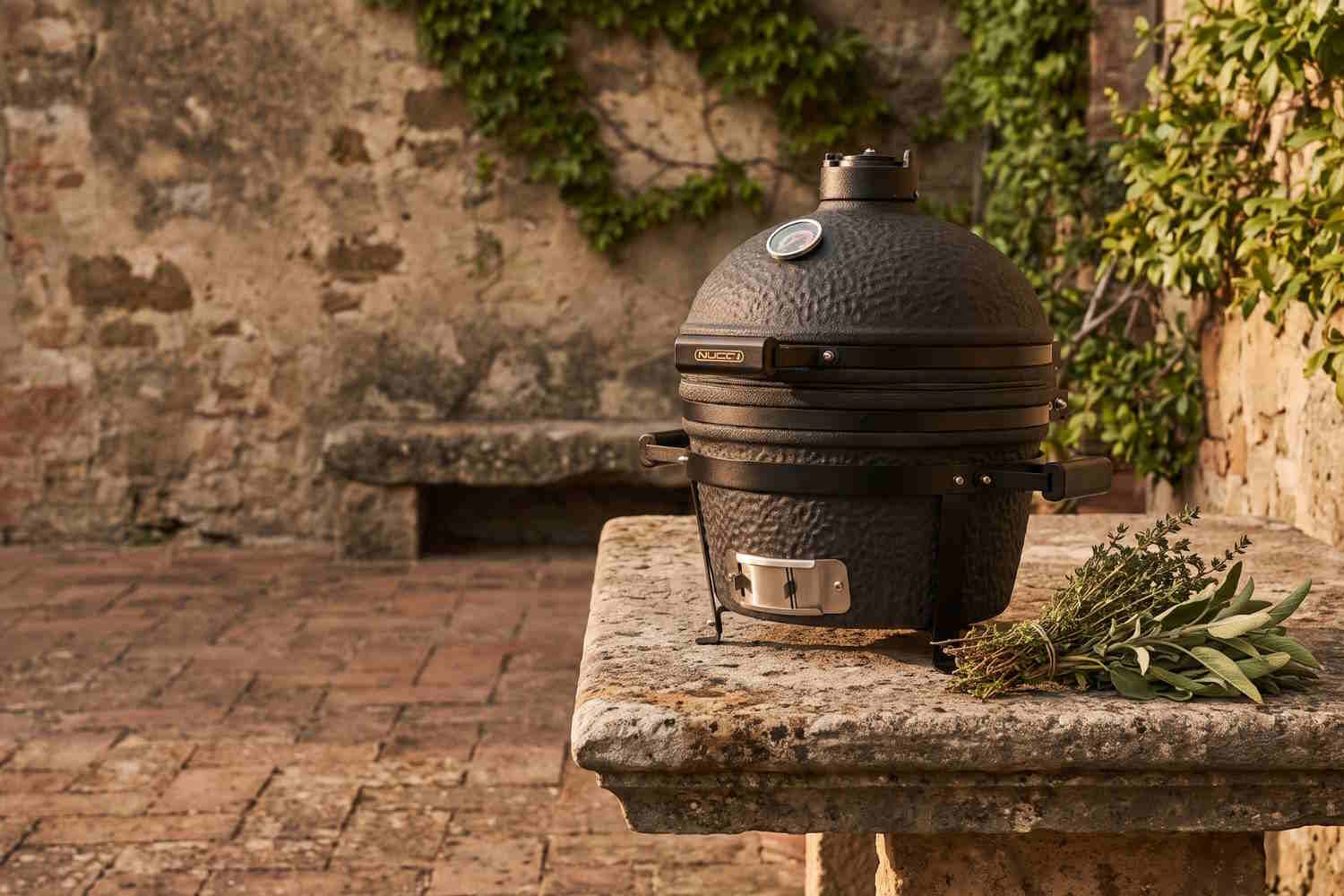
If combustion control is important, temperature control is equally important.
Kamado barbecues stand out for their ceramic structure, a material that accumulates heat and releases it gradually. This feature allows you to maintain constant temperatures for long periods, reducing fuel consumption and limiting temperature changes.
The stability of the heat makes different preparation methods possible: direct, indirect cooking, light smoking and low temperature preparations that require many hours.
From a practical point of view it means being able to work with greater precision and with fewer sudden variations that risk compromising the final result.
Temperature is a data, not a sensation
For a long time, grilling was entrusted above all to experience and intuition. Today, tools such as thermal probes allow you to precisely measure both the temperature of the cooking chamber and the internal temperature of the food.
The use of these devices allows you to avoid overcooking and charring, improving the overall quality of the preparation.
It is not an aspect that concerns only safety. A correct temperature helps preserve consistency, humidity and aromas, better enhancing the raw material.
From vegetables to fruit: the grill has changed
Thinking of the barbecue exclusively as a tool for cooking meat no longer describes reality.
Increasingly, the grill is being used for seasonal vegetables, corn on the cob, onions, mushrooms, tofu, tempeh and even fruit. In these cases, heat control takes on an even more evident role.
A courgette cooked too quickly tends to dehydrate. An aubergine exposed to excessive temperatures loses its consistency. On the contrary, careful management of the embers allows the development of aromas and flavors without compromising the structure of the food.
The quality of cooking emerges precisely when the heat enhances the ingredients rather than covering their taste.
A more conscious barbecue is possible
Discussion of barbecue often tends to focus on the extremes. On the one hand there are those who consider it an unhealthy practice, on the other those who minimize any critical issues.
Scientific evidence suggests a different path. There is no single solution capable of eliminating every problem, but there are many choices that can improve the quality of cooking: using quality charcoal, avoiding ignitions with solvents, limiting direct contact between food and embers, controlling smoke and monitoring temperatures.
In this context, systems such as Instagrill and Kamado represent two different approaches united by the same objective: to make grilling more controllable and efficient.
Barbecuing should not necessarily be considered a cooking method to avoid. As with many other culinary techniques, the difference depends above all on the choices we make before even lighting the fire.
