
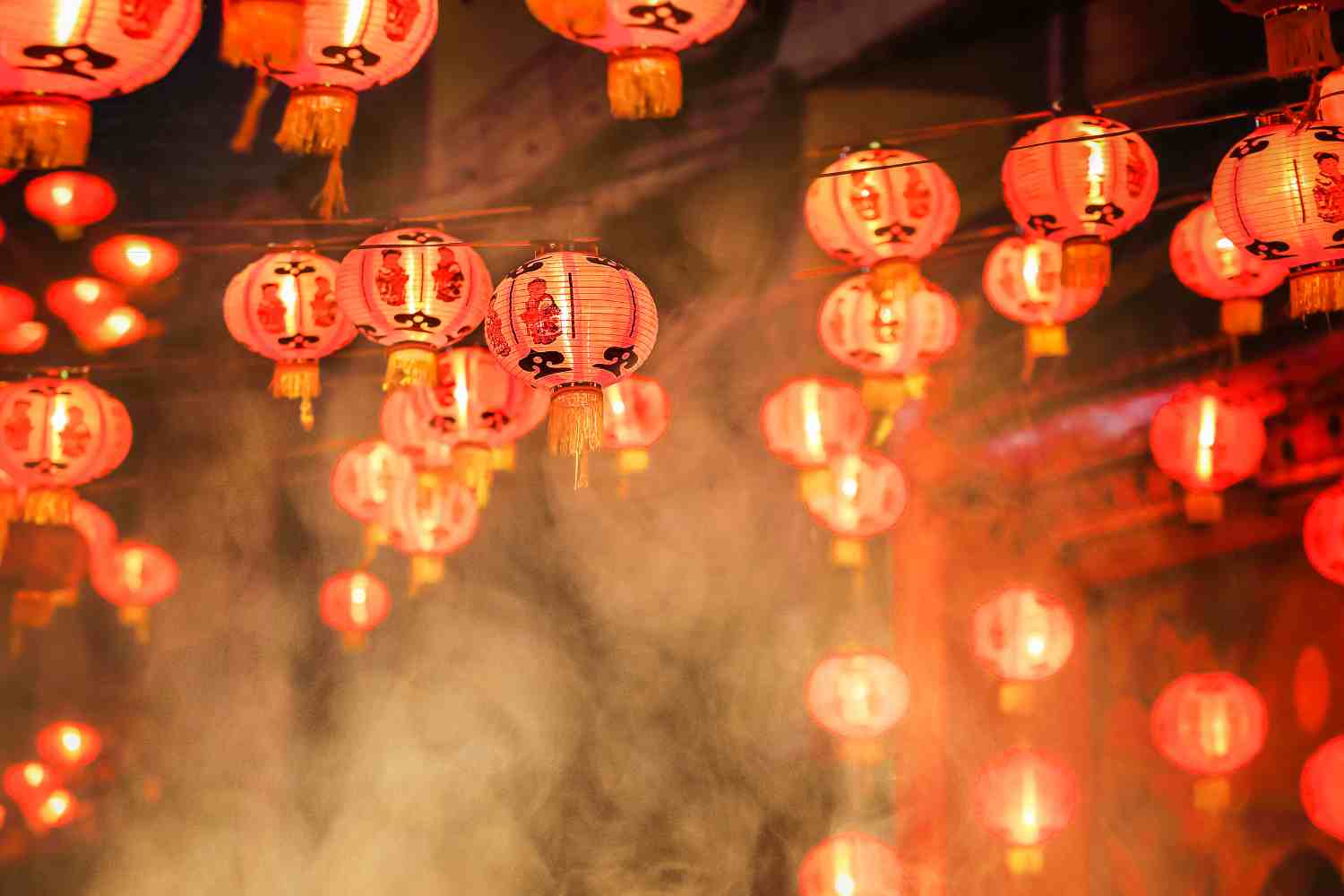
Chinese New Year 2026 falls on Tuesday, February 17 and officially marks the beginning of the Year of the Fire Horse, one of the most powerful and symbolically charged combinations of the Chinese zodiac. The date is neither random nor arbitrary: it is determined by the traditional lunisolar calendar, which follows the combined cycles of the moon and sun. Precisely for this reason the Chinese New Year changes every year, but always remains between January 21st and February 20th. In 2026 the lunar new year will begin with the second new moon after the winter solstice, a criterion that has governed the start of the Spring Festival for centuries.
The Fire Horse: energy and instability
With the entry into the new lunar year, 2026 is associated with the Horse, the seventh animal of the Chinese zodiac, and in particular with its declination of Fire. According to Chinese astrological tradition, each sign never repeats itself, but is always linked to one of the five fundamental elements: Wood, Fire, Earth, Metal and Water. The Fire Horse is considered a sign of great energy, movement and creative instability. It is not a quiet year, nor does it promise automatic balance: it is a period that, culturally, is associated with rapid changes, impulsive choices and strong individual drives. It is no coincidence that those born under the sign of the Horse enter into their own benmingnianthe personal zodiac year, traditionally seen as a delicate and potentially unfortunate passage.
How it is celebrated
Chinese New Year celebrations don’t end in a single day. In China, the official holiday period lasts eight days, from February 15 to 23, 2026, with offices, factories and most non-essential businesses closed. However, from a cultural point of view, New Year extends for sixteen days, starting from the eve of February 16th until the Lantern Festival, which in 2026 will fall on March 3rd. It is a time span marked by daily rituals, each with a precise meaning, which revolves around family, symbolic purification and the preparation of a new beginning.
From the eve to the Lantern Festival
New Year’s Eve is the most important moment of the entire festive cycle. It is dedicated to the family reunion dinner and the tradition of staying up until midnight, a gesture that symbolizes the desire to usher the old year out the door and welcome the new one with auspicious words. In the following days, visits to relatives, exchanges of gifts and the distribution of the famous red envelopes dominate hongbaocontaining money and wishes for prosperity. At the same time, red decorations, citrus plants and symbolic foods become concrete tools to attract luck, wealth and family harmony.
From South-East Asia to foreign communities
However, Chinese New Year 2026 is not a holiday confined to mainland China. Taiwan, Hong Kong and Macau observe official holiday periods, while in much of Southeast Asia — from Singapore to Malaysia — the Lunar New Year is celebrated with shorter but culturally sensitive public holidays. Even in Chinese communities abroad, New Year remains a central event, capable of transforming entire cities with parades, dragon dances and fireworks displays.
The Year of the Fire Horse is not just a calendar change, but a global cultural event that intertwines astrology, tradition, superstition and everyday life. 2026 opens under the sign of energy and instability: a year which, according to the Chinese symbolic reading, does not reward waiting but forces action. For many it is a promise, for others a warning. In both cases, it is a step that hardly goes unnoticed.
