
An air conditioner on seems like a trivial thing only until you look at the bill distractedly, perhaps with that serenity of someone who already knows that they will pay it somehow. For many families, however, fresh food has a specific cost. It is measured in hours of air on with the timer, in wide open windows when the asphalt outside still breathes heat, in fans that blow warm air and in bedrooms where sleeping becomes a negotiation with your body.
The heat in the city is often described as a collective annoyance, a sort of big summer oven in which we all end up. But you just have to step outside the metaphor to see the crack. There are those who have an isolated house, trees in front of the windows, curtains, efficient appliances, money for cooling. And there are those who live in poorly exposed apartments, with old window frames, roofs that accumulate heat, buildings surrounded by concrete and just a few euros to move between shopping, rent, medicines and energy.
A new scientific analysis published on PLOS Climate puts order inside this fracture and uses a very clear expression: urban thermal inequality. The heat affects everyone, but some have walls, money and services to defend themselves. Others suffer it helplessly. Inside the home, at school, at work, on the street. The authors speak of over 1,000 cities already affected by urban overheating and approximately 1.7 billion people exposed to conditions beyond comfort and health thresholds. The hours of urban overheating have increased by 300% since 1980. Huge numbers, of course. But then they become very small: a room, a bed, a lowered shutter, an elderly person waiting for the evening.
Fresh is expensive
The first reflex when faced with a heat wave is always the same: turn on the air. Except that the air conditioner, in increasingly hotter cities, risks becoming the domestic boundary between those who can get through the summer and those who have to endure it. The study reminds us that wealthier families allocate a limited portion of their spending to air conditioning, while low-income families can use up to 8% of their budget just to cool themselves. A percentage that weighs even more when the house leaks, the appliance consumes too much and the neighborhood already starts with a few degrees higher.
Here the question stops being “it’s hot, what a heavy summer”. It becomes a hidden tax. If you have enough economic margin you pay it in euros, if that margin is missing you pay it in lost sleep, rising blood pressure, tiredness, irritability, deteriorating health. The urban heat works like this: it enters through the windows, remains in the walls, rests on the most fragile bodies and then sends the bill. The English formula used by scholars, thermal poverty trap, sounds technical. The mechanism, however, is very familiar: those who live in worse conditions would need protection more, but have fewer tools to obtain it.
Even in Italy this topic is moving beyond the scope of summer emergencies. The campaign What it’s hot is about summer energy poverty, or cooling poverty: for years we have linked energy poverty above all to winter heating, a cold house, the boiler, and turned off radiators. Now the unlivable house can also be that of July, with the sun shining for hours and the coolness transformed into an asset to be managed with prudence.
The heat map
The heat in the city has a precise geography. Followed by asphalt, dark roofs, large car parks, treeless streets, mineral courtyards, facades that absorb and return heat even when the sun has already set. You only need to walk through a neighborhood with little greenery on an August afternoon to understand that the official temperature only tells part of the story. The rest is told by the empty pavements, the hot shelters, the lowered shutters, the people crossing the road looking for the only piece of shade available.
A study on Turin, conducted as part of the ClimActions project, shows this fracture well. The researchers compared heat islands, the presence of an elderly population, socioeconomic, health and environmental indicators. The result is what many Italian cities already know firsthand: the most vulnerable areas tend to be concentrated where social fragility, less greenery, more exposure and worse housing combine. Greener and less dense areas, however, show a lower risk.
This is the part that should weigh more heavily in public choices than the usual photos with the shovel in hand and the newly planted tree. Bringing shade where the risk is already low is of little use. Bringing it in front of schools, public housing, sidewalks used by the elderly, children, workers and people without cars changes daily life. Urban greenery, when used well, stops being gentle furnishings and becomes climate infrastructure. A bench in the shade, a less hot stop, a road that can be crossed at two in the afternoon are public health, only with fewer commemorative plaques.
Inside the schools
The heat enters even where we would prefer to leave it out. It enters school classrooms as June gets longer, in warehouses, on construction sites, on public transport, in offices without decent ventilation, in retirement homes, in children’s rooms. The World Health Organization recalls that heat stress is one of the main environmental and occupational risks and can aggravate cardiovascular diseases, diabetes, asthma, mental health conditions and other existing frailties. Heatstroke remains a medical emergency, with very high risks when help arrives late.
The least talked about part concerns learning. According to the literature cited in the analysis, above 25°C in the classroom learning capacity progressively declines, with heavier losses for low-income students. Here too the inequality changes rooms but remains the same: those who study in better buildings, with more livable spaces and adequate protection, leave with a silent advantage. Those who face days of lessons in hot classrooms must concentrate while the body just tries to resist.
The same goes for work. At temperatures around 40°C, productivity can be drastically reduced, especially for those who work outdoors or in poorly protected environments. Extreme heat saps energy, slows down, increases the risk of errors and accidents, worsens the quality of sleep and therefore also the following day. A city that warms up too much becomes less habitable precisely for the people who have the least chance of escaping.
Shade where you need it
Solutions exist, it’s just that many make little impression. Light-colored roofs, reflective materials, building insulation, trees designed neighborhood by neighborhood, less asphalted schoolyards, accessible climate shelters, libraries and public spaces that are cool during alerts, public housing redeveloped even for the summer. Concrete interventions, sometimes even boring to talk about, therefore perfect for actually working.
The analysis also cites international experiences with cool coatings and cool roofs, roofs designed to absorb less heat. In some contexts, these interventions have significantly reduced the internal temperatures of the most fragile homes. It is an important fact because it shifts the discussion from the usual “buy a better air conditioner” to a more serious question: how do you build a city that doesn’t force people to defend themselves, one bill at a time?
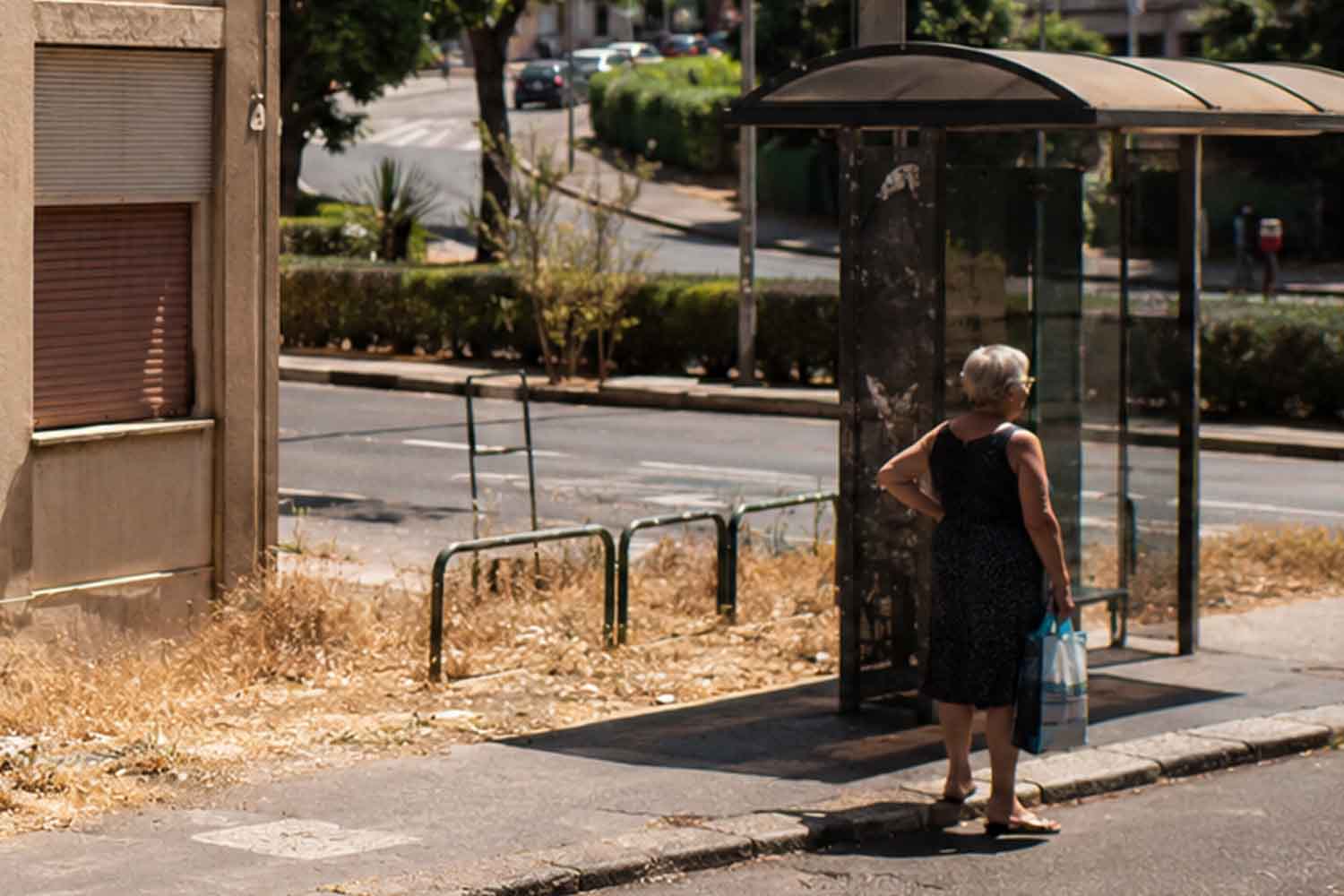
For Italian cities it means a concrete look at the neighborhoods: where there is no shade, where the elderly live alone, where the houses are old and hot, where the schools become greenhouses, where a bus stop in full sun is a small administrative cruelty repeated every day. “Thermal justice” serves to decide who must be protected first, with what money, with what jobs, with what times. The heat in the city is now also measured in this way. On the one hand, those who close the door, turn on the air and sleep. On the other, those who remain awake, with the shutters lowered, the fan pointed at them and the air already looking used.
You might also be interested in:
