
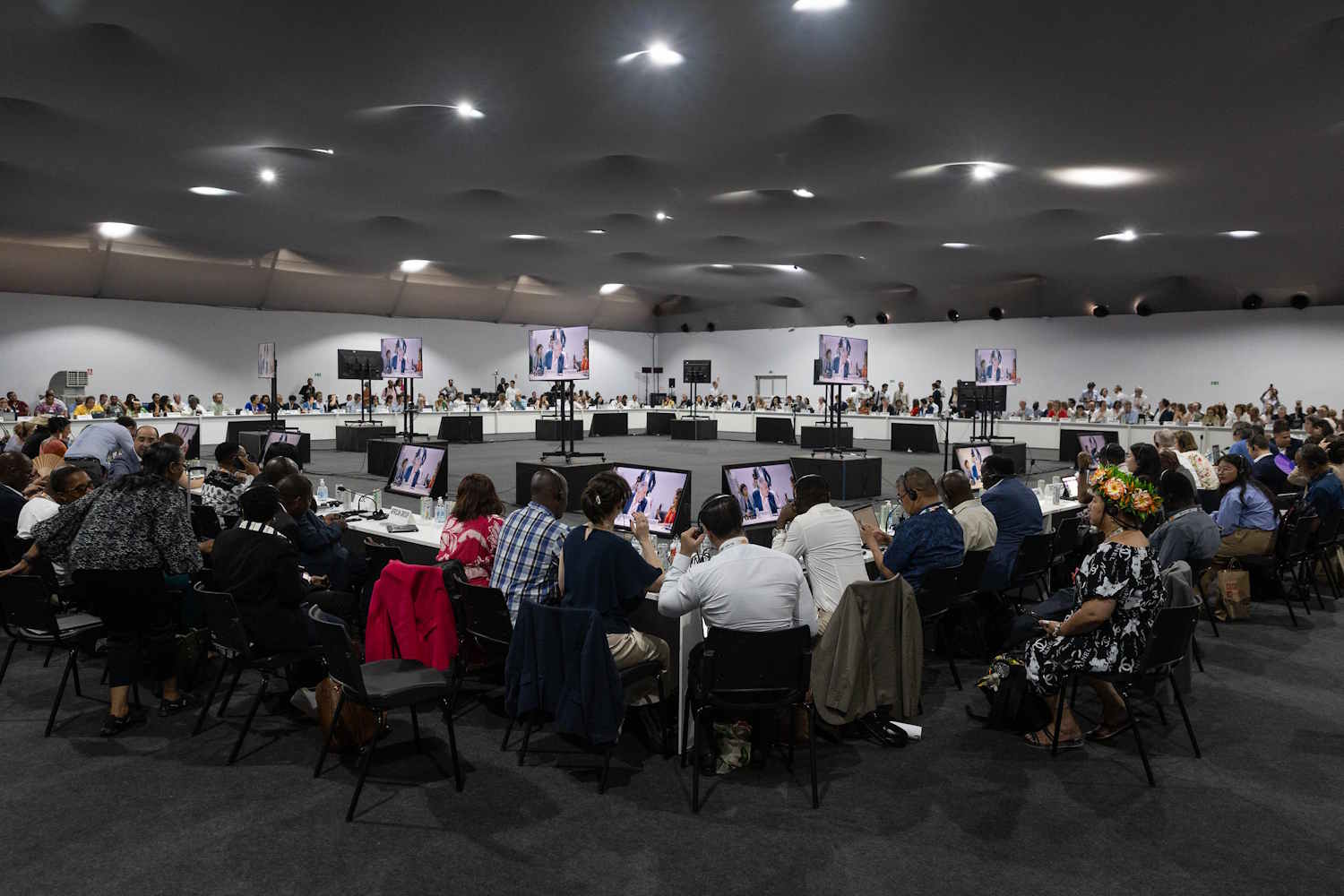
The draft text for COP30 sparked several reactions from environmental experts and activists, who denounced the total lack of concrete measures to address the issue of fossil fuels.
Although the topic of phasing out fossil fuels emerged forcefully during the negotiations, the document’s proposal would have effectively eliminated any direct reference to these energy sources, causing disappointment and concern.
The proposal, presented today 21 November, does not even remotely mention the need to progressively reduce the use of oil, gas and coal. A theme which, despite its centrality in global political discussions, finds no space in a document which instead limits itself to recognizing the “need for an effective and progressive response to the urgent threat of climate change“.
The text focuses mainly on the path to low greenhouse gas emissions and resilient development, but does not offer a concrete plan to transition away from fossil fuels.
A lack of precise commitments that was seen as a serious step backwards compared to the commitments made during COP28 in Dubai, where almost 200 countries had at least agreed to move away from fossil fuels in a “fair, orderly and equitable” way to achieve net zero emissions by 2050. Despite growing support for a plan to eliminate fossil fuels, the draft did not even put down a real “roadmap”, but proposed to leave each country free to define its own objectives without binding measures.
Lula’s appeal and international criticism
Brazilian President Luiz Inácio Lula da Silva also emphasized the need to abandon fossil fuels, defining this transition as a priority for the future of the planet. However, critics of the COP30 text argue that, despite declarations of intent, the document does not adequately address the economic and social challenges related to the energy transition.
Bruce Douglas, CEO of the Global Renewables Alliance, said failure to establish a pragmatic roadmap would be a “sensational missed opportunity“According to Douglas, the phasing out of fossil fuels is now not only an ecological necessity, but also an economic choice, given that investments in renewable energy exceed those in fossil fuels by two to one.
On the last day of negotiations, substantial improvements are needed to stay on the path towards a world that limits global warming to 1.5°C and avoids the worsening of the planetary crisis – say the WWF, which calls on countries to include roadmaps on fossil fuels and deforestation with concrete targets in the final text.
The WWF also asks Minister Pichetto Fratin and the Italian delegation for clarity on the position taken. In fact, Italy has not signed the declaration of the countries that have officially asked to include the two roadmaps in the final decisions. Minister Pichetto, in fact, had yesterday underlined that he was not against the two roadmaps and that he had not hindered the European Union on this, but in practice neither Italy’s signature nor that of the European Union appears, so it is reasonable to assume a veto: it is time to say exactly how things are.
