
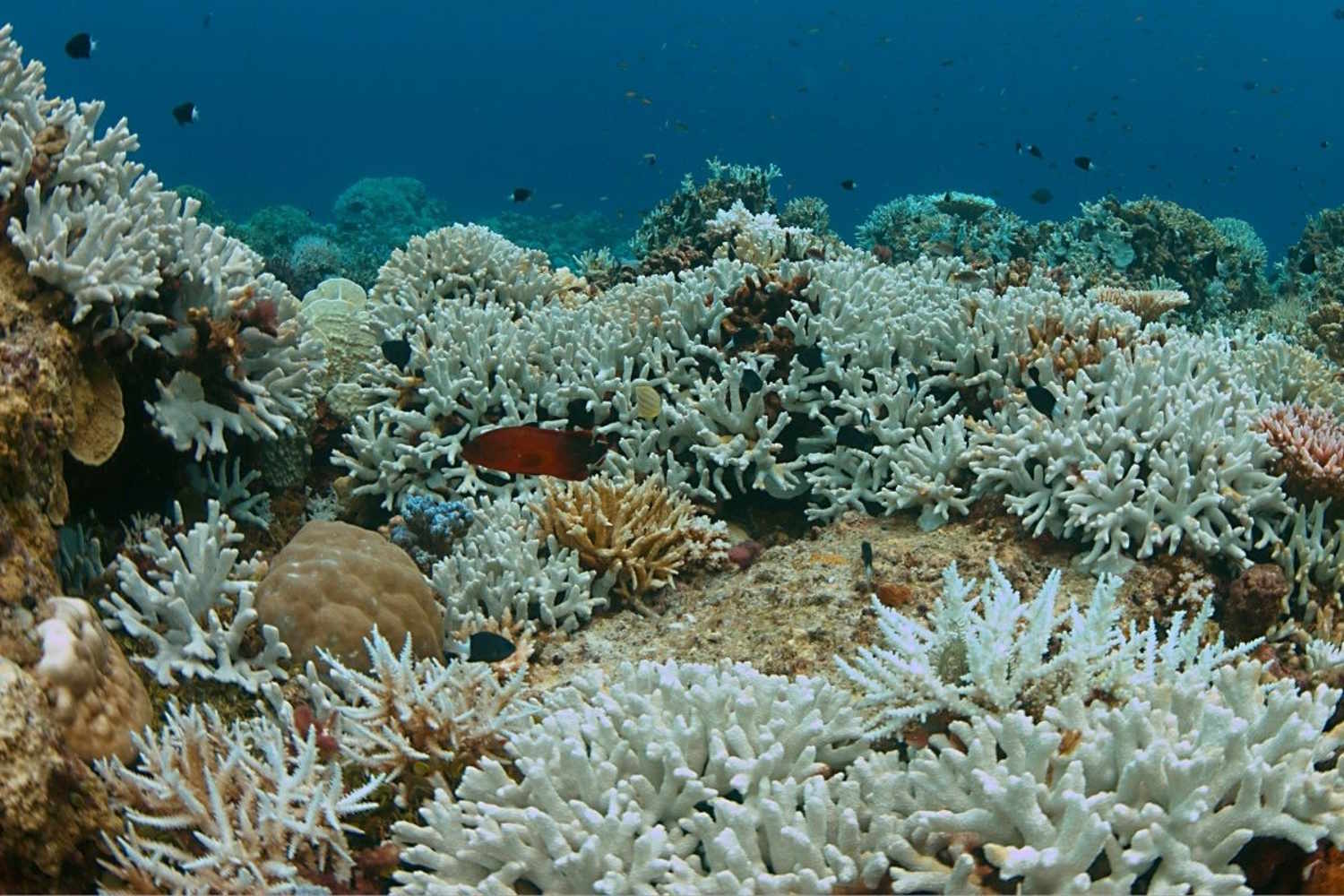
The coral coverage throughout the large coral reef has been undergoing its largest annual decline since the surveys began.
To say it is the new report of the Australian Institute of Marine Science (AIMS), which examined the health of 124 coral reefs between August 2024 and May 2025, discovering that 48% have undergone a drop in the coral coverage percentage.
The main reason is the heat stress caused by climate change, but also tropical cyclones and the rapid seafront stars that feed on corals play a role in this significant decline. These are these factors that make it so difficult for coral reefs to recover from mass whitening events. As the authors of the report say:
A high disturbing environment means that recovery intervals are becoming shorter. Allowing coral reefs to survive these conditions requires a combination of global greenhouse gases to stabilize temperatures, the management of the best practices of local pressure and the development of interventions that support the adaptation and recovery of the coral reef in response to climate change.
What is happening to the great coral reef
Often the largest living structure in the world is nicknamed, the large coral reef is an expanse of 2,300 km of tropical corals which houses an extraordinary variety of biodiversity.
Also the second largest coral reef in Australia, Ningalooon the western coast of Australia, he suffered repeated whitening and this year both the main coral reefs have become simultaneously white for the first time ever.
The coral is vital for the planet. What is called the “architect of the sea”, builds vast structures that host about 25% of all marine species.
The whitening occurs when the coral is stressed because the water in which it lives is too hot. Coral can recover from heat stress, but it needs time, ideally even several years. The stressed coral will probably die if it experiences 1 ° C temperatures above its thermal limit for two months. If the waters are higher than 2 ° C, it can survive about a month.
According to the report, the unusually hot tropical waters triggered a widespread whitening of the corals on the large coral reef in 2024 and in the first months of 2025, the sixth event of this type since 2016.
In addition to climate change, natural weather models such as El Niño can also play a role in mass whitening events.
The coral reef has experienced unprecedented levels of heat stress, which have caused spatially larger and more serious whitening to date – reads the report. Any recovery may take years and would depend on the future reproduction of corals and the minimum environmental disorder, according to the report.
In the results of the latest AIMS survey, the most affected correlas were the Acroporesusceptible to stress from heat and favorite food of the sea rapid stars.
These corals are the fastest to grow and are the first to disappear – concludes Mike Emelie, head of research Aims. The large coral reef is such a beautiful and iconic place for which it is really worth fighting. And if we manage to give it a chance, it has an intrinsic ability to recover.
Don’t you want to lose our news?
