
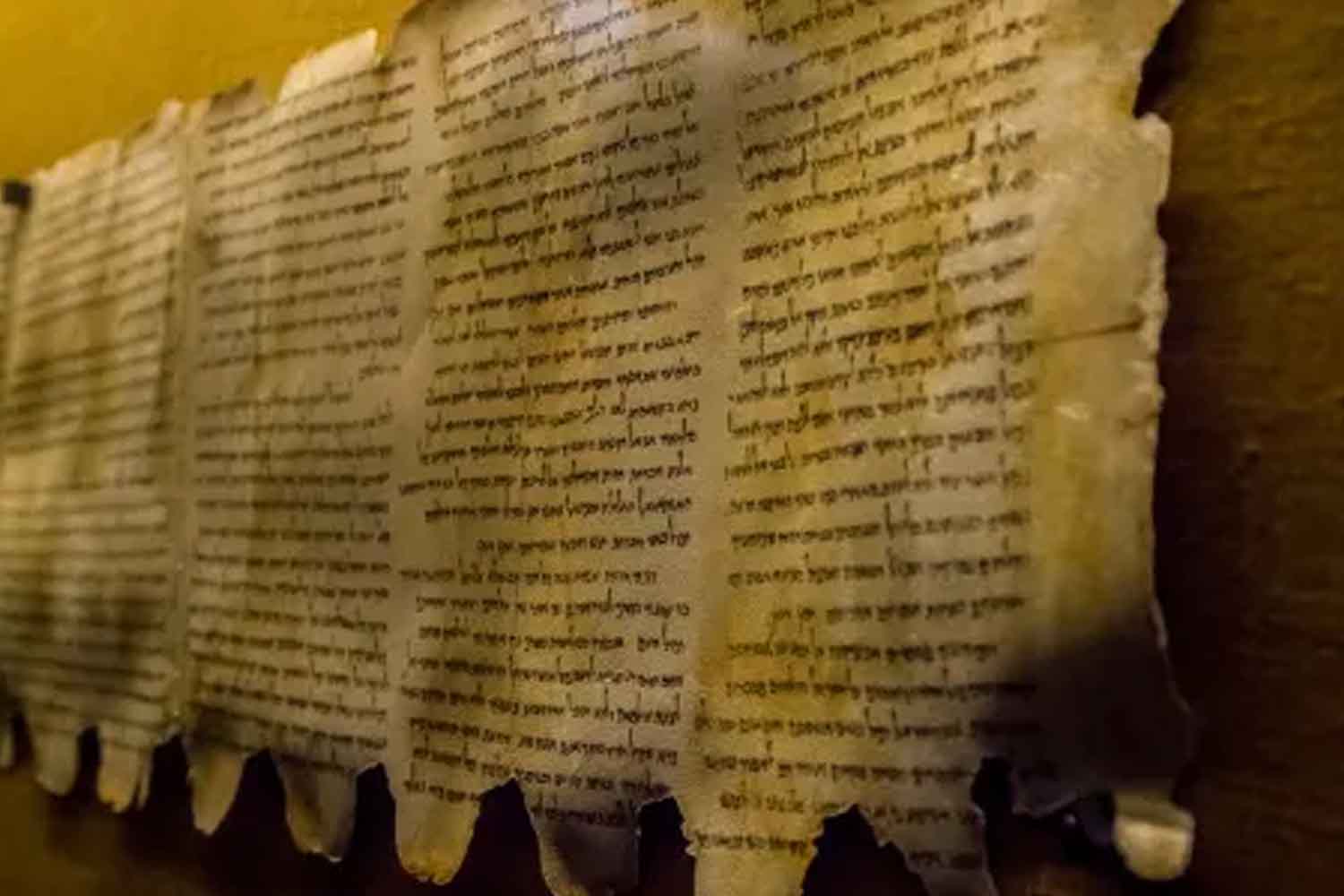
Exactly three hundred and sixty-four days. Fifty-two full weeks. Religious holidays always on the same day of the week, without travel and without discussions. The calendar used by the Qumran community had an almost reassuring mathematical precision. Too bad the Sun hadn’t been consulted: every year he missed about a day and a quarter.
After twenty years, the gap was almost four weeks. If it continued long enough, a spring festival could end in winter or even autumn. A rather serious inconvenience for a community in which celebrations, harvests, first fruits and seasons were closely linked.
A new reconstruction proposed by Eshbal Ratzon, professor at Tel Aviv Universitynow try to explain one of the problems that have accompanied the study of the Dead Sea Scrolls for decades: was that 364-day calendar really used or was it just an ideal religious model? According to the study “The Qumran Calendar: a Historical Reconstruction”published in the magazine Tarbizthe two answers could both be correct, simply at different times.
The Dead Sea Scrolls are a collection of ancient manuscripts and fragments discovered in the Qumran caves and other sites in the Judean Desert, dating mostly to the Second Temple period. They include copies of biblical texts, prayers, commentaries, legal works and writings related to the beliefs and practices of the Jewish communities of the time. The community linked to the Qumran texts is often associated with the Essenes, although the complete identification between the two groups is still debated by scholars.
A perfect year of 364 days
The choice of 364 days had a very precise logic. The number is divisible by seven: each year contains exactly 52 weeks and holidays always fall on the same day of the week. No slippages, no annual decisions on the calendar. For the Qumran community this order reflected something much greater than organizational convenience: it was considered part of divine order.
As Tel Aviv University explains in the presentation of the research, the calendar also had political and religious weight. In Jerusalem, the Temple authorities established important dates on the basis of the lunisolar calendar. The Qumran community believed, however, that those days had already been set by God at the moment of Creation and that human beings should not change them.
The theme also occupied a lot of space in the manuscripts: according to Ratzon, Nearly twenty scrolls found at Qumran deal with calendars and astronomy. The Book of Jubilees, particularly important in the community library, presents the 364-day calendar as the original calendar received by Moses on Sinai.
The Leon Levy Dead Sea Scrolls Digital Library of the Israel Antiquities Authority also describes among the manuscripts a 364-day calendar organized into four seasons of thirteen weeks each. In short, it is difficult to consider it a marginal detail.
The Sun made another calculation
The geometry worked great as long as you looked at weeks and holidays, but with the seasons the trouble began. The 364-day year was shorter than the astronomical year by approximately a day and a quarter. A tiny difference on its own, much less harmless when left to accumulate. In twenty years it meant moving the holidays by almost four weeks with respect to the seasons; after several decades, a celebration scheduled for spring could end up in winter or even autumn.
And it wasn’t just about choosing the wrong cloak to go to a party. Those anniversaries were connected to harvests, first fruits and agricultural cycles. A calendar that claimed to perfectly order religious time gradually began to describe a world different from the one outside the door.
Scholars had proposed various solutions. Perhaps the community periodically added days or entire weeks to realign the system. Or those 364 days had never really been used and only served to represent an ideal order.
According to Ratzon, however, the Dead Sea Scrolls offer no convincing evidence for either explanation. Hence a third possibility: the calendar would actually work for a certain period, until working became too complicated.
From daily calendar to religious symbol
The reconstruction places the practical use of the calendar in the early years of the community, in 2nd century BCwhen the dispute over religious dates reportedly contributed to the conflict with the leadership in Jerusalem.
Then two things changed. The first was now visible in the sky and in the fields: the seasonal gap continued to increase. The second came from politics. According to the study, during the Hasmonean reign of Alexander Jannaeus relations with the community would have become less conflictual; the sovereign also supported religious positions considered closer to theirs and opposed the Pharisaic leadership.
This would have allowed the community to renounce the previous position and to adopt in daily life the more practical calendar used at the Temple. That of the 364 days would have remained as a religious model: valid, in their conception, at the time of Creation and perhaps destined to return at the end of time.
It’s one historical reconstruction proposed by the studionot the definitive solution engraved on another scroll. Ratzon herself presents it as a way to overcome the old alternative between a actually used calendar and a purely theoretical calendar. It could have been both: first an everyday tool, then a religious and identity symbol.
The system that promised to put each party in its place would gradually lose contact with the seasons. The Dead Sea Scrolls, however, preserved those 364 days quite well: more than two thousand years later we are still trying to understand what the inhabitants of Qumran really did with them.
