
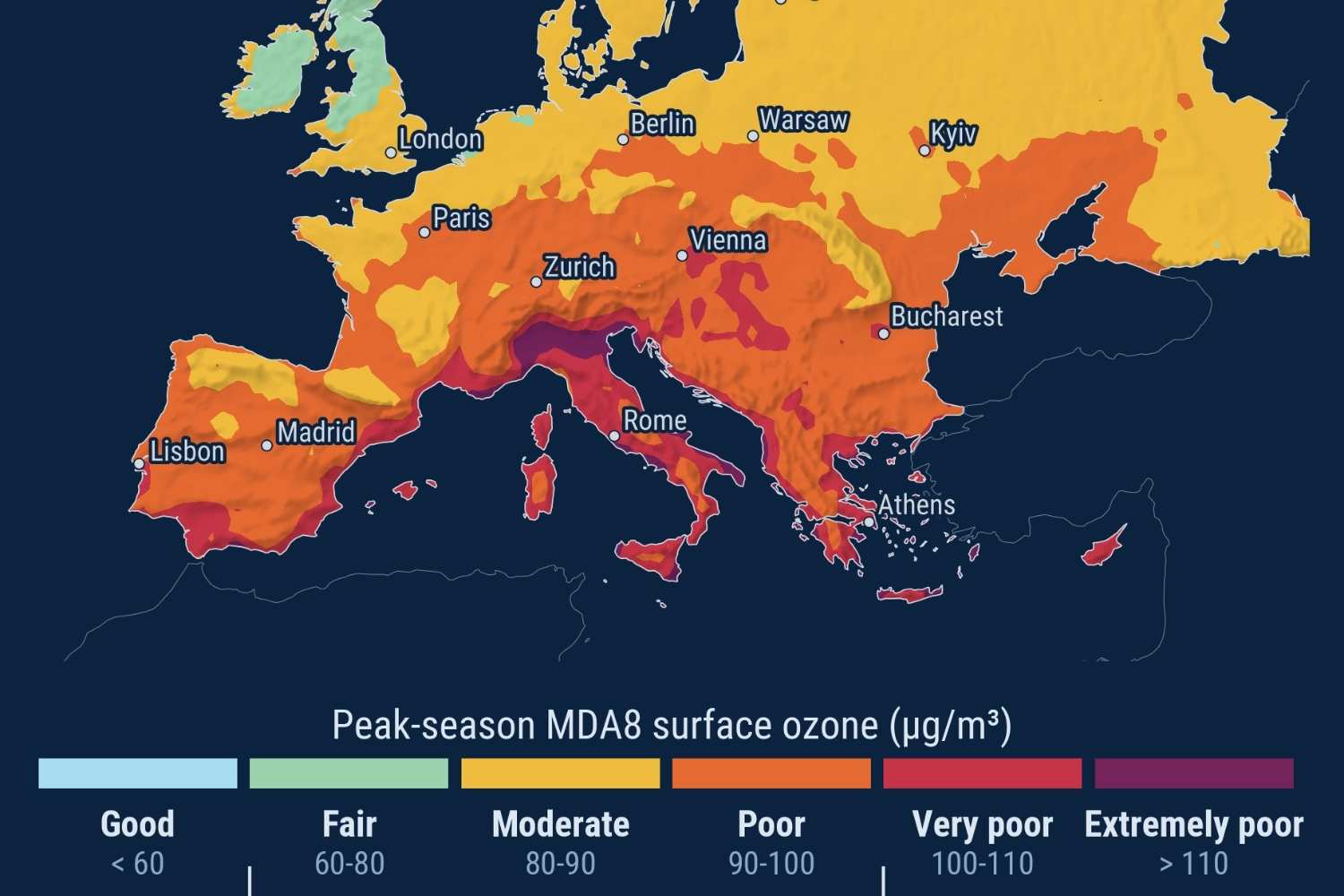
In Italy the problem is concentrated above all in the North. During the summer of 2026, the northern area of the country, including Milan, recorded some of the highest ground ozone concentrations observed in Europe in the warm season. This was revealed by Atmosphere Watch 2026, the global analysis of the Copernicus Atmosphere Monitoring Service (CAMS), the European service that monitors the composition of the atmosphere through models, ground observations and satellite data.
@Copernicus Services
@Copernicus Services
Heat pushes ozone up
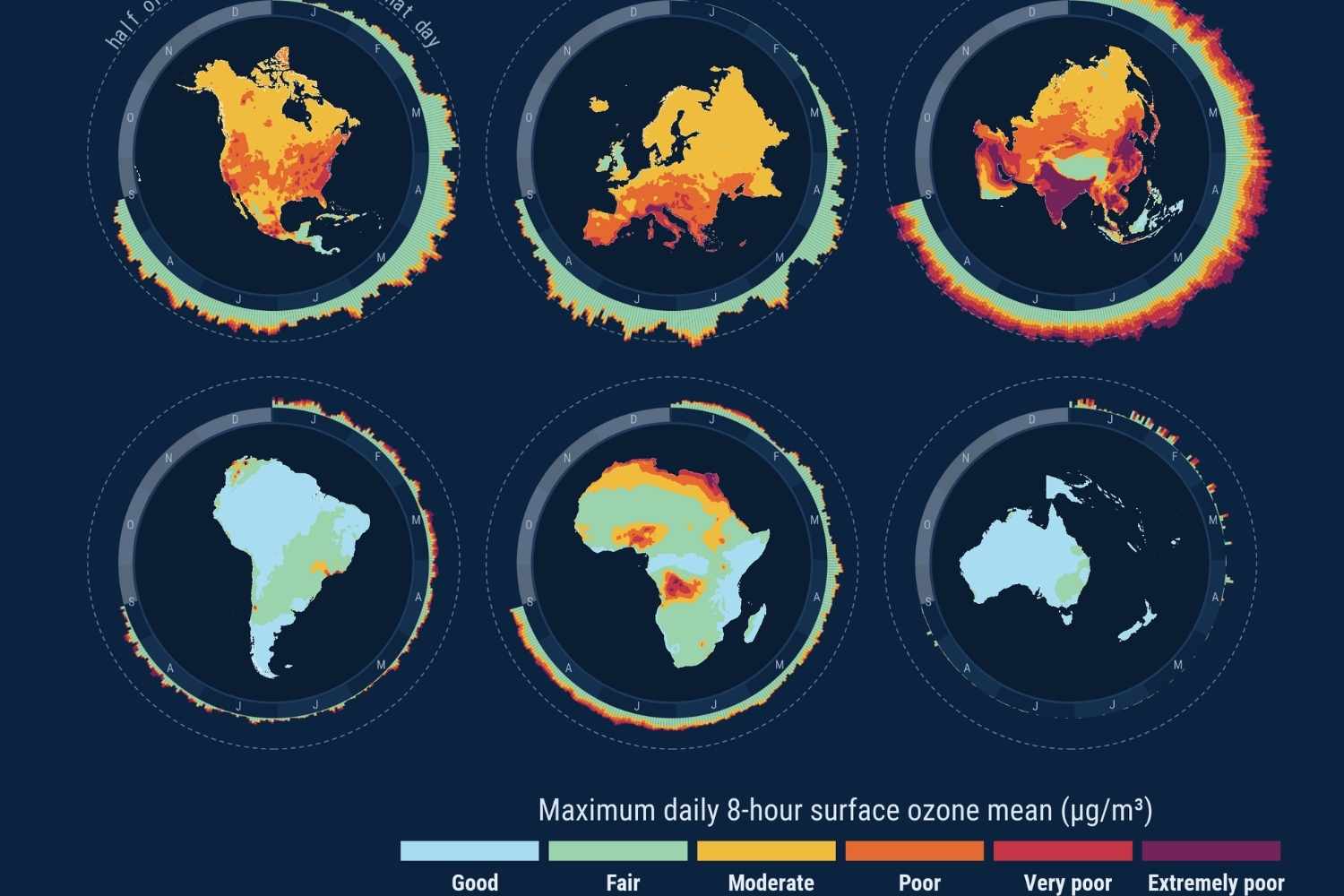
The Italian data is part of a European summer marked by repeated heat waves. Between June and August, high temperatures and strong solar radiation favored the formation of ozone, a pollutant that develops in the atmosphere when nitrogen oxides and volatile organic compounds react to light and heat. According to CAMS, in the first eight months of 2026 nearly 40% of the world’s population was exposed to ozone levels classified as extremely high. In Europe, around half the population experienced levels classified as “poor”, “very poor” or “extremely poor” according to the classification used by the analysis.
Southern Europe recorded the highest concentrations in the peak season and northern Italy is one of the European areas most affected by the increase in summer ozone.
A pollutant that is difficult to reduce
Ozone on the ground is different from that present in the stratosphere, where it has a protective function from ultraviolet rays. Near the earth’s surface, however, it is a pollutant that can damage health, vegetation and crops. In recent years, European air quality has improved for several pollutants regulated by EU legislation, including particulate matter, nitrogen dioxide and sulfur dioxide. For ozone, however, CAMS does not detect a clear decreasing trend.
European legislation establishes that the maximum eight-hour average daily concentration should not exceed 120 micrograms per cubic meter for more than 18 days a year. The long-term objective is set at 100 micrograms per cubic meter, in line with the indications of the World Health Organization.
Fires also fuel pollution
The large forest fires of the summer also contributed to worsening the situation. The fires that broke out in France and Spain in July and the one in the High Fens in Belgium in August produced enormous quantities of smoke and pollutants, transported by atmospheric currents even thousands of kilometers away. Fires emit fine particulate matter, nitrogen oxides and volatile organic compounds. Once in the atmosphere, these substances can react and contribute to the formation of ozone. The CAMS system follows these phenomena by combining satellite data, ground measurements and models that allow the transport of pollutants to be reconstructed.
For the Bergamo area, in particular, the analysis relating to the end of July indicates that the transport of ozone from outside Europe had a weight comparable to that of the overall European anthropic sources.
