
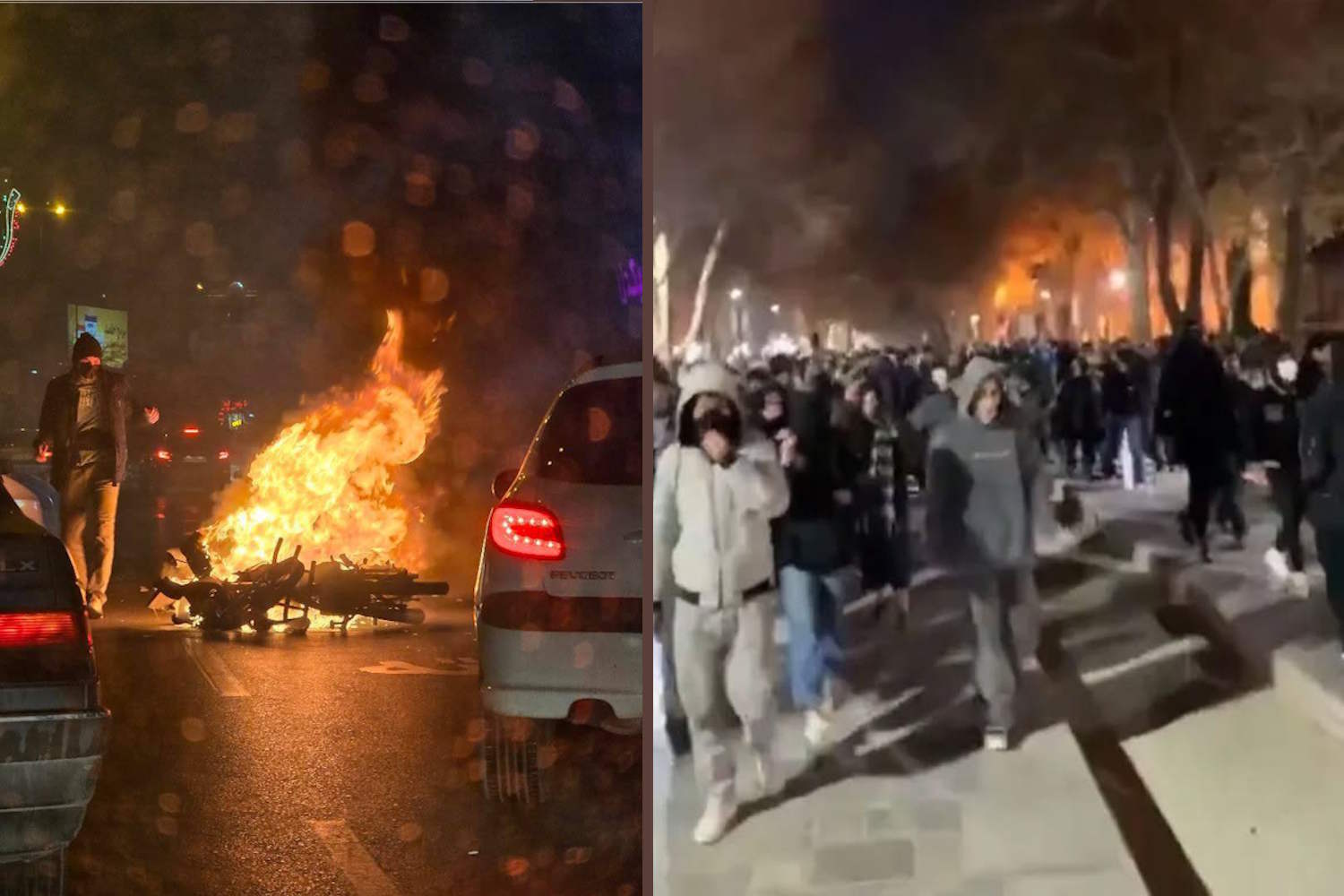
Iran is going through one of the darkest phases of recent years. Protests that erupted over the collapse of the economy and the skyrocketing cost of living have turned into deadly clashes, while the state’s response becomes increasingly brutal.
In fact, the economic crisis is now compounded by a repression that does not even spare hospitals and healthcare personnel, marking an alarming leap in quality.
But where does the protest come from? The demonstrations began with traders and shopkeepers taking to the streets against the handling of the collapse of the Iranian rial and out-of-control inflation. Today the country lives with inflation of over 40% and a currency that in 2025 alone has lost around half of its value compared to the dollar.
The closed bazaars and strikes quickly spread to students and citizens, exhausted by years of Western sanctions, international isolation and regional tensions. In just a few days, the economic protest has become an open challenge to political and religious power.
Violence has multiplied in different areas of the country: Lordegan, Kuhdasht, Isfahan, Marvdasht, up to the western provinces. Iranian media and human rights organizations speak of protesters killed, injured and arrested, often with versions conflicting with the official ones.
The authorities accuse “armed elements” and “infiltration”, while NGOs denounce the use of lethal force against unarmed civilians and arbitrary arrests. A script we have already seen, but which today takes on even more serious contours.
The assault on Ilam hospital
The most disturbing point in the crackdown came on January 4, when Iranian security forces attacked a hospital in the city of Ilam, where wounded protesters were receiving treatment or had sought refuge.
According to information gathered by activists and independent observers, in the previous days the province of Ilam was already the scene of a bloody repression, with deaths and numerous injuries. Many of them had been transported to the Imam Khomeini hospital in the city.
On January 4, Revolutionary Guards and special police forces surrounded the health facility. Testimonies speak of firearms, tear gas thrown inside the hospital, doors being broken down and beatings, which affected not only the demonstrators but also doctors, nurses and healthcare personnel.
The raids would not be isolated: security forces would raid several times, arresting injured protesters and even family members who were assisting them. An action that openly violates international law and the special protection guaranteed to healthcare facilities.
Human rights trampled upon
According to human rights organizations, Iranian security forces must immediately cease the illegal use of force and firearms, end arbitrary arrests of injured people and ensure that those in need of treatment can receive it without fear of being arrested or beaten.
The requests are clear:
The repression comes at an already explosive moment. The Iranian economy is practically strangled by sanctions, inflation remains out of control and the country has just suffered military attacks and an air conflict with Israel, which have aggravated the internal crisis.
From Tehran, the government alternates threats, military presence in the streets and vague announcements of dialogue. The Basij, a paramilitary militia loyal to Supreme Leader Ali Khamenei, continue to be at the forefront in containing the protests.
In any case, this is not the first wave of demonstrations in Iran, but this one has a greater specific weight. It arises from an economic crisis that affects everyone, cuts across different social classes and is part of a fragile geopolitical context.
However, the attack on a hospital marks a point of no return: it shows how far the authorities are willing to go to stifle dissent. A signal that does not only concern Iran, but anyone who continues to silently observe an increasingly ferocious repression.
Sources: Amnesty /
