
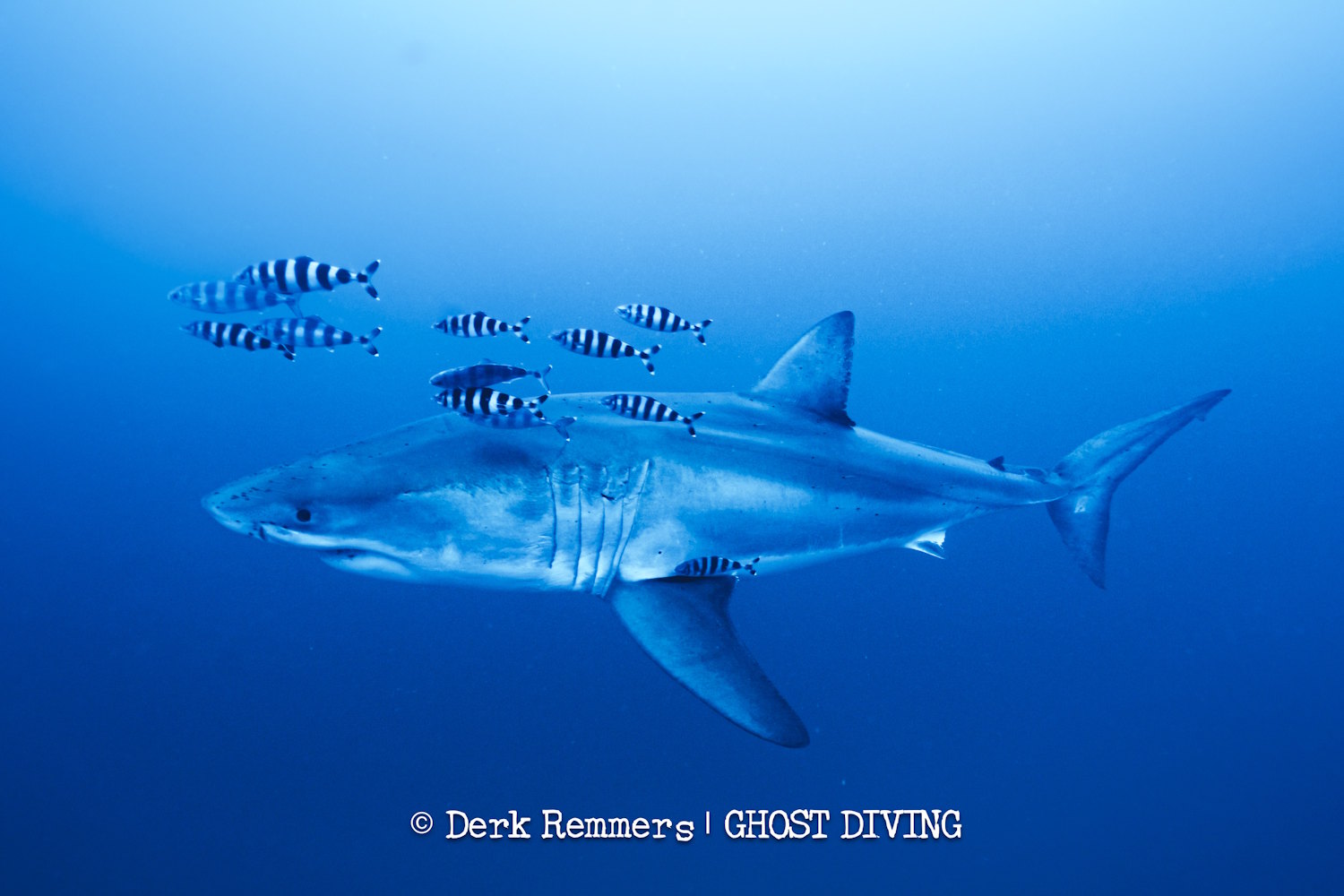
On World Oceans Day, which is celebrated on June 8, an incredible discovery comes from the heart of the Mediterranean: a group of divers engaged in removing ghost nets filmed underwater what experts believe to be the first adult white shark ever documented in its natural habitat in the Mediterranean Sea.
The meeting took place during an expedition organized by the Healthy Seas Foundation together with partners Ghost Diving and SDSS (The Society for Documentation of Submerged Sites), engaged in the recovery of fishing gear abandoned on a wreck located in the Strait of Sicily, between Sicily and Tunisia.
A video documentation created by divers had never been recorded before in the Mediterranean and to immortalize the animal it was Derk RemmersGhost Diving volunteer, who was on the seabed to free the wreck from the ghost nets. This abandoned fishing gear represents one of the most serious threats to marine wildlife: it continues to capture and kill animals for years, trapping turtles, fish and other species.
View this post on Instagram
The Strait of Sicily is considered one of the most important biodiversity hotspots in the Mediterranean, but it is also one of the most intensely exploited areas for fishing. Right here, ghost nets continue to transform wrecks and seabeds into real death traps, starting with sea turtles of the Caretta caretta species and large pelagic fish.
What makes this encounter so powerful is not just the shark itself, but the context in which it occurred – explained Veronika Mikos, director of Healthy Seas. We were there to remove ghost nets that were trapping marine life in a biodiverse ecosystem. Moments like this remind us how important it is to protect what still survives in the waters of the Mediterranean.
@Caterina De Seta/SDSS
ARW
Why this sighting is so important
White Shark, Great White Shark (Great White Shark), is today considered a species in very serious decline in the Mediterranean. Much of the information available on its presence comes in fact from specimens accidentally caught in fishing activities or found dead.
For this reason, a direct observation of an adult individual in its natural environment represents a rare scientific opportunity.
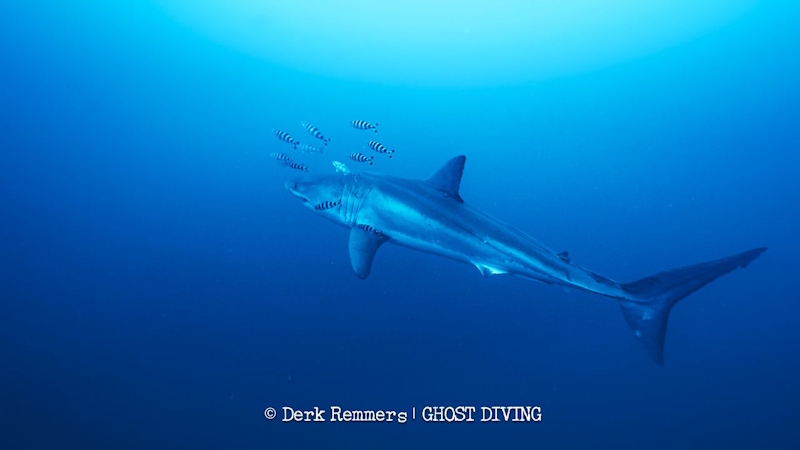
According to Carlo Cattano, researcher at the Sicily Marine Center of the Anton Dohrn Zoological Station in Palermo, this type of sightings is fundamental to better understand the distribution, behavior and habits of the species.
The observation also confirms the high conservation value of this area, which over the years has proven to be a key point for numerous threatened marine species, underlined the biologist.
Remove ghost nets to save marine ecosystems
During the mission, the divers continued to recover the nets entangled on the wreck and the surrounding seabed, eliminating a real danger for the animals that populate that ecosystem. Submerged wrecks, in fact, often function as real artificial reefs, attracting fish, crustaceans and other organisms. However, when they are wrapped in abandoned nets, they transform into traps that trap the very biodiversity they are supposed to host.
Statistically, it is more likely to win the lottery than to encounter such an iconic animal underwater, Remmers said. But that meeting made the importance of our work even more evident.
In addition to the removal of ghost nets, the expedition also included scientific monitoring activities and sampling of environmental DNA (eDNA), a technique that allows the presence of marine species to be identified through the genetic traces left in the water.
Meanwhile, today’s discovery, on World Oceans Day, reminds us of how much the Mediterranean still holds extraordinary biodiversity and how urgent it is to protect it from man-made threats.
