
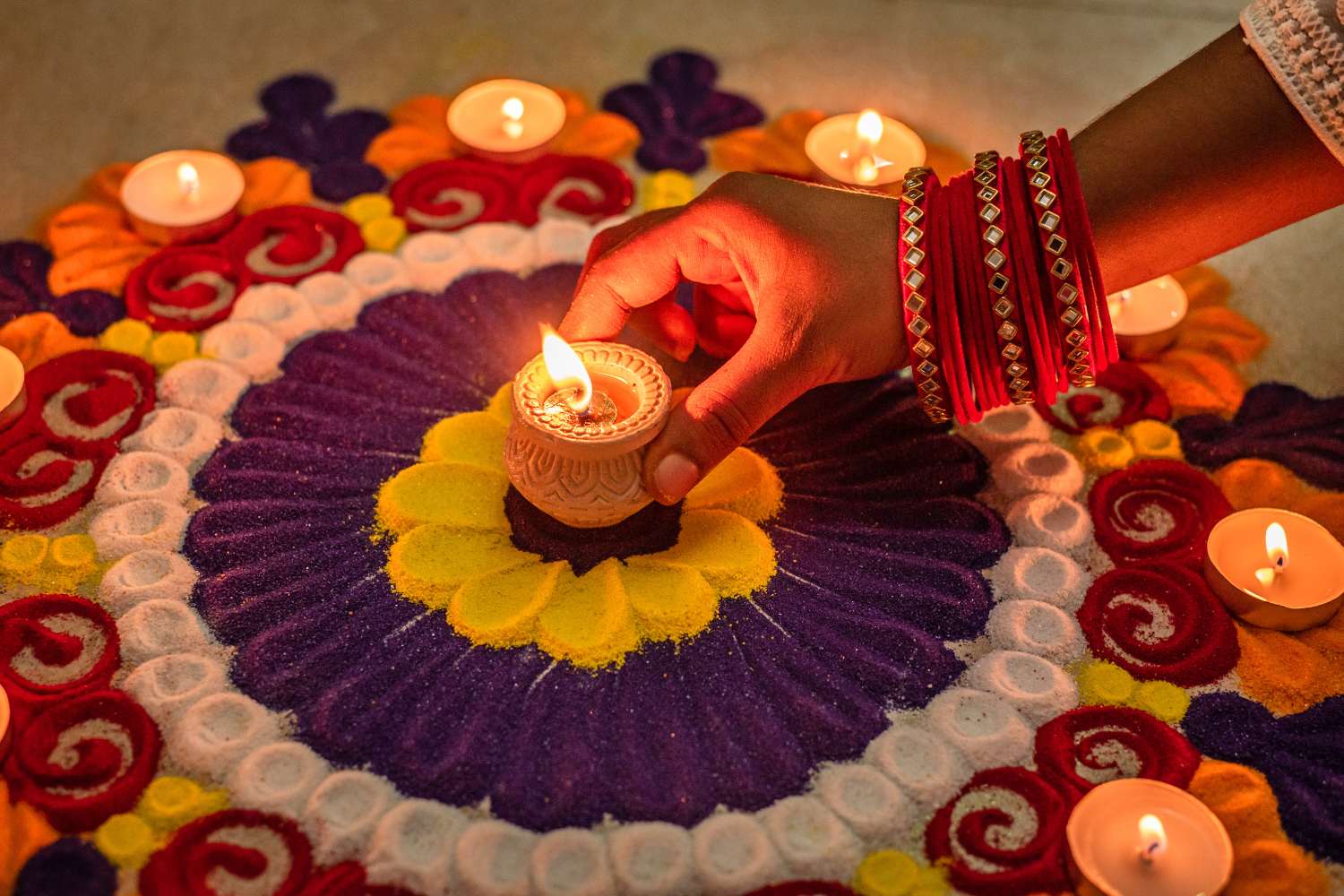
In India, the holiday of Diwali, also known as, is celebrated between October and November Divali or Deepavali. It is one of the most important and heartfelt anniversaries in the country, dedicated to light as a symbol of hope, justice and prosperity. This year, Diwali falls today, 20 October 2025, but in many regions the celebrations will continue into the next few days, as tradition dictates.
The origins of Diwali
The roots of this festival lie in Indian history and spirituality. Buddhists, Hindus, Jains and Sikhs celebrate it, each with a different meaning but linked to the same theme: the victory of light over darkness.
For Hindus, Diwali marks the return of Prince Rama to the kingdom of Ayodhya after fourteen years of exile and his victory over the demon Ravana. It is also the day dedicated to the goddess Lakshmi, consort of the god Vishnu and symbol of wealth and prosperity.
Ahead of the holiday, families clean and decorate their homes, buy new clothes and prepare desserts to share with relatives and friends. Oil lamps are lit and doors left open to guide the goddess Lakshmi into homes, to bring luck and abundance.
Light as a symbol of rebirth
During Diwali, Indian cities transform into a huge light show. The streets, temples and houses are decorated with thousands of small flames and colored lamps. It is the moment in which the bond with the community and with one’s own spiritual dimension is renewed.
Many take advantage of this opportunity to reconcile with family and friends, letting go of resentments and misunderstandings. Diwali thus becomes not only an external but also an internal celebration, an invitation to renew oneself and find balance.
One of the most recognizable elements of the celebration is the Rangoli, a design made with colored powders, rice or flower petals at the entrance to homes. Each family creates different ones, as a good omen and welcome for guests.
The flavors of Diwali
Food plays a central role in the celebration. Among the most prepared desserts are ladoos, made with chickpea flour, ghee and sugar, and barfi, a milk dessert flavored with cardamom or enriched with dried fruit.
During Diwali, families cook in large quantities, sharing dishes and sweets with friends, neighbors and colleagues. It is a gesture that represents generosity, gratitude and the celebration of abundance.
The different spiritual interpretations
Each religion experiences Diwali in a distinct way, but they all share the value of light as a symbol of knowledge and awareness.
For Buddhists, the festival coincides with the conversion of Emperor Ashoka, who abandoned violence to embrace the path of peace.
Jains instead celebrate the enlightenment of Mahavira, founder of Jainism.
For Sikhs, Diwali commemorates the liberation of Guru Hargobind Singh Ji in 1619, an event that marks the victory of spiritual freedom and justice.
In all its forms, Diwali remains a time of reflection and purification. The light of the lamps represents the purity of the soul and the ability to ward off negativity, paving the way for a new life cycle.
A more sustainable Diwali
In recent years, the trend to celebrate an eco-sustainable Diwali has spread in India. Many people choose to forgo fireworks to reduce pollution, preferring natural lights, solar-powered lamps and decorations made from recycled materials.
This new environmental sensitivity does not take anything away from the magic of the festival, but enriches its meaning, making it more aware and respectful of nature.
The festival of light
Diwali is much more than a religious celebration: it is a time of collective renewal, reconciliation and hope. In every home, the light of the lamps becomes a universal message of peace, harmony and confidence in the future.
Today, 20 October 2025, the whole of India shines with millions of lights that tell the same story: that of the victory of light over darkness, of good over evil and of life which, once again, is reborn.
