
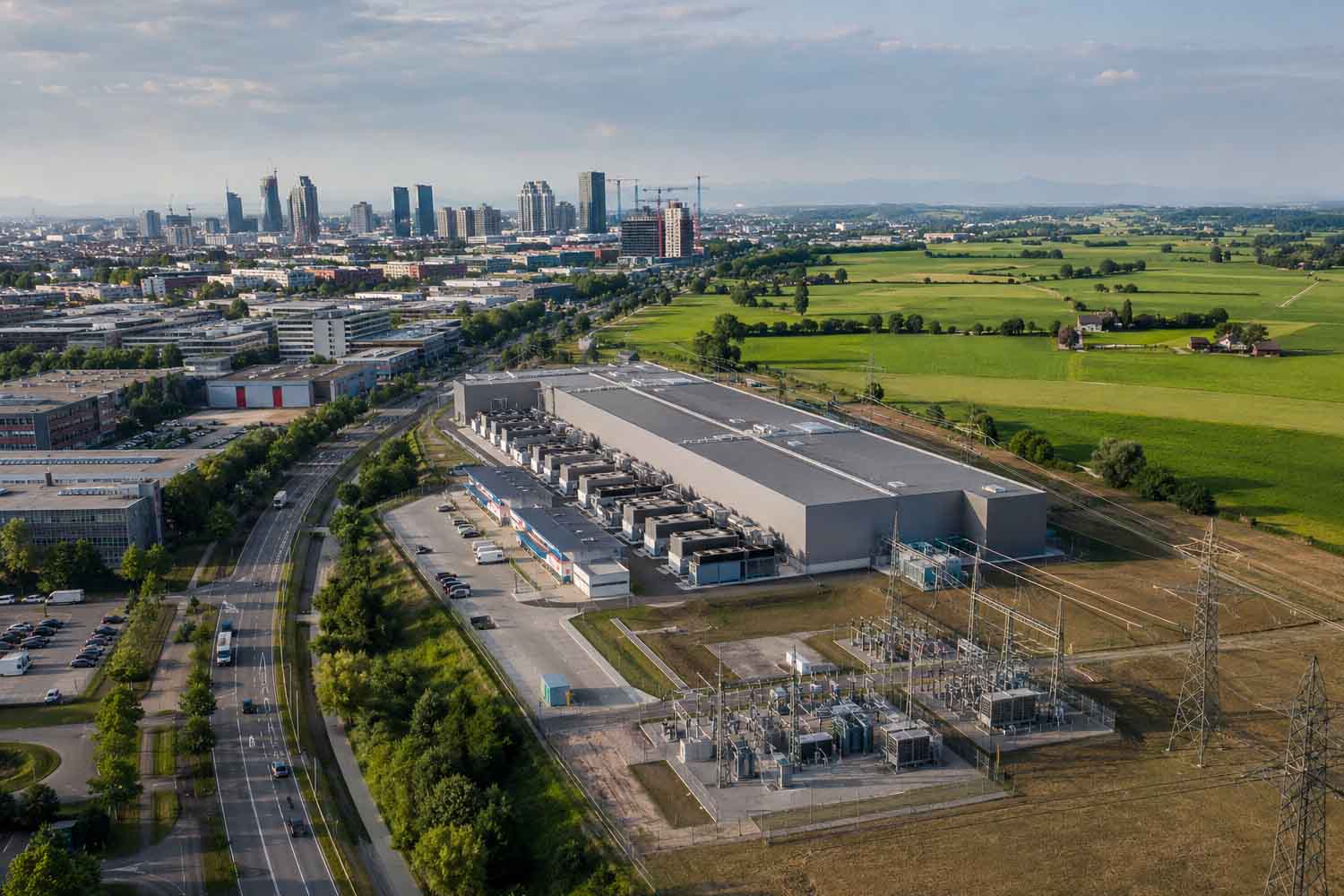
A data center comes with investments that can exceed a billion dollars, acres of servers and a hunger for electricity comparable to that of a small city. But how much of all this really remains for those who live around? In the United States the answer varies quite a bit depending on the address: jobs, wages and businesses are growing in metropolitan areas; in rural counties much of these benefits nearly disappear. Energy consumption, however, still remains.
This is what emerges from a study by Daniel Yue and Yiyang Zeng del Georgia Institute of Technologypublished in April 2026 as a working paper on SSRN. The researchers reconstructed the arrival of data centers in the United States and compared the economic performance of the counties that welcomed them with that of similar territories where the systems had not yet come into operation. The work is still a preprint and has therefore not completed the normal scientific review process.
When a data center arrives, something really moves
In the first three years after opening, on average, the county’s employment increases by 0.9%the wage bill by 1.1% and the number of businesses by 1%. The effects become larger over time: work reaches +3.5%, overall wages at +5%, economic activities at +4.7% and median family income at +1.9%. Building permits also grew significantly, by 16.1%.
Considering the size of the investments, however, the result is less spectacular than the inauguration with shovel, helmet and ribbon to cut might suggest. Large plants can cost over a billion dollars and, once construction is complete, they need relatively few permanent workerssometimes less than a hundred.
The interesting part comes when the researchers look at the map. In metropolitan areas, the data center is part of a system where construction companies, technicians, engineers, suppliers, professional services and specialized workers already exist. A substantial part of the money spent thus continues to circulate in the area, reaching other companies and other employees.
Outside the cities this multiplier becomes smaller. Missing skills are sought elsewhere, suppliers come from other counties and much of the money tied to the plant is shared with them. In non-metropolitan counties, the study, however, finds a small decrease in unemployment.
In other words, the shed can be rural. The induced much less.
Electricity, however, must be found on site
And this is where an apparently economic analysis inevitably becomes environmental. Data centers are extremely energy-intensive infrastructures and the growth of artificial intelligence is rapidly increasing their size and power requirements.
The International Energy Agency estimates that in 2025, data centers consumed approximately 485 TWh of electricity in the world. By 2030 they could reach around 950 TWh, almost double. In the United States, they will be responsible for a huge chunk of the new electricity demand expected this decade.
Their peculiarity also lies in their concentration. Globally they still represent a limited share of consumption, but a data center is not distributed in thin slices across the entire country. It connects to a specific network, in a specific territory, often together with other similar systems. This is why the IEA emphasizes that local effects on the grid can be much more pronounced than their share of global consumption.
The Georgia Tech study in fact finds another result: in the areas where the authors are able to more clearly measure the relationship between the plant and the territory served by the utility itself, electricity prices increase by about 5% after the arrival of the data center. It is an estimate that the researchers themselves treat with caution, because electricity companies can serve multiple counties and the rules for distributing costs change from state to state.
In short, the problem also lies in a very concrete question: who pays for the new lines, substations, generation capacity and all the adjustments necessary to power the new neighbor?
More electricity demand also means wondering where it will come from
The bill is only part of the bill. The other concerns the sources used to produce all that electricity.
According to IEA projections, renewables are expected to meet about half of the increase in global data center demand through 2030. The rest won’t magically be carbon-neutral: natural gas and coal will continue to play an important role at least in the short termwhile networks and accumulations will have to grow quickly enough to keep up.
In the United States there is already a rather concrete sign. A working paper from the Federal Reserve Bank of Dallas estimates that existing data centers have increased wholesale electricity prices by an average of 3-5%, with greater effects in the large corridors where these facilities are concentrated. Future scenarios depend very much on how many projects will actually be built, how hard they will work and the speed with which new energy sources will enter.
The same researchers also modeled the additional emissions needed to produce the required electricity: they increase significantly in scenarios with stronger data center growth. They are projections, therefore not photographs of the future already written, but they show how difficult it is to discuss this infrastructure by separating the economy, the network and the climate.
The billion announced says little about what the community will have left
The study concerns the United States and the percentages cannot be transferred to Italy, where the electricity grid, taxation, labor market and authorizations work differently. The observed mechanism, however, calls into question one of the phrases that most often accompany these projects: investments will arrive, therefore development will automatically arrive.
It depends on who builds, who is hired, where the suppliers are based, what public incentives are granted and above all who will bear the energy and infrastructure costs. According to Yue and Zeng, even the territory matters more than the size of the data center.
In cities with already dense economies, the new system can actually amplify what it finds. In rural areas, something much less generous can happen: the servers remain, the electricity is needed, while a large part of the work and money takes the road to another county. And for a machine that promises to bring billions of dollars into the territory, knowing what remains after the trucks pass is perhaps the most important calculation.
