
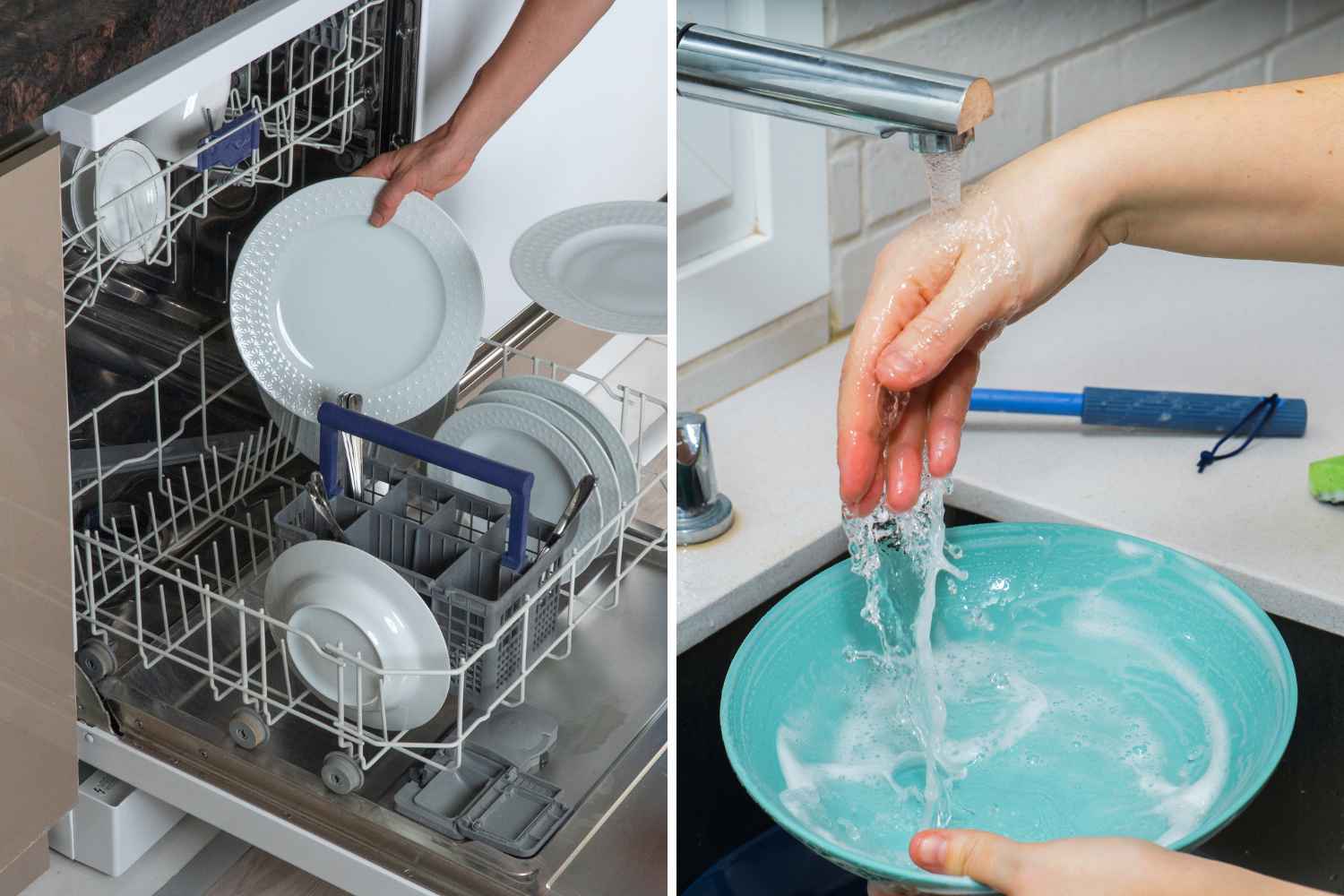
Water is an increasingly precious resource and, with increasingly frequent drought periods in many areas of the planet, reducing waste in daily activities has become even more important.
Among the domestic gestures that can have the greatest impact on consumption is washing the dishes. And here comes a very common question: to save water, is it better to wash the dishes by hand or use the dishwasher?
An experiment carried out by the British Consumers Association Which? had already shown a significant difference between the two systems. Today, however, we can integrate those results with more recent data, which confirm the advantage of the dishwasher when used correctly.
The Which?
In the test, an expert from the association washed the same amount of dishes, with a similar level of dirt, first by hand and then using a dishwasher.
It was a service for ten people, complete with plates, glasses and cups. The dishes destined for the dishwasher were loaded directly into the appliance, without pre-washing under the tap.
To measure consumption, the water drained from the dishwasher was collected in a large container. The same procedure was repeated during manual washing, collecting all the used water in the sink.
The result was quite clear: washing by hand had required around 45 liters of water, while the dishwasher had used around 13 litres.
What the latest data says
However, the comparison does not stop at that single experiment. In 2026 Which? has published new data based on tests carried out on dozens of recently marketed dishwashers.
According to the association, washing by hand a quantity of dishes equivalent to around 14 place settings can require on average around 63 liters of water. A modern dishwasher, however, can use less than 13 liters with a standard program and around 10 liters with the Eco program.
In percentage terms, it means that using the dishwasher can reduce water consumption by around 80% compared to manual washing, with savings that can further increase by choosing the Eco cycle.
The indications from the European Commission also point in the same direction. An efficient dishwasher can use around 9 liters of water per Eco cycle, whilst still being able to wash a large number of place settings.
Of course, not all dishwashers consume the same amount of energy. The values may change depending on the model, capacity, selected program and age of the appliance.
Does the Eco program really consume less?
The Eco program is generally the most fuel efficient, although it often lasts longer than rapid or intensive cycles.
The longer duration does not necessarily mean greater energy expenditure. On the contrary, the Eco program tends to work with lower temperatures and optimize the use of water during the wash.
For this reason, when the dishes do not have particularly stubborn dirt, choosing the Eco cycle can help reduce both water and energy consumption.
Better to avoid pre-washing under the tap
One of the most common mistakes is to carefully rinse plates, pots and glasses before putting them in the dishwasher.
This habit can nullify an important part of the water savings guaranteed by the appliance.
In most cases it is sufficient to remove solid food residues with cutlery or a napkin and load the dishes directly. Modern dishwashers are designed specifically to wash dirty dishes without the need for a real manual pre-wash.
Leaving the tap running for several minutes before starting the dishwasher can add many liters to the overall consumption.
How much does your dishwasher really consume?
To find out the real consumption of your appliance it is useful to check the energy label.
European dishwasher labels indicate water consumption expressed in liters per Eco cycle, as well as energy consumption per 100 cycles, appliance capacity, program duration and efficiency class.
This allows you to easily compare different models before purchasing.
A more recent dishwasher that is well sized for the family’s needs can therefore make a significant difference to consumption over the course of the year.
Dishwasher or hand washing: which is better?
To wash a significant amount of dishes, the available data continues to indicate the dishwasher as the generally more efficient solution from the point of view of water consumption, especially when used at full load and with the Eco programme.
The comparison naturally changes when it is just a glass, a cup or a couple of plates. In these cases it would not make sense to start an entire cycle.
How you wash dishes by hand also makes a big difference. Leaving the tap open continuously is the most wasteful system, while filling a basin or sink tub and using water in a controlled way allows you to significantly reduce waste.
Overall, however, when the dishwasher is full, is loaded correctly and does not pre-wash under running water, it remains one of the most effective solutions for reducing water consumption in the kitchen.
Energy and costs must also be considered
Water consumption is not the only element to evaluate. The water used for manual washing must also be heated, resulting in gas or electricity consumption.
For this reason it is not correct to think that washing dishes by hand does not involve any energy consumption.
At the same time, precise costs vary greatly based on energy tariffs, the type of system used to produce hot water, the model of dishwasher and the detergent chosen.
Rather than relying on a universal figure, therefore, it is useful to focus on good habits: use the dishwasher only when it is sufficiently loaded, prefer the Eco program and do not waste water with the pre-wash.
Years after the first experiment, the conclusion remains essentially the same: a modern dishwasher, used correctly, can consume much less water than traditional washing of dishes under the tap.
View this post on Instagram
