
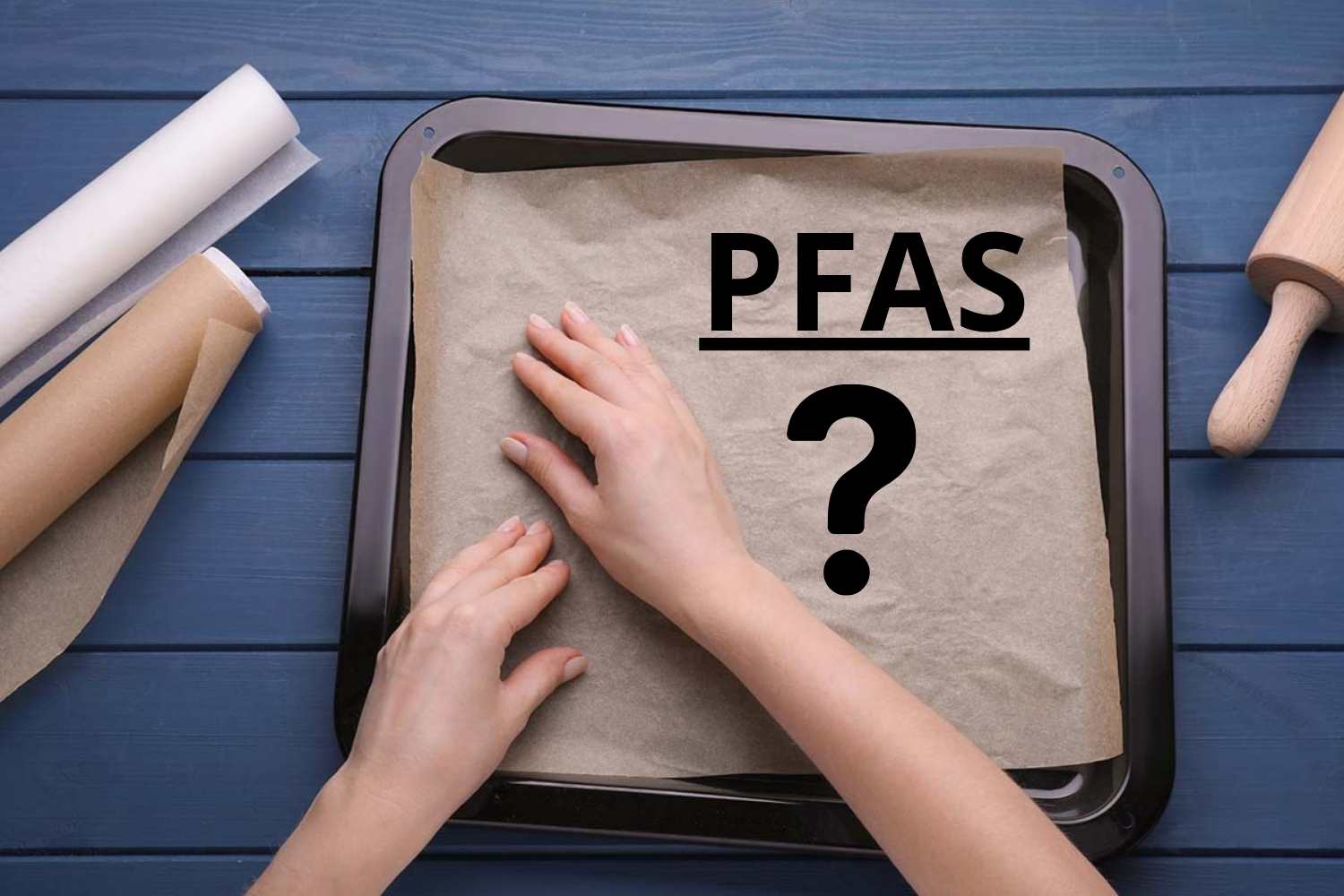
They are everywhere: in waterproof clothes, in non -stick pots, in cosmetics and even in food packaging. We are talking about the Pfas, “eternal chemicals”, known for their ability to reject water, fat and dirt. But what do we know about their presence in objects that we use every day in the kitchen, such as parchment paper and silicone mats? Is it appropriate to worry every time we bake a biscuit pan?
But let’s start from the beginning. Pfas (Per- and polypluoralchilic substances) are a vast group of chemical compounds produced industrially. Their main feature is the extreme resistance to degradation, both in the environment and in the body. Hence the nickname “Forever Chemicals“.
Numerous scientific studies have connected exposure to certain types of PFAS to health problems, including thyroid diseases, diabetes, obesity and reduction of birth weight in infants.
Does pfas contain pfas?
One of the most common questions is if the parchment paper contains PFAS, given that it must resist fat and humidity. To clarify, the German magazine ÖKO-TEST He deepened the topic by talking to an expert.
According to Manuel Fernández, head of policy on chemicals at the German Federation for the environment and the protection of nature (bund), at least in Europe – and therefore also in Italy – the baking paper on the market does not contain PFAS in significant quantities. In general, in fact, it is covered with silicone to obtain the non -stick effect.
However, this does not mean that it is completely critical. In fact, the silicone coating, although different from the PFAS, is not biodegradable, can accumulate in the environment and requires a highly energy intensity production process.
Better reusable mats and sheets?
More and more consumers use reusable oven mats, a decidedly more sustainable choice. But be careful: some of these, explains Fernández, are made of PTFE, better known as Teflon, a material belonging to the Pfas family. At high temperatures, these materials can release toxic residues, in particular if the product is damaged, used incorrectly, or of low quality.
ÖKO-TEST Remember that in a 2021 survey he had detected the presence of Pfoa, a PFAS prohibited in the EU, in a teflon baked mat, with values higher than the limited limits.
As you have understood, not all products are dangerous, but caution is needed and choose certified materials as well as avoid excessive overheating.
The best choice
The expert therefore reassures: in general, both the parchment paper and the silicone mats are safe products; The real risk is contained if you choose certified quality items and too high temperatures are avoided or the use of damaged materials. There is therefore no reason to be alarmed with the normal use of parchment paper.
However, the safest and most sustainable solution to bake in the oven remains another, the most traditional: grease the pan with vegetable oil (or butter/margarine at high temperature) and then sprinkle with flour or breadcrumbs. It is a simple, economic method, without harmful substances and suitable for any type of oven.
Don’t you want to lose our news?
Sources: ÖKO-TEST / Bund
