
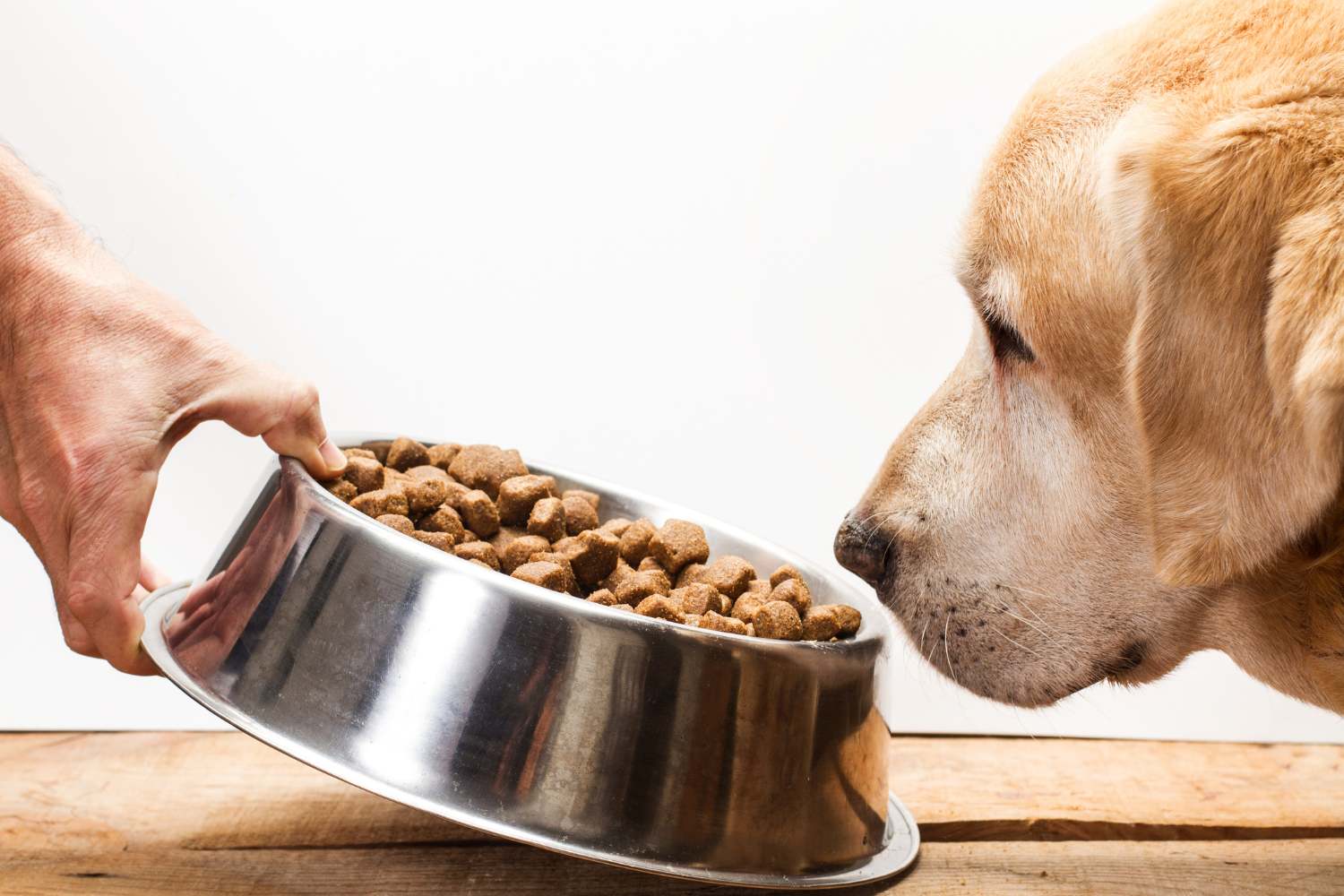
We often don’t think about it, but also the production of food for pets contributes significantly to environmental pressure worldwide, above all due to the use of ingredients of animal origin. Feeding over 471 million dogs in the world with meat diets generates high greenhouse gas emissions, water consumption and soil use. For this, vegetable -based dry foods could represent a more sustainable solution, reducing the environmental impact associated with dogs feeding.
To say it is a new study, conducted by the University of Nottingham and published on Frontiers in Sustainable Food Systemswhich compared the environmental impact of 31 dry foods for dogs sold in the United Kingdom. The products analyzed included those based on vegetables, poultry, red meat (beef and lamb) and special veterinary diets, all for adult dogs and complete from a nutritional point of view.
The authors evaluated five main environmental indicators for each food per 1,000 kcal:
In the analysis, the main ingredients of each product and their proportions by weight were considered, correcting for humidity and energy density. The selection included 27 different brands, excluding non -complete or not intended foods.
The results of the study
The results of the study were very clear: plant -based foods showed a clearly lower environmental impact on all five parameters considered: soil use, greenhouse gas emissions, acidifying emissions, eutrophic emissions and freshwater sampling.
On the contrary, red meat diets – in particular beef and lamb – are by far the most impactful, while poultry -based those are placed halfway. Even special veterinary foods, while containing semi -milintic components, have an intermediate impact between vegetable and red meat.
To have a more concrete idea of the proportions, according to the study: to produce a thousand calories of red meat for dogs, more than 57 m² of land are needed, while the same vegetable calories require just 2.7 m². CO₂ emissions of beef or lambs are almost five times higher than those of vegetable food; The acidifying and eutrophizzing emissions exceed 7-8 times those of vegetable products, and the necessary water doubles.
To make the impact even more concretely, the authors offer a visual comparison: an adult dog of 20 kg, fueled exclusively with flesh -based food for all adult life (about 9 years), “would consume” the equivalent of 57 ground football fields. With a vegetable diet, however, the necessary space is drastically reduced to 1.4 football fields.
Here, specifically, the data on the earth necessary to produce the food of a 20 kg adult Labrador Retriever, fed for 9 years with different foods in the United Kingdom:
CO₂ emissions equivalent to the entire adult life of the dog vary from 2.8 London-New York (vegetable) trips to over 31 trips (beef).
This comparison shows how much the food choices of our pets can weigh on the environment and how much, at least in part, it is possible to reduce the impact by choosing vegetable alternatives, without compromising the nutritional needs of dogs. Even inserting only some portions of vegetable food in the daily diet can make a significant difference in the long run.
