
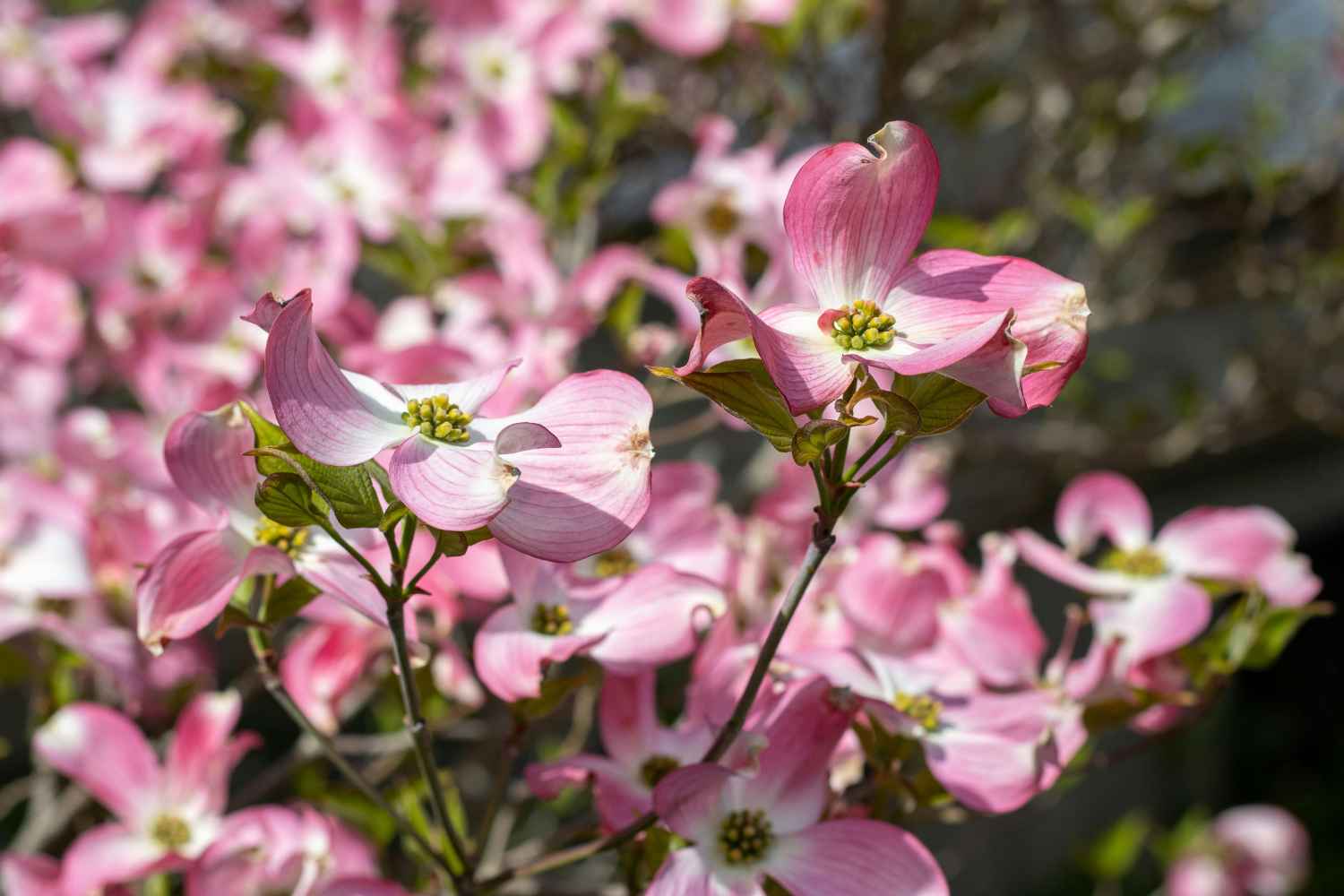
The dogwood, scientifically known as Cornus masis a shrub belonging to the family Cornaceae which deserves some attention due to its rich and fascinating history, as well as its many uses.
This plant, together with the hazelnut, is among the first to flower, already in February, and produces edible fruits when fully ripe, fruits that can be transformed into jams, jellies and liqueurs, and in ancient times they were preserved in honey or brine to ensure their availability even out of season.
Dogwood varieties and cultivars
In addition to the generic botanical species, there are numerous selected cultivars that differ in fruit size, productivity and ripening period, and it is a shame not to mention them in an article dedicated to cultivation. Among the most widespread Ukrainian varieties, ‘Yantarnyi’ (or Jantarnyj) stands out, one of the most prolific cultivars, capable of producing up to 30 kg of fruit from a ten-year-old bush, with medium-sized yellow drupes.
Also very popular is ‘Elegant’ (also known as Elehantnyi), a variety released in Ukraine in 1980, particularly productive, with shiny dark red fruits with an intense flavour, which ripen early and do not fall from the plant when ripe; to bear fruit at its best, however, it requires another dogwood plant as a pollinator. One of the most productive cultivars of all is the one marketed as ‘Red Star’, which can achieve an average yield of around 50 kg from a fifteen-year-old bush. There is no shortage of valuable European varieties, such as the Polish ‘Szafer’, with pear-shaped and dark cherry-shaped fruits, a sugar content of around 14% and medium-early ripening in the first half of September, or ‘Golden Glory’ and ‘Variegata’, more widespread in the ornamental field due to their shape and foliage.
Generally speaking, dogwood tends to be self-sterile or only partially self-fertile, so whatever the cultivar chosen, the presence of several different varieties in the same plot is essential to guarantee good fruiting.
Characteristics and cultivation of dogwood
©Virynja/123rf
The dogwood is a fruit and ornamental plant, less known than other fruit trees, but very useful for increasing biodiversity in mixed gardens and orchards. Originally from Europe, it adapts easily to Italian climates and grows up to about 8 meters in height. It flowers early in spring, with small yellow inflorescences followed by oval, green leaves. The fruits, called carnelians, are red drupes of about 2 cm which ripen between August and October.
Dogwood wood, known for its hardness, was once used to make tool handles. The plant has a strong sucking attitude, which allows it to multiply easily. However, grafted varieties tend to exhibit this characteristic to a lesser extent.
Where to plant dogwood
The dogwood grows well in Italy, as it adapts to different types of soil and climate, including calcareous soils and altitudes up to 1400 meters above sea level. It can be planted both in full sun and in partial shade, while planting usually takes place by transplanting a 2 or 3 year old seedling.
To encourage growth and development of the root system, we recommend digging a deep hole and adding mature compost or manure.
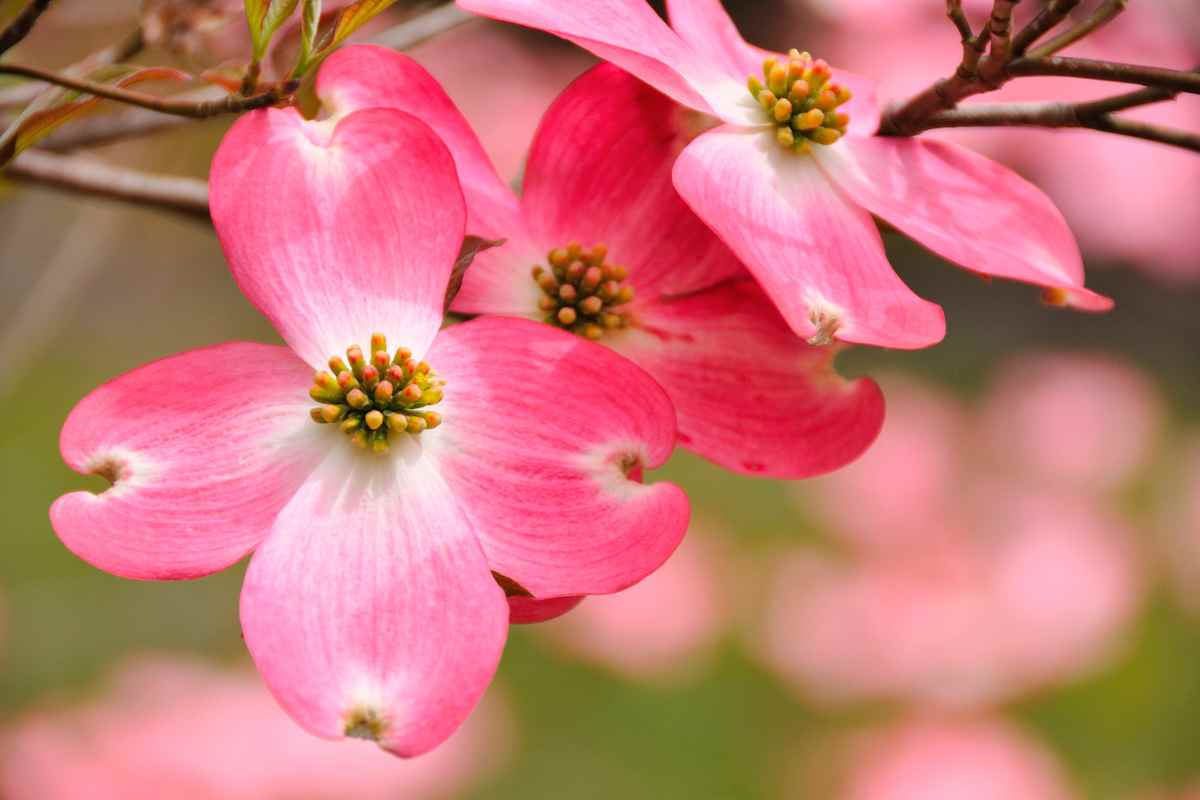
Dogwood cultivation techniques
The dogwood is a rustic and easy to grow plant. It requires periodic fertilization, especially in spring, with manure or compost, while irrigation is necessary in the early years and during periods of drought (it is also very useful to irrigate with nettle or horsetail macerates to provide additional nutrients).
Mulching helps limit the growth of wild herbs, so use natural materials such as straw or cut grass.
Pruning is simple and involves just a few operations: remove dry or damaged branches, and prune any that are too tangled.
Growing dogwood in pots
To grow dogwood in pots, choose well-fertilized soil and carry out irrigation operations more frequently than when growing in open ground.
Also remember that the soil must be topped up every year and that periodic repotting is necessary.
Production times, planting distances and pollination
Whoever decides to plant a dogwood must take into account a certain amount of patience, especially if starting from a plant obtained by seed: in this case, in addition to the long germination, the plant only reaches flowering around the tenth year of life, and seed plants are also distinguished by a strong genetic heterogeneity and a slower fruiting compared to grafted plants. For this reason, those aiming for faster and more uniform production prefer to start from grafted specimens, which start production significantly earlier than seedlings.
Planting distances also deserve attention: professional operators generally indicate rows spaced 4-5 meters apart, with a minimum distance of 2-2.5 meters between plants along the row, to favor productivity per unit of surface area in the first years; some more prudent sources instead recommend a minimum of 5 meters between plants for the more vigorous cultivars and 3 meters for the more compact ones, given the natural tendency of the dogwood to grow very wide.
On the pollination front, it should be remembered that the dogwood is often only partially self-fertile: for this reason, when creating a system with grafted plants, it is good practice to alternate every two grafted plants with a plant obtained from seed, in order to encourage cross-pollination. This attention to genetic diversity in the plant concretely translates into more abundant and regular fruiting over time.
Dogwood diseases and pests
The dogwood can be attacked by the dogwood scale insect, visible above all on the leaves and fruit stalks: the presence of sticky honeydew is a sign of its presence.
Among the most effective biological remedies we can include fern macerates and suggest manual cleaning of the affected leaves through the use of alcohol.
As regards fungal pathologies, leaf spots caused by Phyllostica corniola can be prevented with horsetail or propolis macerates.
How to collect and use dogwood fruits
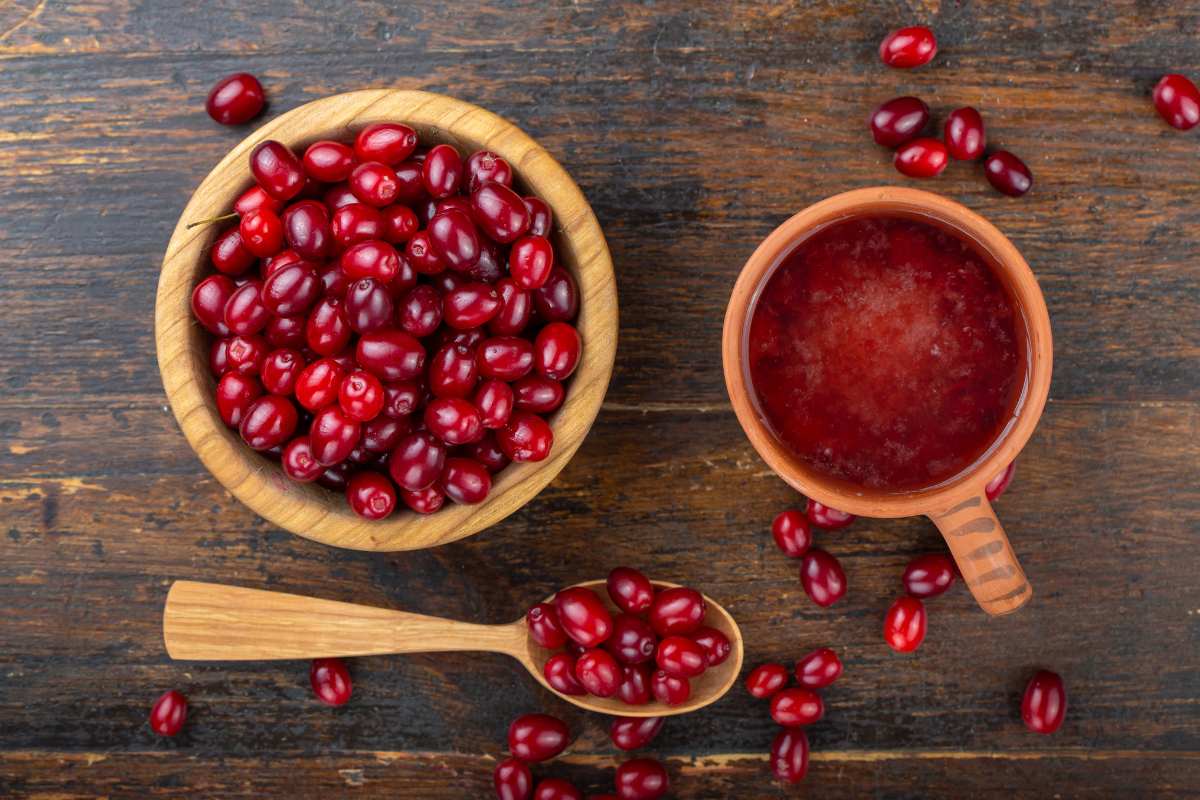
Dogwoods are harvested from August to October. Rich in vitamin C, they are excellent consumed raw or transformed into jams, jellies, candied fruit and pickled preserves, also finding space in the preparation of liqueurs and grappas.
Properties and traditional uses of dogwood
Throughout history, each part of the dogwood has had its own use: the ground seeds were used as a coffee substitute, known as “Viennese coffee”, while the branches were used to create very resistant baskets.
Furthermore, the rest of the parts that make up the plant’s plant are dyes, capable of coloring fabrics yellow.
Dogwood wood is known for its extraordinary resistance, the hardest among European trees: it was used to make gears, wheel spokes, mechanical parts subject to wear and even weapons such as the Macedonian warriors’ pike and St. George’s spear.
In mythology, it is said that the Trojan Horse was made of dogwood, and the famous Gordian knot, which Alexander the Great cut with his sword, was made of dogwood bark. There is also a reference to the origins of Rome: according to legend, Romulus traced the borders of Rome with a dogwood stick, which took root and became a large tree.
Cultural and legendary significance of the dogwood
In Serbian Orthodox culture, the dogwood is considered sacred and protective for health, while a Christian legend tells that the dogwood, once majestic and strong like the oak, was blessed by Jesus so that it would no longer be used for painful purposes, reducing its growth.
Dogwoods are less common today, but still grow in some sheltered locations. When the fruits reach maturity at the end of summer, the fresh and acidic flavor evokes memories of times gone by.
Growing a dogwood is a way to rediscover an ancient and almost forgotten fruit, capable of adding variety and biodiversity to your garden or orchard.
The plant is robust, versatile and relatively easy to manage, making it a particularly appropriate choice for enthusiasts of gardening and sustainable agriculture.
