
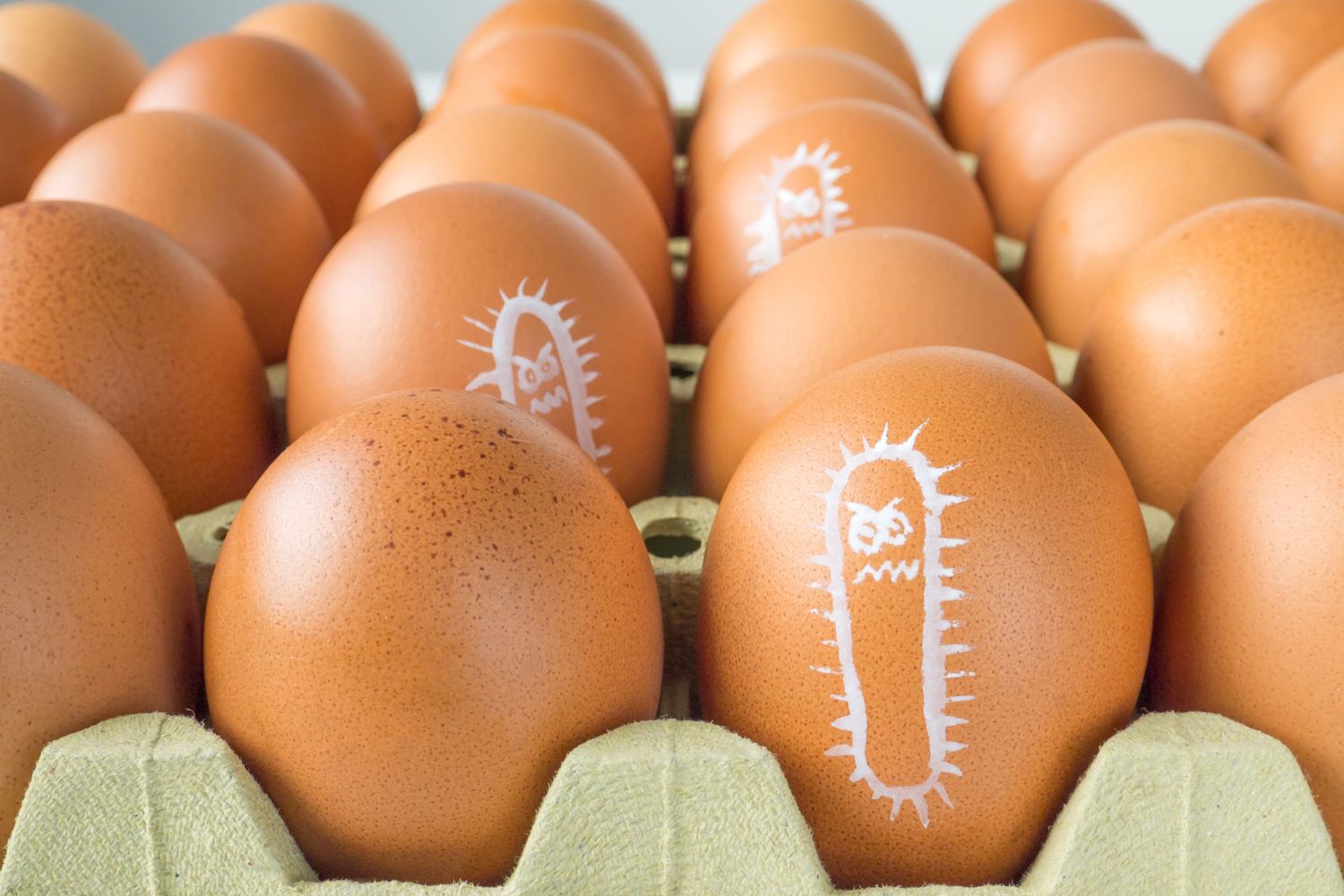
Eggs are among the most common foods on our tables, but when possible Salmonella contamination emerges it is important to understand which products are actually involved and where they were distributed. There is an ongoing outbreak of salmonellosis in Belgium which, according to the latest data released by the Belgian Federal Agency for the Safety of the Food Chain (AFSCA/FAVV), has already recorded at least 306 cases.
However, the story does not only concern Belgium. The eggs coming from the company at the center of the investigation were also potentially distributed in other European countries, including Italy, triggering an alert and the necessary checks on their presence on the market.
These are eggs produced by Laerco BV, a company based in Geel, in northern Belgium. The presence of Salmonella had already been identified in recent months and had led to an initial recall of the eggs.
Despite the measures adopted, however, new cases did not decrease as expected and further checks led to the presence of the bacterium also being identified in a second chicken coop on the company. Hence the Belgian authorities’ decision to block the entire farm and expand the recall.
The recalled eggs
The AFSCA has ordered the recall of potentially contaminated eggs produced by Laerco. The recall concerns eggs from free-range hens identifiable through specific codes printed on the shell:
The official AFSCA recall was issued on August 10, 2026, and urges consumers who own the affected eggs not to consume them and to return them to the point of sale.
@afsca
Because Italy was also informed
The issue took on a European dimension because the eggs did not remain exclusively on the Belgian market. The relevant notification in the European RASFF (Rapid Alert System for Food and Feed) system is 2026.7152. Available distribution information indicates several European countries involved, including Italy, France, Luxembourg, Czech Republic, Poland, Portugal, Spain and the Netherlands.
This does not mean that there are cases of salmonellosis linked to these eggs in all the countries indicated. Instead, it means that the authorities were involved in the alert because the product may have been distributed beyond the borders of Belgium and therefore had to be traced and, if necessary, withdrawn.
It is a procedure foreseen by the European food alert system: when a potentially risky food circulates in multiple states, the information is shared between the authorities to allow coordinated controls and interventions.
How egg contamination can occur and the risks
Salmonella is a bacterium that can cause salmonellosis, a foodborne infection that typically causes diarrhea, fever, abdominal pain, nausea and sometimes vomiting. In most cases the symptoms resolve spontaneously, but the infection can be more serious in young children, the elderly and frail people.
But how does Salmonella get into eggs? Contamination can already occur during the formation of the egg, if the hen is infected, or later, affecting the surface of the shell through contact with contaminated material and the farm environment.
The risk is greater when eggs are eaten raw or undercooked, because adequate cooking helps to eliminate the bacterium. Particular attention should therefore be paid to preparations such as tiramisu, homemade mayonnaise, creams and mousses.
The Belgian case shows once again how important food traceability is: quickly identifying the origin of the contamination allows the authorities to recall the products involved and limit the risk of new cases.
Sources: Afsca / RASFF
