
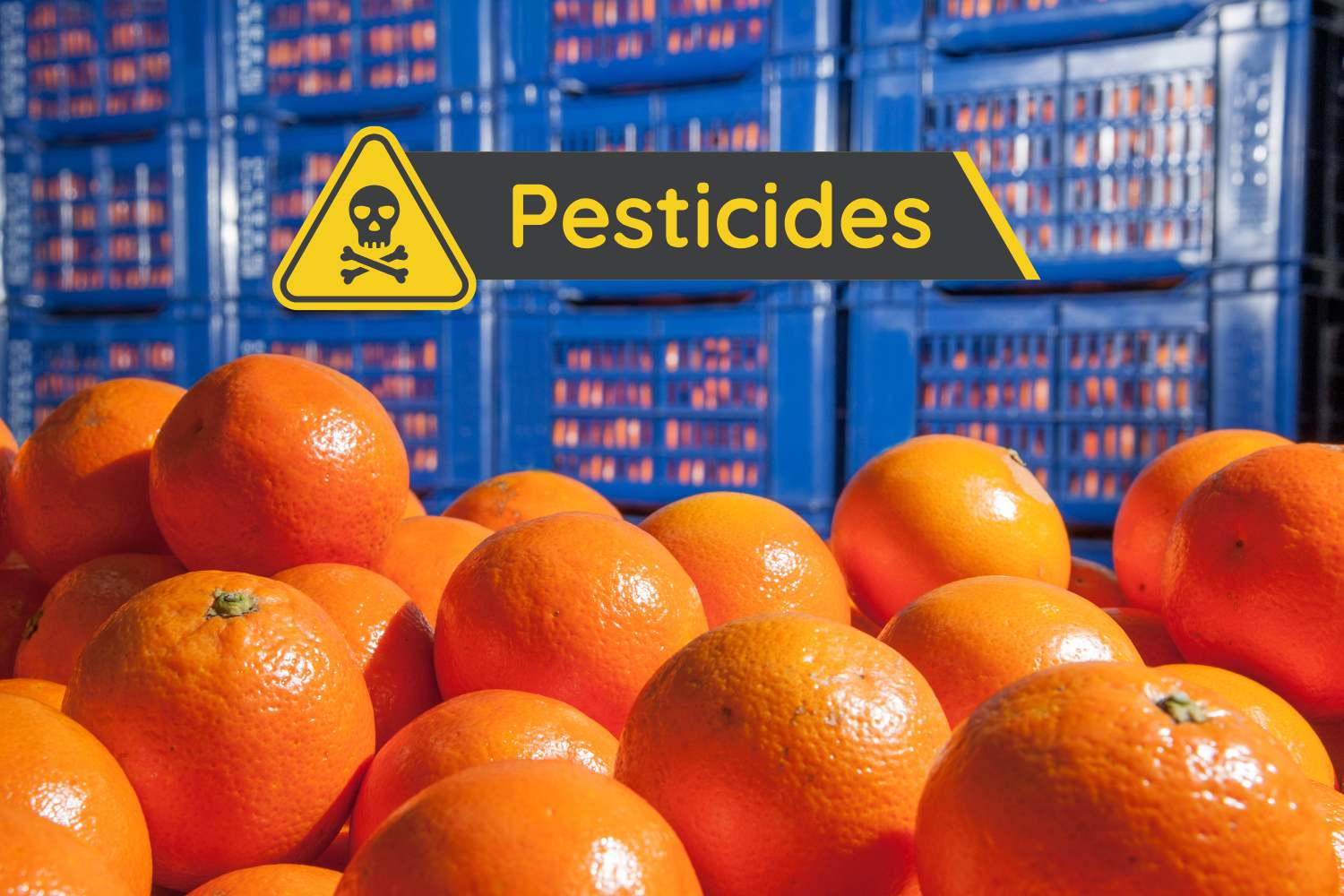
While Sicily is still dealing with the damage from Cyclone Harry, there is a risk of Egyptian oranges arriving on European shelves contaminated by chemicals that have been banned in the EU for years. This is reported by the Consortium for the Protection of Sicilian Blood Orange PGI, which is loudly calling for decisive intervention from the Government and European authorities.
And these are not mere suppositions. According to what was reported by the Rapid Alert System for Food and Feed (RASFF), among the first shipments of Egyptian citrus fruits arriving in Italy in 2026, one was identified containing 0.21 mg/kg of Chlorpropham – a herbicide and growth regulator whose use was banned in the European Union already in 2019. The quantity detected, among other things, would have exceeded the maximum limit allowed by European legislation by twenty-one times before being put on sale announcement.

The Consortium’s accusations
The president of the Consortium for the Protection of Sicilian Blood Orange PGI, Gerardo Diana, does not mince his words:
For years, as a Consortium and together with the main organizations in the fruit and vegetable sector, we have been warning the authorities and consumers about this problem. It is not acceptable, now more than ever, that there are different standards on food safety: in Italy and Europe the limits on residues are rightly stringent, to protect the health of all citizens.
Chlorpropham, although not classified among the most toxic substances of all, has been banned in Europe precisely because the overall assessment of its risk profile does not meet the requirements of the European Pesticide Regulation. Its presence in such high concentrations in the products that risk ending up on our tables is therefore anything but negligible.
However, the issue goes beyond food safety. The Consortium also points the finger at a competitive model that structurally penalizes Italian producers, forced to comply with rigid regulations and much higher costs.
It’s not just about food safety: working conditions, costs and protections are also profoundly different. In Egypt, the cost of labor is at least half that of Italy, and safety standards in the workplace are much lower. This creates wild and unfair competition that damages our businesses and endangers the quality supply chain we have built – Diana continues.
A theme that is intertwined with the broader one of the so-called “social dumping”: when the rules of the game are not the same for everyone, it is not only the local economy that loses, but the entire system of values - environmental, health, work – on which European quality production is based.
The phytosanitary risk
In addition to chemical contamination, the Consortium points the finger at another often underestimated aspect: the inadvertent introduction of plant pathogens and parasites. Among the most feared is Citrus Tristeza, a devastating viral disease that particularly virulent strains could also spread to new rootstocks selected to combat it, nullifying years of research and work in the nursery sector.
The moment couldn’t be more critical. The passage of Cyclone Harry brought the main Italian citrus fruit producing regions to their knees, leaving an already fragile supply chain even more exposed.
The situation is even more delicate after the passage of Cyclone Harry, which hit the two main Italian citrus fruit-producing regions. The risk of Egyptian oranges invading our markets is now higher than ever. It is everyone’s duty to protect the health of citizens and defend our citrus growing from this unfair competition – concludes President Diana.
The request is therefore that of an immediate strengthening of controls, both at the external borders of the European Union and within individual member countries, with checks that are not limited to chemical residues alone but also include phytosanitary surveillance. The stakes, after all, are high and concern everyone: consumers who have the right to safe food, producers who deserve fair trade rules, and a quality agricultural ecosystem that is worth protecting.
