
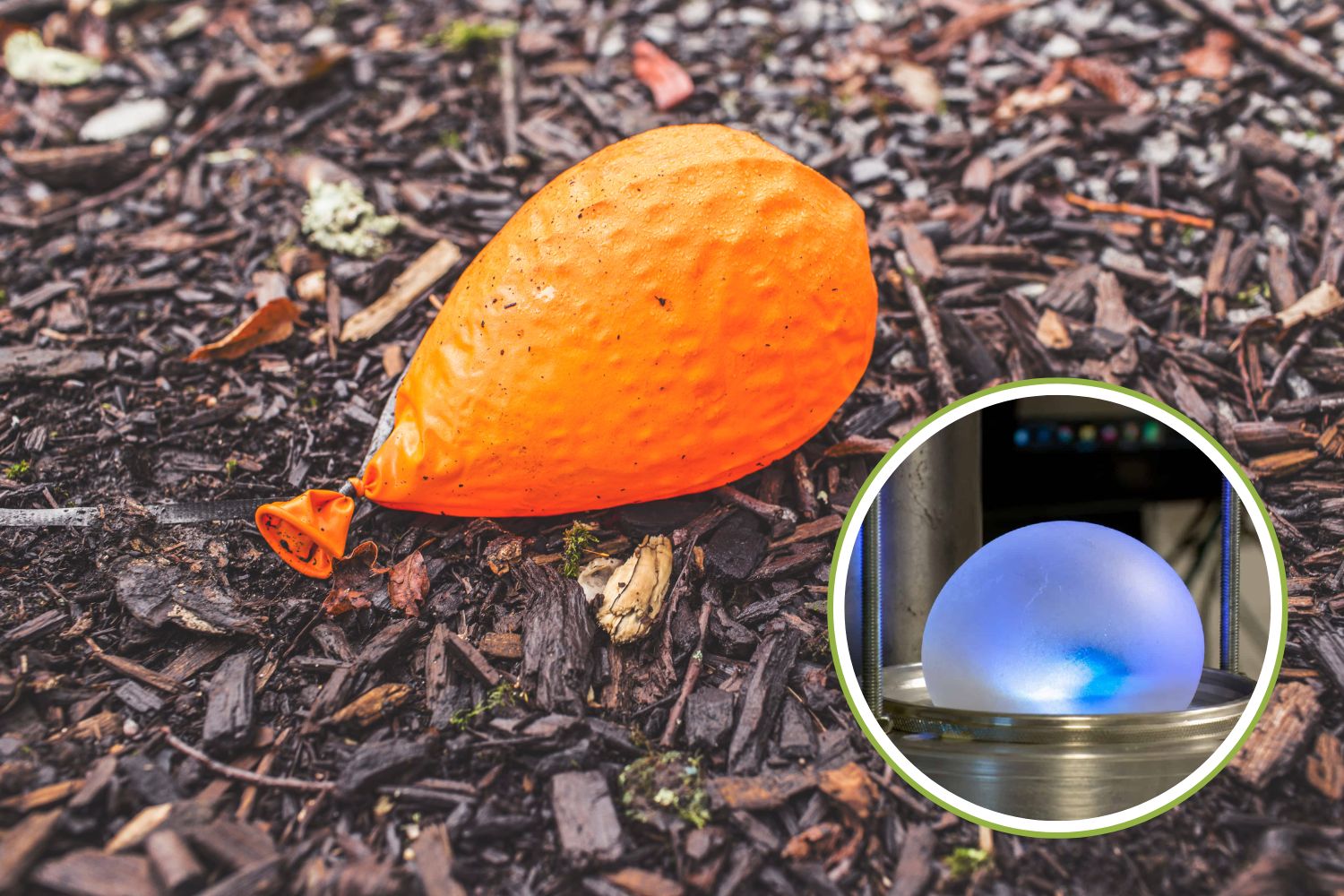
A balloon ends up in the sea, in a meadow or in a compost heap and, instead of remaining there for years, it begins to disintegrate. That’s the idea behind it Bioloona new material developed atImperial College London to build latex balloons capable of degrading much more quickly than those on the market today. The group talks about about nine months. A time definitely more compatible with a birthday party than with a small legacy left to wildlife.
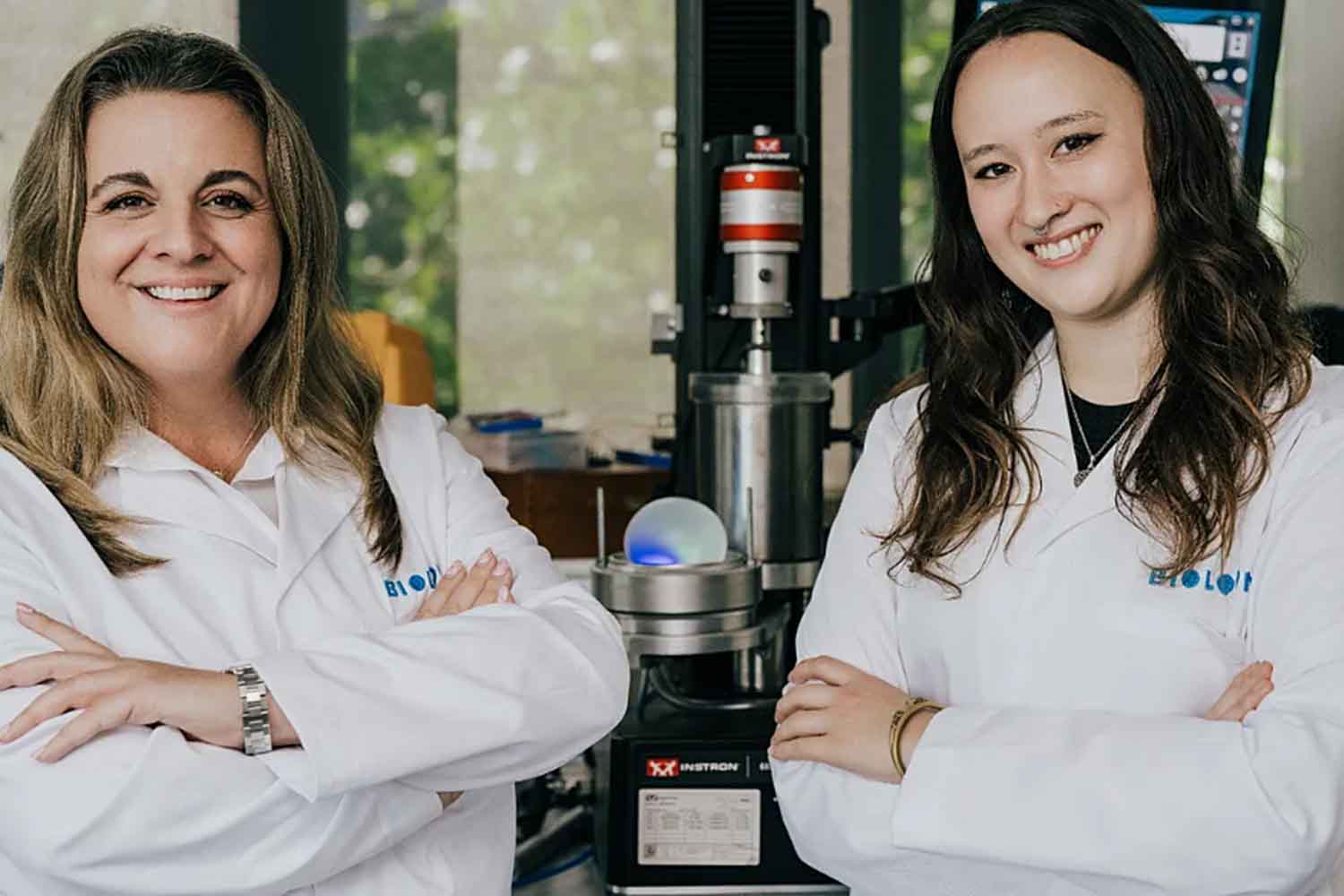
The project arose from the research of Juliana Cumming, a PhD candidate in Chemical Engineering at Imperial, together with professors Jason Hallett, Maria Charalambides and Koon-Yang Lee. After about three years of work, a spin-off was also born, founded in 2026 by Hallett, Cumming, Charlotte Melia and Christie-Lee Molgaard. The formula is patented and, according to the university, the first products could hit the market within about a year.
The problem is what makes the balloon a balloon
Natural latex comes from the sap of the rubber tree and seems like the perfect candidate for an object destined to degrade. Then it must become strong enough to be inflated, knotted, crushed by a child and possibly survive at least until the cake.
To obtain these properties the latex is normally subjected to vulcanization with sulfur and processed with different additives. The treatment creates bonds between the chains of the material and improves elasticity and resistance, but makes degradation much more difficult. A study published in 2021 on Journal of Hazardous Materials tested latex balloons also sold as “biodegradable” by leaving them for 14-16 weeks in fresh water, salt water and industrial compost. In the end they still had, overall, a recognizable shape and size.
Bioloon tries to intervene precisely on this passage. The material remains based on the natural latexhowever combined with another biodegradable polymer, while the system used to bind the chains of the material changes. Imperial explains that the new formulation avoids the additives of the conventional process and retains the necessary characteristics: the prototype can be inflated multiple times and has been designed to be compatible with normal balloon production techniques.
Cumming reported that the samples were tested in soil, sea water and deionized water and that, based on tests, the group estimates biodegradation in the order of nine months. Here, however, it is necessary to hold the calendar with one hand and the enthusiasm with the other: the nine-month figure is, at present, an estimate communicated by the researchers. Imperial’s scientific page describes the project and the results achieved, but does not yet publish a peer reviewed study with a complete protocol, raw data and comparable degradation times in different environmental conditions. The invention is therefore concrete; that “nine months” still has to earn all the decimals.
Because a lost balloon can become a very serious problem
©Bioloon
The issue far exceeds the aesthetics of a beach with a few pieces of rubber in the sand. Loose balloons can be ingested by animals, and soft balloons pose a particular danger because they can block the gastrointestinal tract.
In 2019 a study published in Scientific Reports analyzed 1,733 seabirds belonging to 51 species. Among the animals examined, balloon fragments were the type of ingested waste associated with the greatest risk: in the specific sample, ingesting a balloon or a fragment thereof was 32 times more likely to be associated with death than a fragment of hard plastic. The researchers also explained why: Soft, flexible materials can compact and create blockages.
That’s why a more quickly biodegradable balloon would be especially interesting when something goes wrong: a string slips out of hand, the balloon takes off and the party continues without it. Biodegradable, however, does not mean harmless while it is degrading. In the months necessary for decomposition, the material remains available to be ingested, and no new latex therefore turns the voluntary release of balloons into the environment into a good idea.
From the balloon to the gloves, the material could have a life bigger than the party
Perhaps the most interesting part of the project lies beyond the balloon. Imperial presents Bioloon as a research on biodegradable elastomerstherefore elastic materials that can potentially also be used elsewhere. The group is already looking at latex products such as gloves and other items where elasticity and resistance during use are needed, followed by a less problematic end of life. For now we are still in the phase in which a good laboratory formulation must demonstrate that it can become industrial production, maintaining performance, costs and degradation times once released from controlled conditions.
The Bioloon spin-off was formed in 2026 specifically to bring the technology out of the university. According to Imperial, the process was designed to adapt to the systems already used by manufacturers, a detail that is far from secondary when you need to transform an interesting prototype into millions of salable objects.
For now, therefore, we have a balloon that inflates, can be reused and in preliminary tests degrades much faster than conventional latex. We also have a patent, a newborn company and a step still necessary: show with published scientific data how quickly and completely that degradation occurs in different real conditions.
Nine months would already be a big leap compared to a balloon that remains recognizable for years. Assuming that the little hand at the party doesn’t let it fly: that continues to be the least technological and most effective disposal system.
