
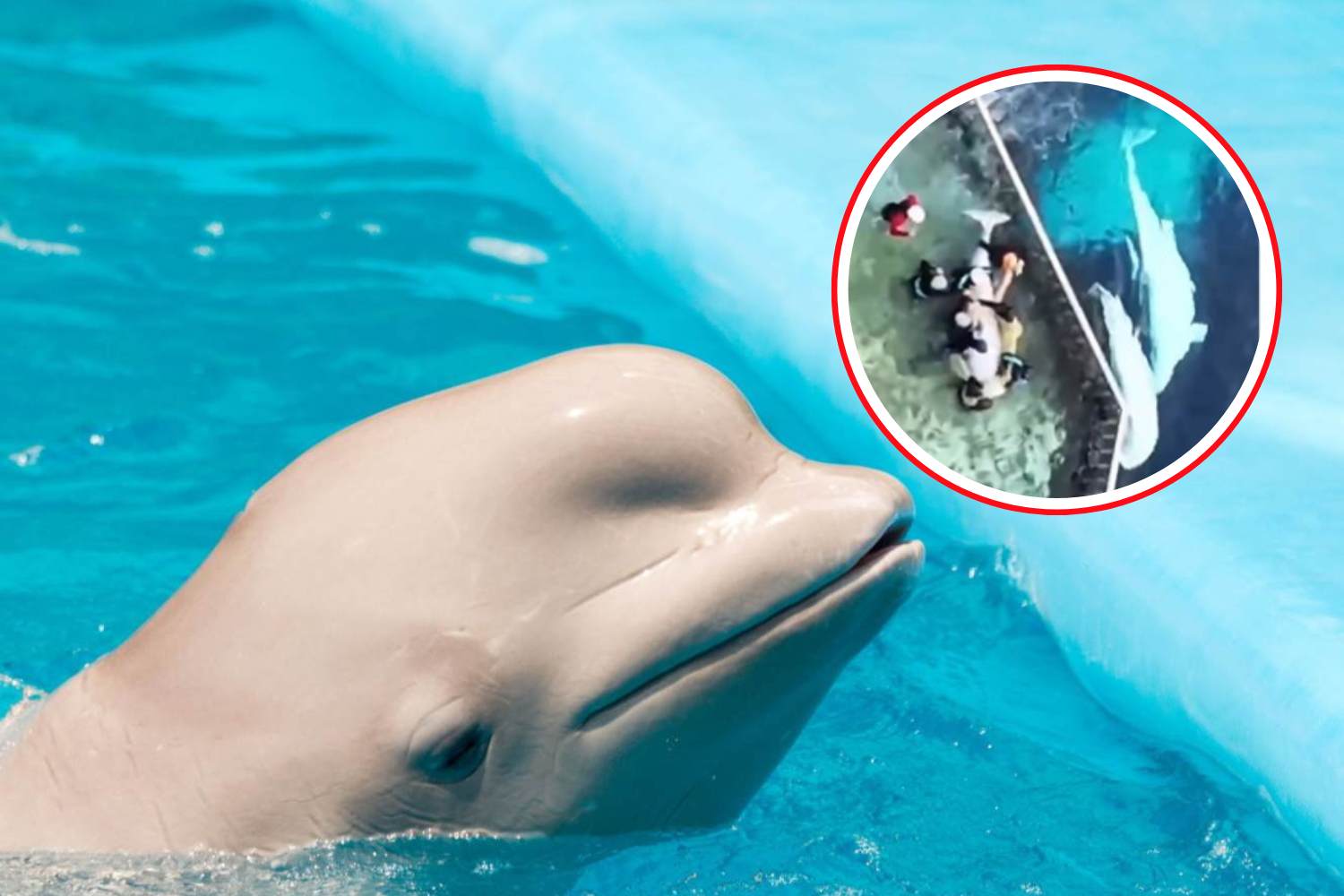
An unprecedented logistical operation has avoided the tragic epilogue for the cetacean inhabitants of the Marineland marine park, a facility located in Niagara Falls and closed to the public since 2024. The facility’s lawyer Andrew Burns and the Canadian Fisheries Minister Joanne Thompson have confirmed the launch of the plan to rescue as many as thirty specimens of beluga.
The decision became essential after the federal government’s refusal to export to China and the consequent threat of suppression due to lack of funds. The first group of animals, composed of the belugas Sierra, Acadia, Osiris, Lillooet, Bertie Botts and Frankie, were taken from the original tanks, loaded onto dedicated trucks to reach the Toronto airport and finally transported by plane to the United States.
View this post on Instagram
From the Canadian swimming pool to the American aquariums: the price of survival
The intervention saw the coordinated participation of a consortium of structures led by the Association of Zoos and Aquariums. Specifically, veterinarian Karisa Tang and spokesperson Johnny Ford of the Shedd Aquarium in Chicago welcomed the first four belugas, while the last two arrived at SeaWorld in San Antonio under the supervision of managers Chris Dold and Steve Aibel.
Six beluga whales from Marineland of Canada were transported to the US in temperature-controlled containers with veterinarians overseeing the journey pic.twitter.com/P2FdbffqSe
— Reuters (@Reuters) July 22, 2026
The remaining twenty-four belugas and four dolphins remaining in Ontario will follow the same path in the coming weeks, with some also planned destinations at Oceanografic Valencia in Spain. Although Niagara Falls Mayor Jim Diodati and former trainer Kristy Burgess expressed deep relief at the success of the first phases of the transport, the outcome of the matter raises serious doubts.
BREAKING: 6 beluga whales have been removed from Marineland & exported to the US.
Sierra, Acadia, Osiris, & Lillooet are being transferred to Shedd Aquarium in Chicago.
Bertie Botts & Frankie are being transferred to SeaWorld San Antonio.
It’s ILLEGAL to breed captive whales… pic.twitter.com/eLUBA3NwqA
— Animal Justice (@AnimalJustice) July 21, 2026
The illusion of freedom and the reality of commercial entertainment
While on the one hand scientist Naomi Rose of the Animal Welfare Institute warns of the serious risks that the stress of travel poses for these large mammals, on the other hand a fundamental contradiction emerges. The rescue avoids unjust euthanasia, but condemns the animals to remain confined in artificial reservoirs.
Instead of regaining freedom in the oceans or accessing dedicated wildlife sanctuaries, marine mammals are simply being relocated to new commercial facilities. The operation guarantees their biological survival, but preserves industrial dynamics where these extraordinary inhabitants of the sea continue to represent an exhibition attraction and a resource to be exploited for public entertainment.
View this post on Instagram
