
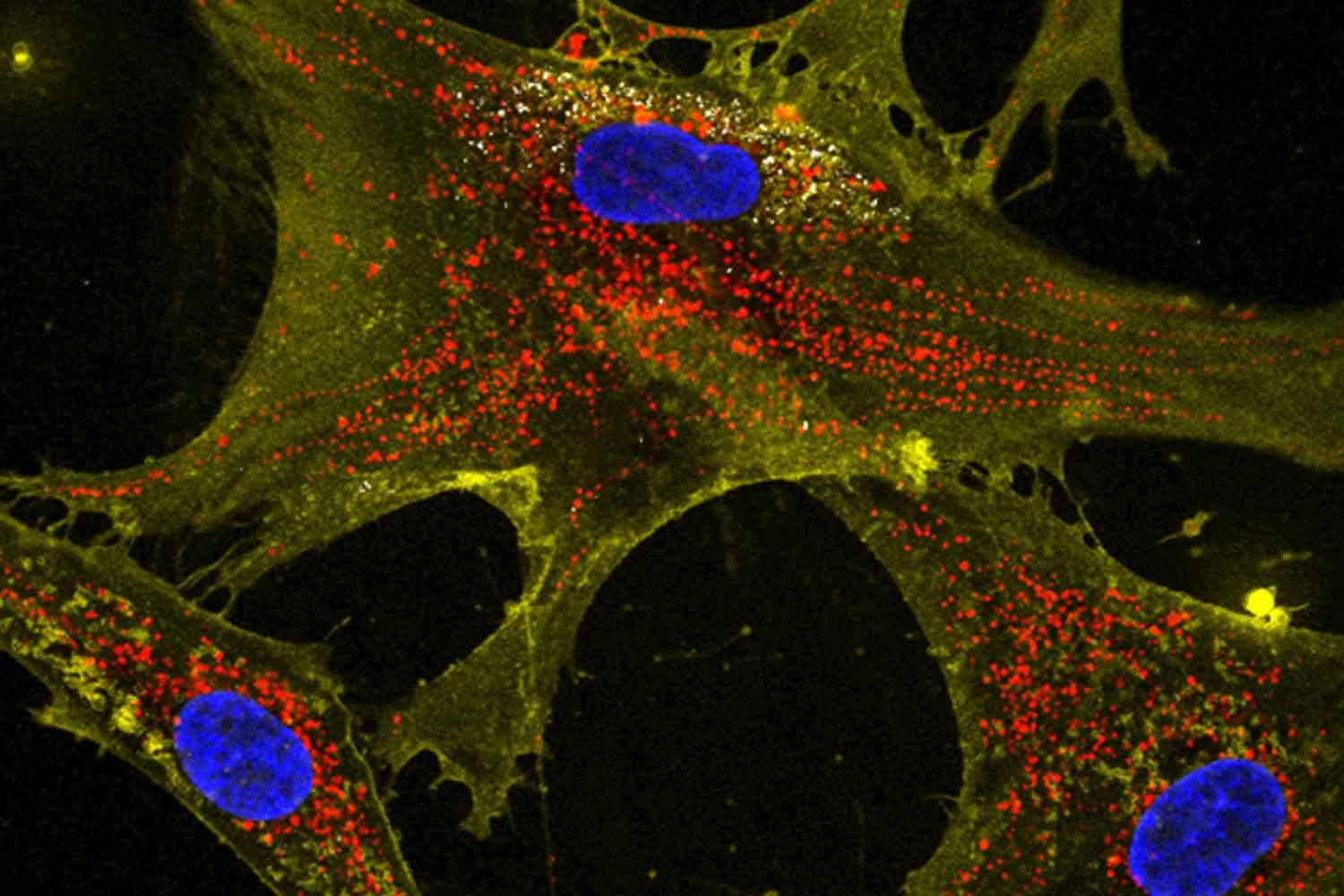
It’s not often that a scientific discovery brings together enthusiasm and caution, especially when it comes to aging. Yet, what comes from the laboratories of Texas A&M University seems revolutionary enough to make everyone stand up: scientists have found a way to recharge cells, boost their vitality and restore them to tissues in difficulty. All through tiny “nanoflowers”, particles invisible to the naked eye that behave like energy workshops.
The underlying idea is simple in theory and crazy in practice: if aging also arises from the progressive decline of mitochondria – the energy generators of cells – then why not produce new ones and transfer them where they are needed? The Texan team, using “enhanced” stem cells, seems to have found an answer.
Recharge your cells
Mitochondria are omnipresent and silent: they work in the cytoplasm of our cells to produce energy, defend us from external agents, synthesize crucial molecules. With age, however, their number and efficiency decrease. And that’s exactly where nanoflowers arrive, microscopic particles made of an inorganic compound, molybdenum disulfide.
The name may seem complicated, but the concept is more immediate: once they enter the stem cells, the nanoflowers trigger a natural response that doubles the production of mitochondria. Stem cells thus become biological mini-factories that accumulate fresh energy, ready to share.
This process of “donating” mitochondria is not new: cells already do it in nature, but in a slow and inefficient way. Here, however, something new happens. Stem cells, improved by nanoflowers, are able to transfer mitochondria two, three, even four times faster to cells in difficulty. Those who receive the “load” regain energy, tolerate stress better and seem to behave like younger versions of themselves.
One researcher summarized it like this: it’s like replacing the worn battery of an electronic device with a new one, without having to change the entire device.
What could we expect
If the technique were to pass the next phases of experimentation, the applications imagined by scientists would be vast. Nerve cells, for example, could recover communication abilities currently compromised by diseases such as Alzheimer’s. The muscular ones could compensate for energy deficits underlying the dystrophy. Cells in the liver or pancreas could process substances such as glucose more quickly, opening up opportunities for new therapies for diabetes.
And then there is the most fascinating and delicate chapter: aging. We are not talking about immortality or miraculous elixirs, but about the idea – concrete, if confirmed – of being able to slow down those degenerative processes that today we consider inevitable: loss of energy, cells that do not respond, tissues that slow down.
For now, however, we are only at the beginning. The tests will start in the next few months and the clinical trials, if the results are confirmed, will take years. The scientific community remains cautious: any innovation that intervenes so deeply into cellular mechanisms must prove safe, stable and controlled.
Yet the potential is enormous. It is rare to see such a concrete anti-aging approach, based on a clear biological logic: not to stop time, but to restore energy to the cells that have lost it.
You might also be interested in:
