
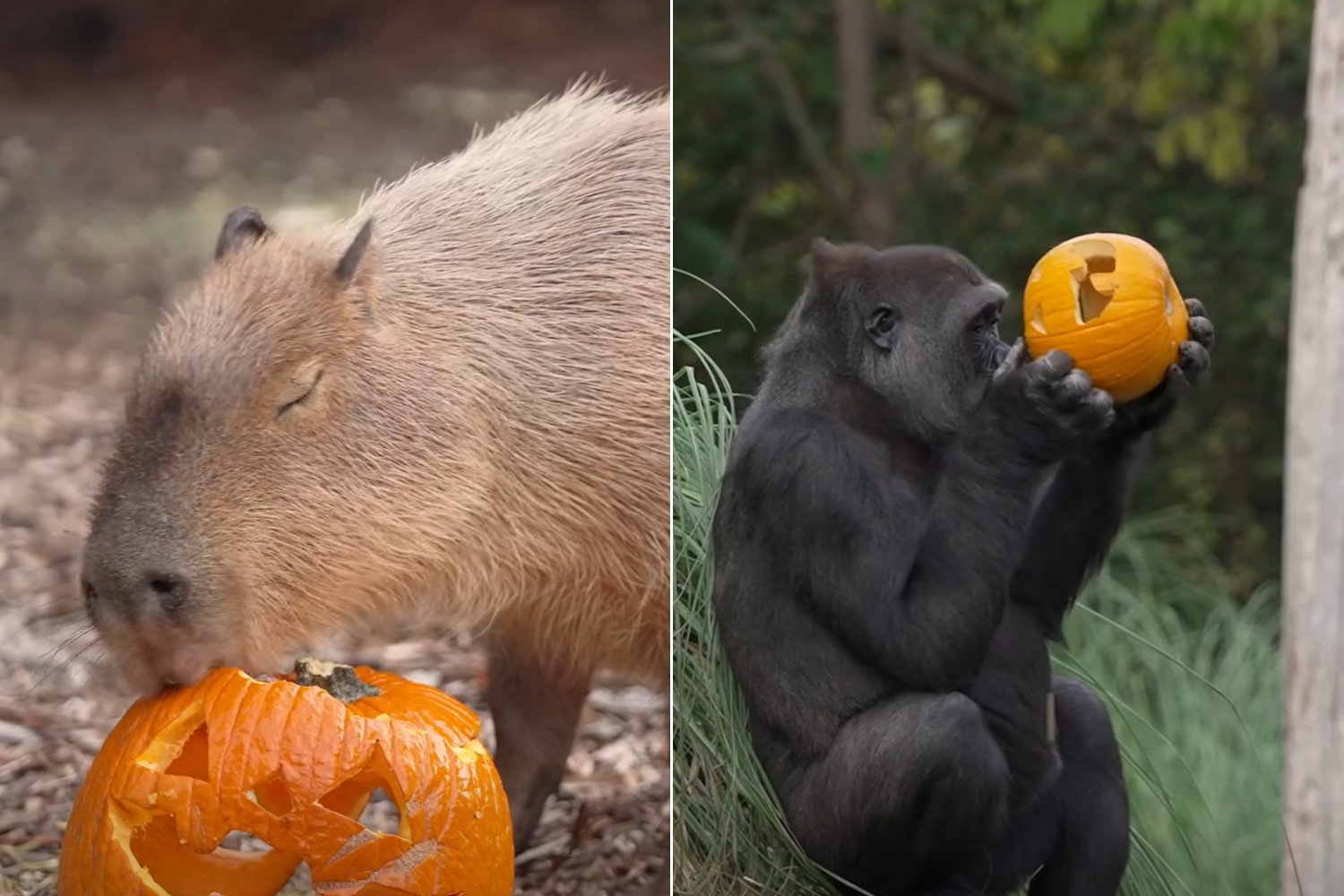
At London Zoo, the Halloween celebrations have become the perfect setting for a spotlight-filled banquet. The guardians of the British structure have in fact set up a real themed route, distributing carved pumpkins filled with food to different species housed in the park. The Humboldt penguins ate their fish breakfast directly from plates made from the orange vegetables, while the two capybaras Kiwi and Gizmo searched for morsels of carrots and leafy greens hidden in the carvings. For the group of western lowland gorillas made up of Kiburi, Effie, Mjukuu, Alika, Gernot and the two little Venus and Juno, an entire field of pumpkins stuffed with peppers and lettuce was set up. All presented in great detail on social media – with the video released by the main media – as an environmental enrichment activity intended to stimulate the search for food.
View this post on Instagram
The drift of social entertainment
Behind the official narrative that describes these initiatives as useful tools to stimulate exploration and natural instincts, lies the usual logic of folklore and human entertainment. Placing food inside ghostly containers to take impactful photos and launch the trick-or-fish joke responds first of all to the need to create captivating content to offer to visitors and to the sounding board of social profiles. Showing seven gorillas or a colony of penguins rummaging through carved pumpkins has nothing spontaneous or wild about it: it is the plastic representation of a routine marked by the choices of the keepers, where the biology of extraordinary creatures is bent into a seasonal themed show.
The real fear remains the deprivation of freedom in wildlife parks
While people are looking for artificial thrills and scary stories on Halloween, the thing that’s really scary is the reality of captivity. No pumpkin shell stuffed with fish or carrots will ever replace the miles of open ocean needed for swimming Humboldt penguins, the great waterways of South America for capybaras, or the complexity of the African rainforest for the gorilla family. Keeping specimens born to live free confined within fenced spaces, forcing them to become extras for photocalls and image campaigns, demonstrates how the road to overcoming the logic of transforming animals into stage attractions is still long.
