
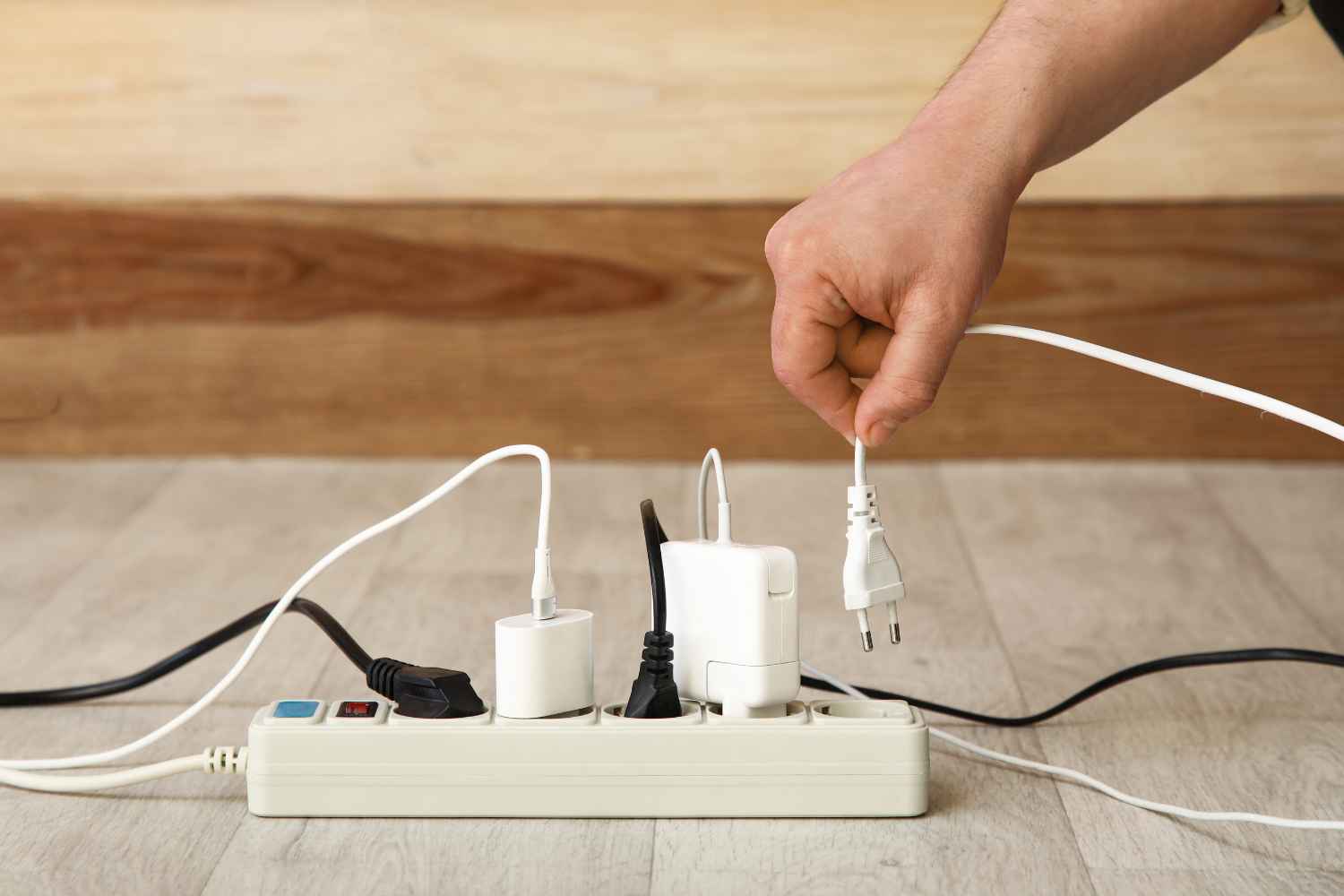
Turning off an appliance with the remote control does not necessarily mean eliminating its consumption. In many homes, televisions, consoles, chargers and other devices remain connected to the electricity grid 24 hours a day, continuing to absorb small amounts of energy.
Taken individually, consumption may seem negligible, but added up over the months and multiplied by all the appliances in the house they can affect the annual energy expenditure.
Of course, the actual costs depend on the model of the appliance, its energy class, the frequency of use and the price of electricity. The figures reported are therefore to be considered indicative.
Which household appliances can consume the most
Some of the most common appliances in the home can impact your bill more than you imagine, especially when they are used frequently or left on for many hours. Among those that can consume the most are washer-dryers, dryers, freezers, refrigerators and washing machines.
Washer dryer: over 115 euros per year
Among the appliances that can weigh most heavily on household consumption are washer-dryers, which combine washing and drying of clothes in a single machine. Their use can exceed approximately 116 euros per year. To reduce consumption, it may be useful to choose programs at lower temperatures and, when possible, let clothes dry naturally instead of always resorting to electric drying.
Dryer: approximately 110 euros per year
Even the dryer can significantly impact domestic consumption, with an indicative cost of around 111 euros per year. The figure can vary greatly based on the energy class of the appliance, the duration of the cycles and the frequency of use. When the climate and space allow it, alternating the dryer with the drying rack can help reduce electricity consumption.
Chest freezer: almost 90 euros per year
The chest freezer remains switched on without interruption and for this reason its consumption accumulates throughout the year. The expense can be around 87 euros per year. Whoever owns one can therefore evaluate whether the additional capacity is actually used or whether, on the contrary, the appliance remains on to preserve a few foods.
Fridge with freezer: approximately 86 euros per year
Even the combined refrigerator stays on 365 days a year and can cost around 86 euros a year. To improve its efficiency it is important to set the temperature correctly, generally around 4°C, and avoid leaving the door open more than necessary. Maintenance also matters: worn seals, ice accumulations and poor ventilation can increase consumption.
Washing machine: almost 70 euros per year
The washing machine can cost around 70 euros per year on household consumption. To reduce waste it is advisable to use it at full load, avoiding cycles with few items when possible. Programs at lower temperatures can also help reduce consumption, since a significant part of the energy used is used to heat the water.
The 3 “vampire devices” not to forget
In addition to large household appliances, you need to pay attention to the so-called “vampire devices”, i.e. those appliances that continue to absorb energy even when they are not actively used.
Among the most common are:
These devices can continue to consume small amounts of electricity even when they appear to be turned off. Unplugging them from the socket or turning them off completely when they are not needed can therefore help eliminate some of the unnecessary consumption. The savings from a single device may be small, but the sum of many small draws over a year can become more significant.
Appliances and standbys can weigh hundreds of euros
Adding up the consumption of some of the most energy-intensive appliances in the home can easily exceed several hundred euros per year. Considering washer-dryer, dryer, freezer, refrigerator and washing machine, the figures indicated overall exceed 450 euros per year.
However, this does not mean that it is possible to save the entire sum simply by pulling a few plugs. In fact, a substantial part of the expense derives from the normal use of household appliances. Intervening on appliances left unnecessarily on standby serves above all to eliminate that portion of energy consumed without real need.
A practical solution could be the use of a power strip with a switch, which allows you to simultaneously disconnect the television, console and other devices connected to the same station with a single gesture.
