
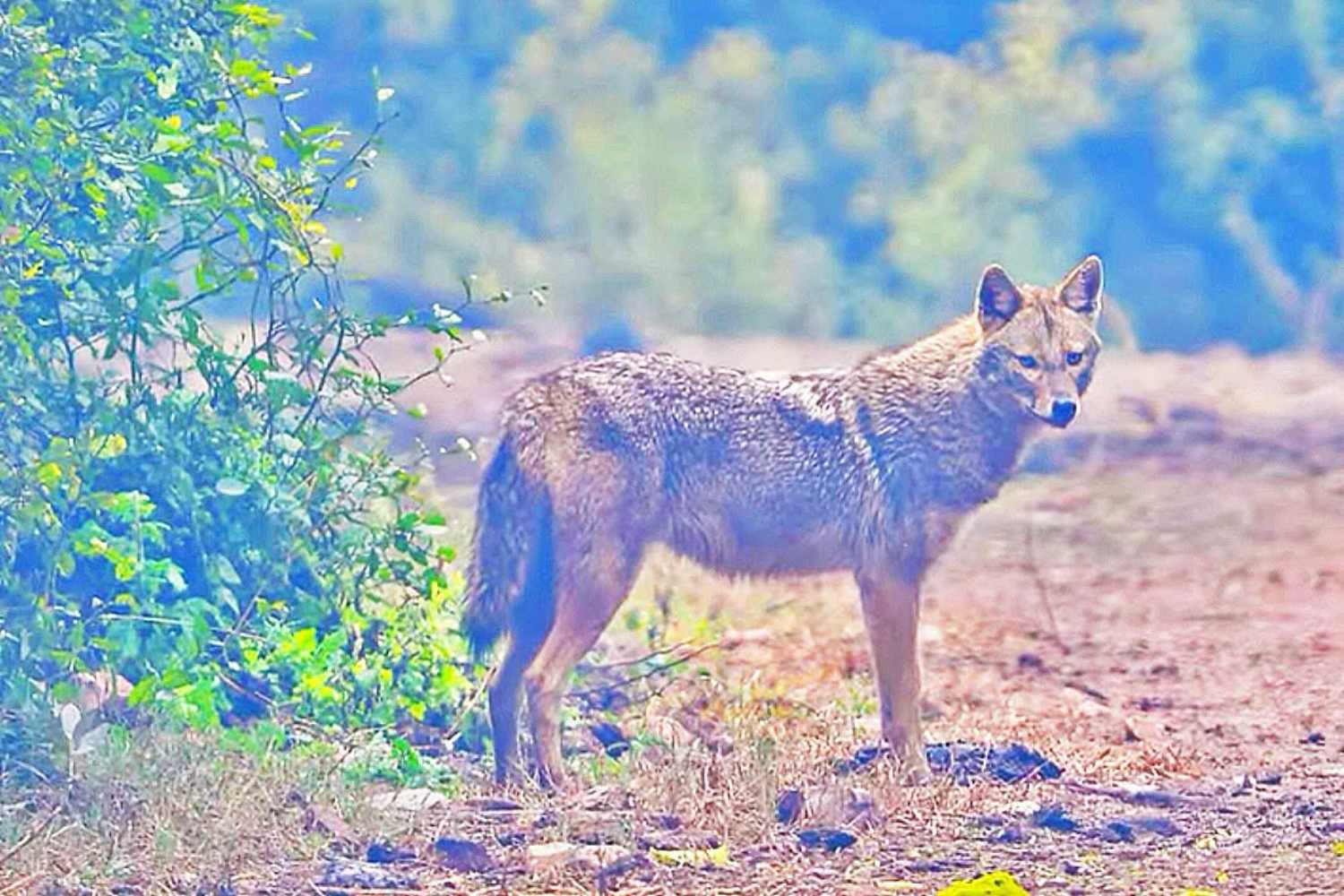
A completely new and surprising presence officially enriches the faunal heritage of the Lombard Ticino Valley Park, marking a totally new chapter for the protected reserve. For the first time in the history of the green area, an adult specimen of golden jackal, scientifically known as Canis aureuswas immortalized in the heart of the woods thanks to the careful eye and patience of photographer Mario Pisoni.
This carnivorous species, native to the Balkan peninsula, is experiencing a phase of constant and progressive expansion throughout Western Europe and has been recorded in various areas of Northern Italy. The animal, characterized by splendid fur with golden shades, moves mainly in the twilight hours and at dusk, living within small family units and demonstrating an extraordinary ability to tolerate anthropic landscapes and the proximity of man without any fear.
The role of “sweeper” of the woods
From a biological and ecological point of view, the golden jackal is placed in an intermediate and fascinating position in terms of size and build between the wolf and the fox. Unlike the latter, however, its inclusion in the territory does not constitute any threat to livestock activities or domestic livestock.
The animal has a strong generalist nature and an extremely flexible diet that ranges from small micromammals to fruit and the remains of animal carcasses, effectively playing a fundamental ecological role as a true natural scavenger of the woods. Territorial competition with the wolf makes its presence more frequent where the latter is rare or absent, outlining a complex and dynamic faunal geography within the Lombard ecological corridors.
The ecological value of the new arrival in the valley
The official arrival of the Balkan specimen was greeted with great enthusiasm by the management body’s leaders, who saw the phenomenon as a clear indicator of environmental quality. Francesca Monno, park councilor, underlined how the event represents a living reminder of nature’s ability to surprise and of the absolute need to preserve such fragile ecosystems.
The technical analysis of Claudio De Paola, director of the reserve, is on the same wavelength, underlining that the new species actively contributes to the biological control of micromammals and to the natural removal of carcasses. To better monitor this unprecedented guest, the park rangers and technicians of the organization led by president Ismaele Rognoni have permanently inserted the Canis aureus in field observation protocols, confirming the effectiveness of the protections implemented in the protected area established in 1975.
