
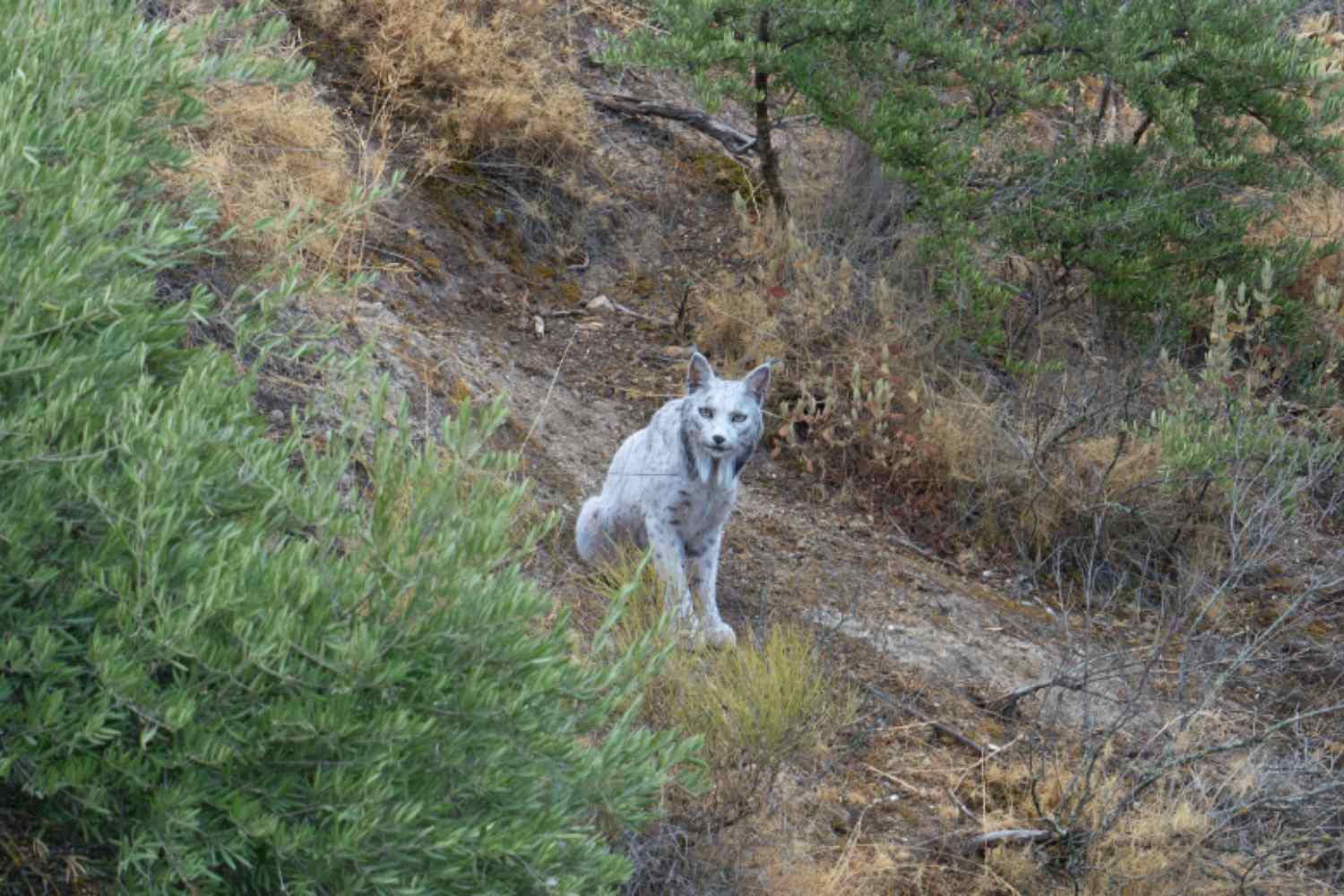
In Andalusia, precisely in the mountains of the province of Jaén, a young nature photographer immortalized a leucistic Iberian lynx, a very rare animal with a pale coat. Ángel Hidalgo, 29, discovered the specimen on October 22, using the phototrampeo technique, which involves installing hidden cameras in natural habitats. This genetic condition, called leucism, causes a partial lack of pigmentation in the hair without altering the color of the eyes, thus distinguishing it from albinism.
The exact location of the sighting is being kept secret to protect the animal from possible poachers and ensure its well-being. The discovery represents a unique event in the European naturalistic panorama and, according to experts, it could be the first leucistic specimen of this species officially documented in Spain and perhaps in the world.
View this post on Instagram
A work of dedication and patience
Ángel has spent years monitoring local wildlife with passion and dedication. Between failed attempts and hours of waiting, the young photographer finally had the satisfaction of seeing the silhouette of this feline appear on the screen which he described as “the white ghost of the Mediterranean forest”, he couldn’t believe it at first.
His experience highlights how fundamental respect and patience are in wildlife conservation and documentation work. Ángel shares some of his work on Instagram and Facebook, inspiring other nature photography enthusiasts and raising awareness of the importance of protecting Mediterranean habitats and endangered species.
View this post on Instagram
The importance of the leucistic Iberian lynx
The feline, endemic to the Iberian Peninsula, plays a crucial role in Mediterranean ecosystems, being a natural predator of rabbits, the main source of food. Despite protection efforts and conservation initiatives carried out by Spain and Portugal, the species remains classified as vulnerable according to the International Union for Conservation of Nature (IUCN).
You might also be interested in:
