
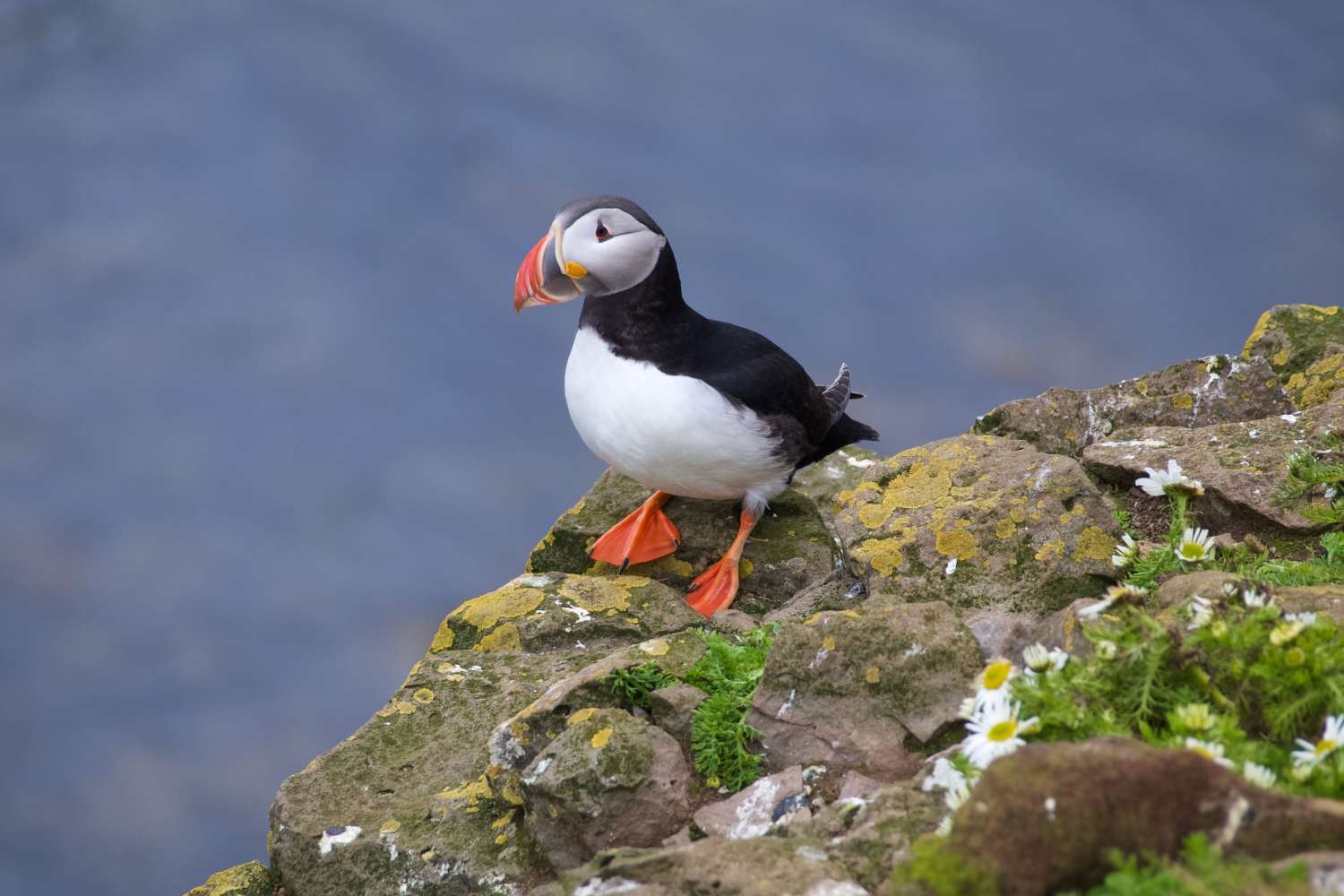
An extraordinary event that has been awaited for three decades has shaken the Dorset coast, transforming the perseverance of enthusiasts into an unforgettable emotion. Along the rocky walls of Dancing Ledge, on the scenic Purbeck coast near Swanage, ornithologist Richard Caldow and a team of 13 volunteers from the Purbeck Natural History Forum have finally photographed a small puffin chick (Fratercula arctica), commonly called a puffin.
This is the first confirmed sighting in the area after 30 years of total absence of certain data. The discovery takes on an inestimable ecological value: this site represents the last regular nesting outpost for this species on the entire mainland of southern England, a fragile community which in the 1950s numbered around 40 breeding pairs (80 specimens) and which today is dramatically reduced to just three pairs.
The dynamics of the discovery and the journey across the open sea
The feat is the culmination of 15 weeks of monitoring and over 150 hours of observation in extremely precarious and impervious conditions. Although just six adult specimens had been recorded in April, hope was rekindled when the volunteers noticed the birds constantly carrying small fish towards the cracks in the rock face, a clear sign of the presence of young ones to feed inside the cavity.
The success of the surveys was the result of rigorous calculation and a lot of patience. By reconstructing the frequency of meals delivered by the parents between May 29th and July 5th, Richard Caldow estimated the age of the young at around 38-40 days, the moment in which the young specimens begin to lean out before fledging. To capture the moment without disturbing the wildlife, the team rented a boat on July 7, positioning themselves offshore from 4pm to 8pm. After more than three hours of exhausting waiting, shortly after 7.00 pm, the little one finally showed his head from a two meter deep crack.
The sighting confirmed that the colony is still able to lay fertile eggs, hatch them and find sufficient food to defend the offspring from natural predators. However, the fate of the young man remains shrouded in mystery: it is likely that he took flight the same night as his first sighting to begin a solitary life in the open sea. The bird will not return to land for two years and will not reach sexual maturity until 2030, when it may choose to return to Purbeck or colonize new coasts.
Advanced technologies and strategies to save the colony
Despite the joy over the event, the colony remains in serious danger of extinction. Although food deliveries initially suggested that the other two pairs had also laid eggs, the trips stopped abruptly after June 12, indicating that the other chicks did not make it.
To understand the reasons for these consistent reproductive failures, National Trust project manager Ben Cooke has pioneered a cutting-edge investigative strategy. In March, a team of high-rope experts rappelled down the cliff to install motion-sensor cameras powered by solar panels right inside the nesting crevice.
At the end of the summer season, the devices will be recovered to examine the thousands of shots collected. The data will clarify the impact of predators, such as rats and peregrine falcons, while analyzing the effects of the climate emergency on food sources. Understanding what happens inside the rock cavity is the last fundamental piece to implement targeted conservation measures and guarantee a future for these iconic seabirds.
