
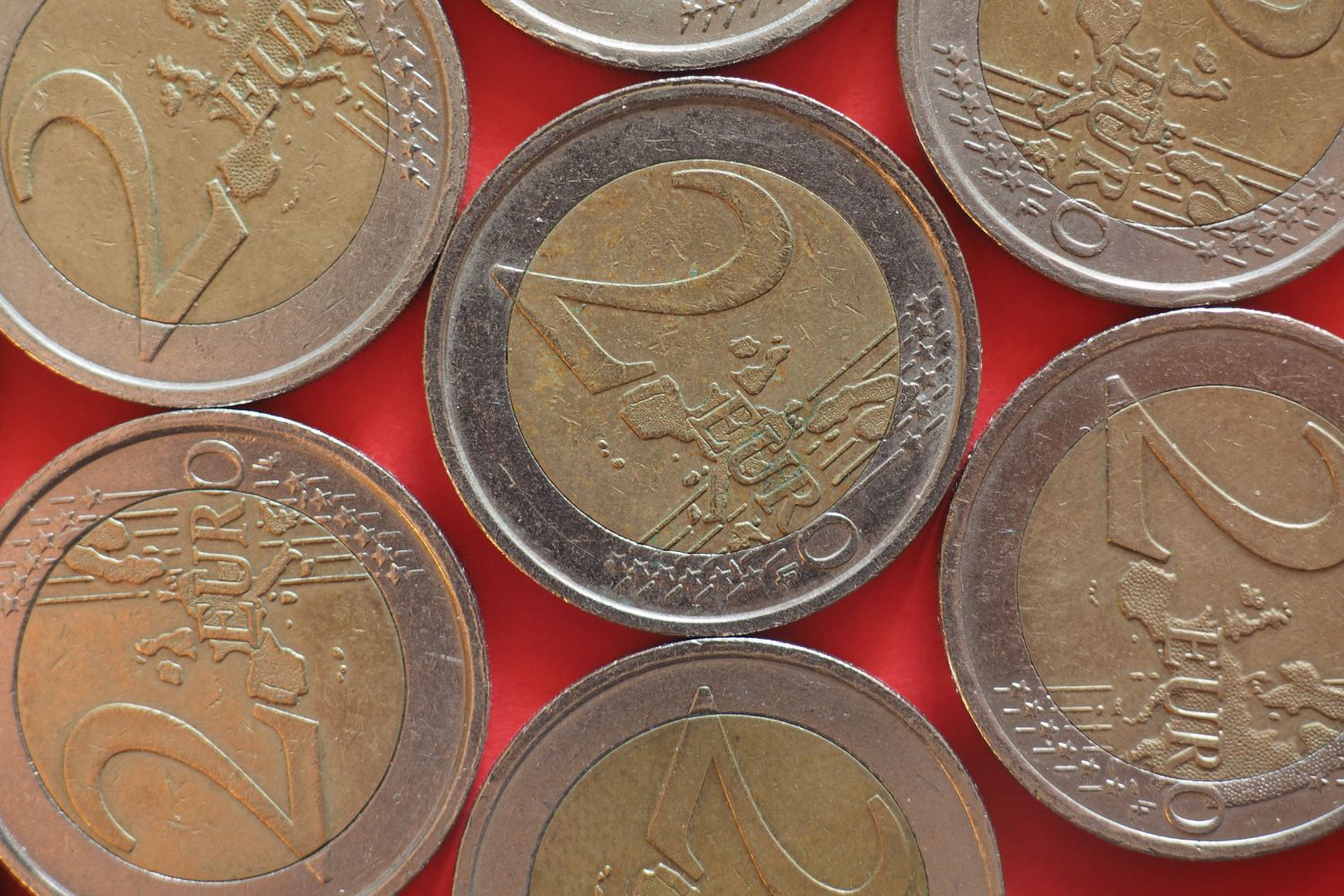
A 2 euro coin leads a fairly anonymous life. It goes from the bar to the vending machine, from the shopping cart to the parking machine, from the cashier’s hand to the pocket of his jeans. Nobody really watches her. We take it, we leave it, we put it in the wallet together with the others, with that automatic trust we have towards small and repeated things. Right there, in that pocket-money normality, counterfeiters find their space.
The Prato case has put the issue back on the table with a very real nuisance: a network specialized in the production and distribution of fake 2 euro coinswith pieces so well looked after that they even worry those in charge of technical controls. According to the reconstructions of the investigation, the clandestine mints identified between Prato and Quarrata would have worked on fakes also intended for arcades, slots, video poker and coin change machines, i.e. places where coins enter and exit continuously, without too many questions and with very little time to look at them one by one. The investigations led to five arrests and the seizure of almost 20 thousand coins on thirteen occasions, as well as presses, cones, rings, central parts and processing tools.
The most unpleasant thing in this whole story is that the fake works when it behaves like an ordinary object. It must look like any other thing. It has to have the right weight, the believable edge, the sound similar enough, the color in place. It must pass where all the other pieces pass. And there 2 euro coin it is the perfect denomination: it is worth more than other coins, it circulates a lot, it often ends up in automatic machines and is checked absentmindedly by the human eye.
The edge speaks
The authentic 2 euro coin has very precise characteristics. According to the European Commission it weighs 8.50 gramshas a diameter of 25.75 millimetersa thickness of 2.20 millimetersa clear outer ring and a golden inner part. The composition is bimetallic: copper-nickel on the outside and a three-layer internal part. Put like this, it seems like stuff from a numismatic catalogue, but instead it is useful in everyday life, when a coin seems “strange” between the fingers.
The first detail to look at is the edge. On the Italian 2 euro coin, the one with the portrait of Dante, the European Central Bank indicates the reason “2*” repeated six timeswith alternating orientation from bottom to top and from top to bottom. Each euro area country has its own border, so the engraving must be consistent with the national side. Writing that is too weak, crooked, slurred, irregular or incompatible with the design can already raise an eyebrow.
Then there are the reliefs. In authentic pieces the design has its own cleanliness: the contours can be read, the stars have a defined shape, the European map on the common side is clear, the national side retains recognizable details even when the coin has already rotated a lot. In the coarsest fakes everything tends to lose strength. The edges soften, the figures seem squashed, the engravings become vague. The fake often looks like a badly made photocopy, only in metal.
Color matters too. The central gold disc and the silver outer ring must remain distinguishable. If the coin seems too uniform, if the two sides become confused, if the gold turns towards a dull yellow or the silver has a dirty and unnatural tone, it is worth stopping. The best fakes can imitate a lot, of course. The worst ones betray themselves just like that, with a kind of general flatness: you look at the coin and something screeches, even if for a second you struggle to understand what.
The magnet serves, judiciously
The magnet test is simple and this is why we like it so much. A Authentic 2 euro coin it has a particular magnetic behavior, linked to its layered composition. The Bank of Italy explains that the 1 and 2 euro denominations are made with a bimetallic and layered structure which gives specific magnetic properties. Translated into the kitchen test: the coin can be attracted slightly by a magnet, but it must come off without theatrical resistance.
A minimum measure is needed here. If a coin remains completely indifferent to the magnet, little can come of it. If it sticks firmly, like a screw or paper clip, that can also be a sign. The correct reaction is somewhere in between: a light, controlled, almost shy attraction. The magnet helps especially with poorly made fakes. Faced with high-level counterfeits, such as those that emerged in the Prato investigation, the home test can lose its effectiveness, because those who produce sophisticated fakes also try to imitate weight, size and magnetism.
Weight remains another useful check, as long as there is a sufficiently precise scale. 8.50 grams it is the reference. A much lighter or heavier coin already tells something. Freehand you can only guess, perhaps by comparing it with another coin that is certainly authentic. Sometimes you just need to hold them next to each other, slide them on the table, listen to the sound, feel the edge under your fingertip. It seems like a scene from a suspicious old trader, but it works more than it seems.
The problem, of course, comes when the fake is done well. In Prato, according to the reconstructions of the operation, investigators spoke of counterfeits of the highest level, with weight, dimensions and magnetism designed to imitate authentic coins and overcome electronic control devices. This changes the perception of the phenomenon: the two-euro counterfeit stops being the obvious fake and becomes an object designed to pass through the system.
When the fake enters the pile
Professional control follows a very different path from home control. In Italy suspicious coins pass through CNACthe National Coin Analysis Center, established in 2001 at the State Polygraphic and Mint Institute. CNAC analyzes suspicious metal coins found in circulation by professional cash handlers, such as banks, post offices, money transport and processing companies, or by police forces. His work concerns both the individual appraisal and the cataloging of the different types of fakes, so as to feed an archive useful for investigations into clandestine mints.
For those who handle cash every day, the procedure is strict. When a coin is considered suspicious, it is withdrawn and sent for checks. If it turns out to be false, the value is lost. The refund arrives only when the coin is recognized as authentic or when it falls within the cases foreseen for authentic coins damaged or unfit for circulation. It is an inconvenient rule, but it serves to prevent the fake piece from re-entering the business and continuing its little career as a metal parasite.
The national data help to understand why the focus falls precisely on the 2 euros. In the statistical report on the counterfeiting of the euro for 2024, published by the MEF Department of Economy, the counterfeit coins registered in Italy are 92,759. Of these, 78,800 are for 2 euros, 8,032 for 1 euro and 5,782 for 50 cents. The total value is close to 170 thousand euros. The disproportion is evident: the 2 euro denomination dominates the scene.
This data, taken alone, must be taken into account. The quantity of authentic coins in circulation remains enormously higher. No one should start questioning every remainder as if it were a suspect under the lamp. However, the Prato case shows well how fakes can slip into the most ordinary gestures, especially when they target automatic circuits and places where metal money moves quickly.
