
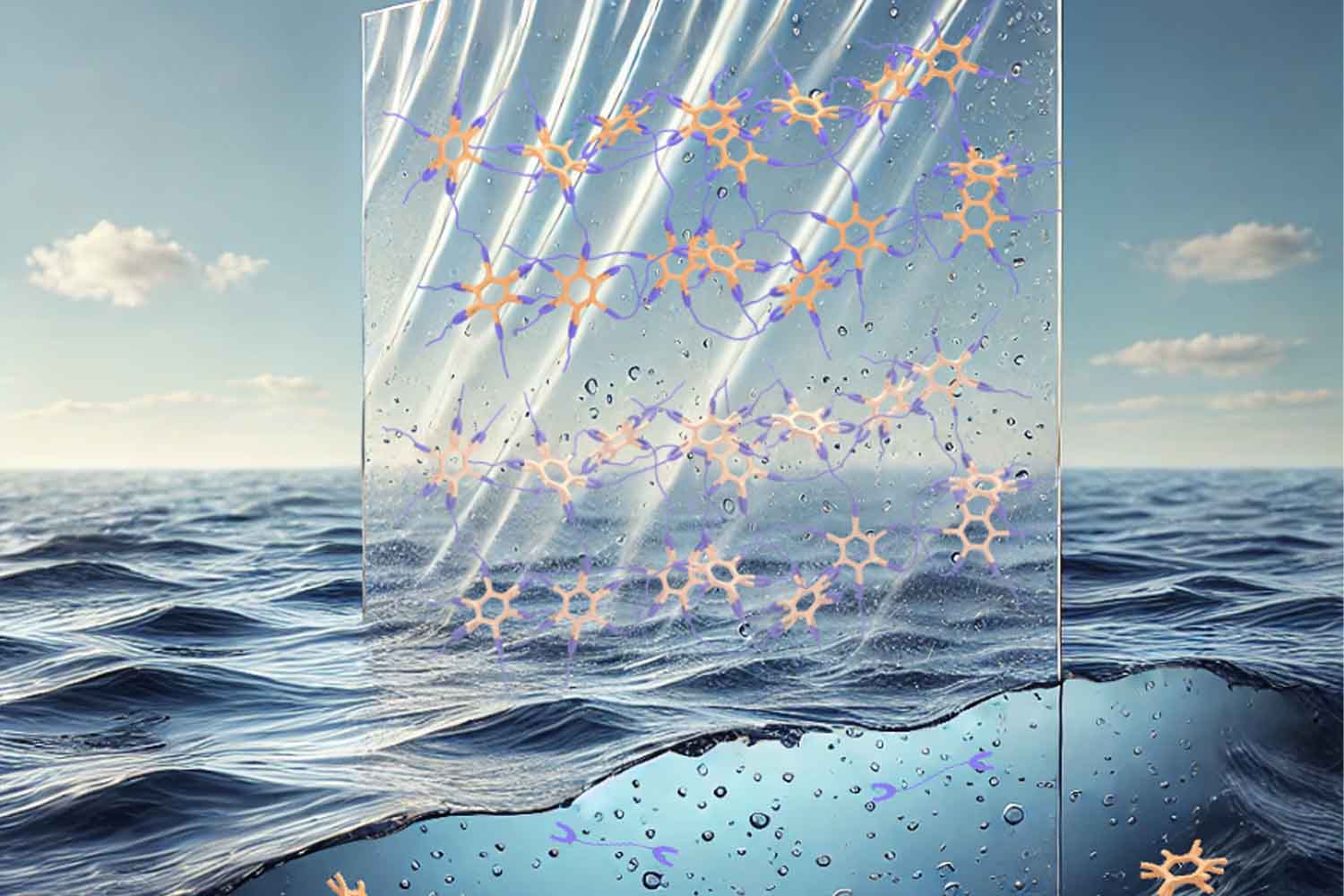
The microplastics are everywhere: in the depths of the oceans, in the soil, in the air that we breathe and even in the food we eat. Every year, millions of tons of plastic end up at sea, fragmenting into invisible particles that enter the food chain and threaten ecosystems. But a new discovery could change things. A team of Japanese researchers, led by Takuzo Aida of Riken Center for Emergent Matter Science (CEMS)developed a plastic resistant, biodegradable and capable of completely dissolving in marine water. This innovative material could represent a turning point in the fight against pollution from microplastics. The study was published in the magazine Science.
A plastic that dissolves in sea water: this is how it works
Biodegradable plastics already exist, but most of them – like the Pla (polylactic acid) – It does not degrade into the marine environment. The result? Even these materials, once dispersed in the oceans, end up contributing to the problem of microplastics. It was needed a more effective solution.
Riken researchers then worked on a new class of materials: i Supramolecular polymersa type of plastic in which molecules are held together by reversible chemical bonds. This allows the material to maintain Resistance and flexibilitybut also of break in controlled way When he comes into contact with sea water.
The key to this innovation lies in its components: plastic is made by combining Sodium examination of sodiuma common food additive, with monomers based on Ioni Guanidinio. Both can be easily metabolized by the bacteria present in the environment, guaranteeing a complete and natural degradation of the material.
Resistant, safe and sustainable
In addition to his biodegradabilitythis new plastic offers numerous advantages compared to traditional materials. , eliminating one of the main environmental problems related to plastic disposal.
And not only that: the tests have shown that the material is completely recyclable. After the dissolution in salted water, the researchers managed to recover 91% of the sodium -loving love And 82% of the Guanidinio ionopening the way to possible applications in recycling and in the circular economy.
But the most surprising data concerns the degradation in the soil: just 10 daysthe material dissolves completely, releasing phosphorus and nitrogenfundamental elements for the soil, just like a natural fertilizer would do.
A plastic that does not pollute and that, on the contrary, can enrich the soil? It might seem science fiction, but it is the future that science is building.
This discovery represents a fundamental step forward in the fight against plastic pollution, but so that the change becomes reality serves the support of industry and institutions. If this technology is adopted on a large scale, we could finally reduce the accumulation of microplastics in the seas and soils, protecting the environment and our health.
Meanwhile, the research continues: the next goal will be to make this plastic commercially competitiveto allow its wide diffusion and use in the most critical sectors, such as packaging and industrial production. In the meantime, one thing is certain: The plastic of the future must be sustainable, and this could be the solution we were waiting for.
