
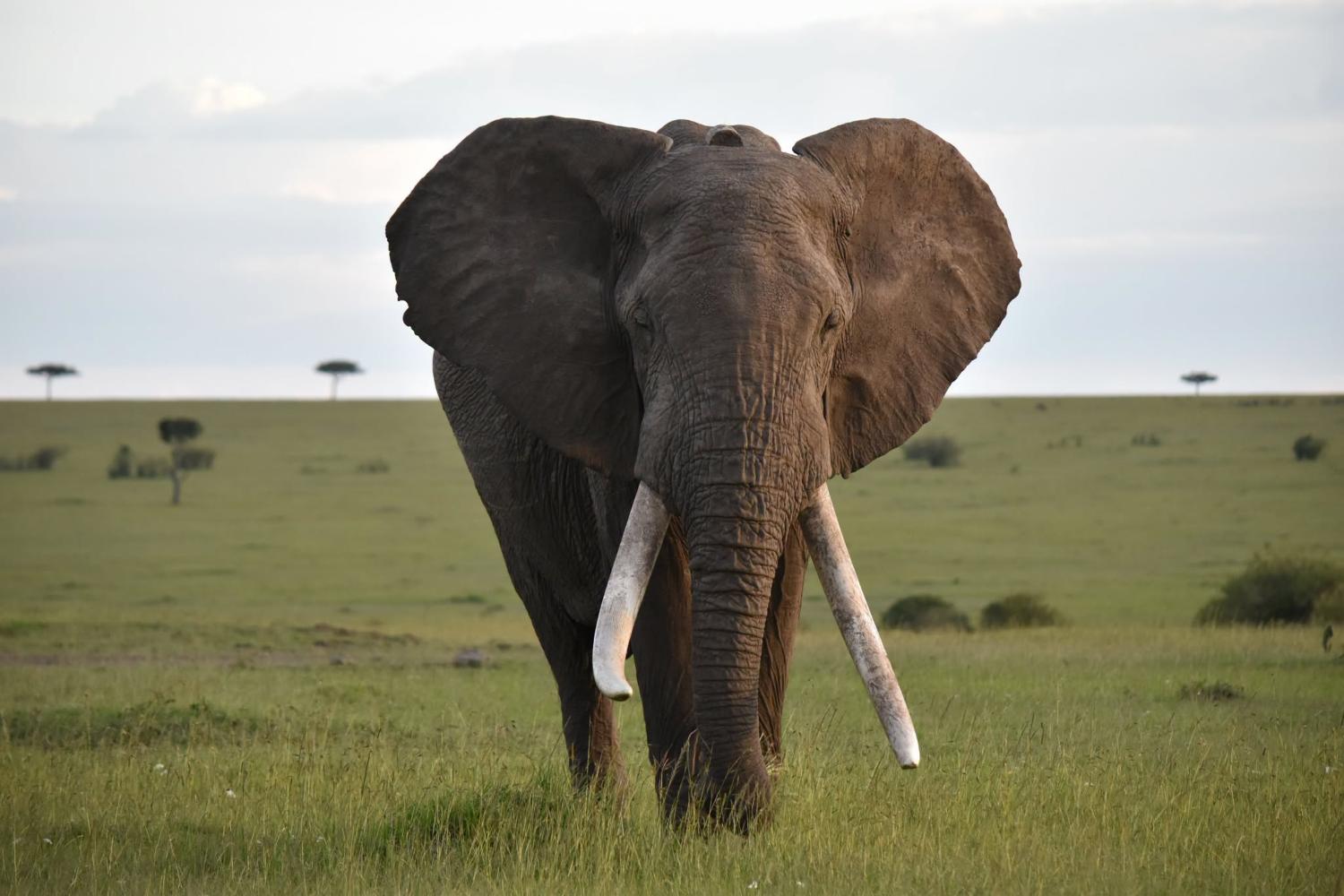
The African ecosystem loses one of its most majestic and emblematic guardians. In the Kenyan Masai Mara reserve, the elephant Fred died of natural causes at the age of around 55, leaving an unfillable void in the history of environmental conservation. The news of his passing was made known on October 26 by the Mara Elephant Project organization, which celebrated his extraordinary existence.
Fred belonged to the small and precious category of super tuskers, male specimens characterized by mammoth defenses which, in his specific case, exceeded 45 kilograms in weight for each tusk. Its survival to such an advanced age represents an epochal achievement, considering that the animal managed to overcome the darkest decades of the poaching crisis unscathed.
View this post on Instagram
The scientific monitoring started in 2013 and the contribution to conservation
Since 2013, Fred’s life has been continuously tracked thanks to the application of a satellite collar. This important monitoring project was conducted in close synergy between the Mara Elephant Project, the government body Kenya Wildlife Service and the Wildlife Research and Training Institute.
The animal’s daily movements and the analysis of its behavior in the field have offered researchers fundamental information to develop new protection strategies for wildlife. The data obtained from its tracking has allowed us to improve safety measures for the just 85 super tusker specimens still alive in the entire African continent, of which at least 26 reside in the eastern region.
Fred’s legacy after Craig’s disappearance in Amboseli Park
Fred’s death follows by a few months that of Craig, another famous giant with very long tusks that skimmed the ground, who died on January 3, 2026 in Amboseli National Park at the age of 54. The loss of these two iconic mammals puts the spotlight back on the need to protect a species constantly threatened by illegal ivory trafficking.
The experience gained through Fred’s observation demonstrates how cooperation between public institutions and private associations can guarantee the protection of the most vulnerable animals. The scientific legacy left by the tracking of the Masai Mara elephant will continue to guide researchers in prevention activities in the area, so that future generations can still admire these extraordinary giants in their natural habitat.
