
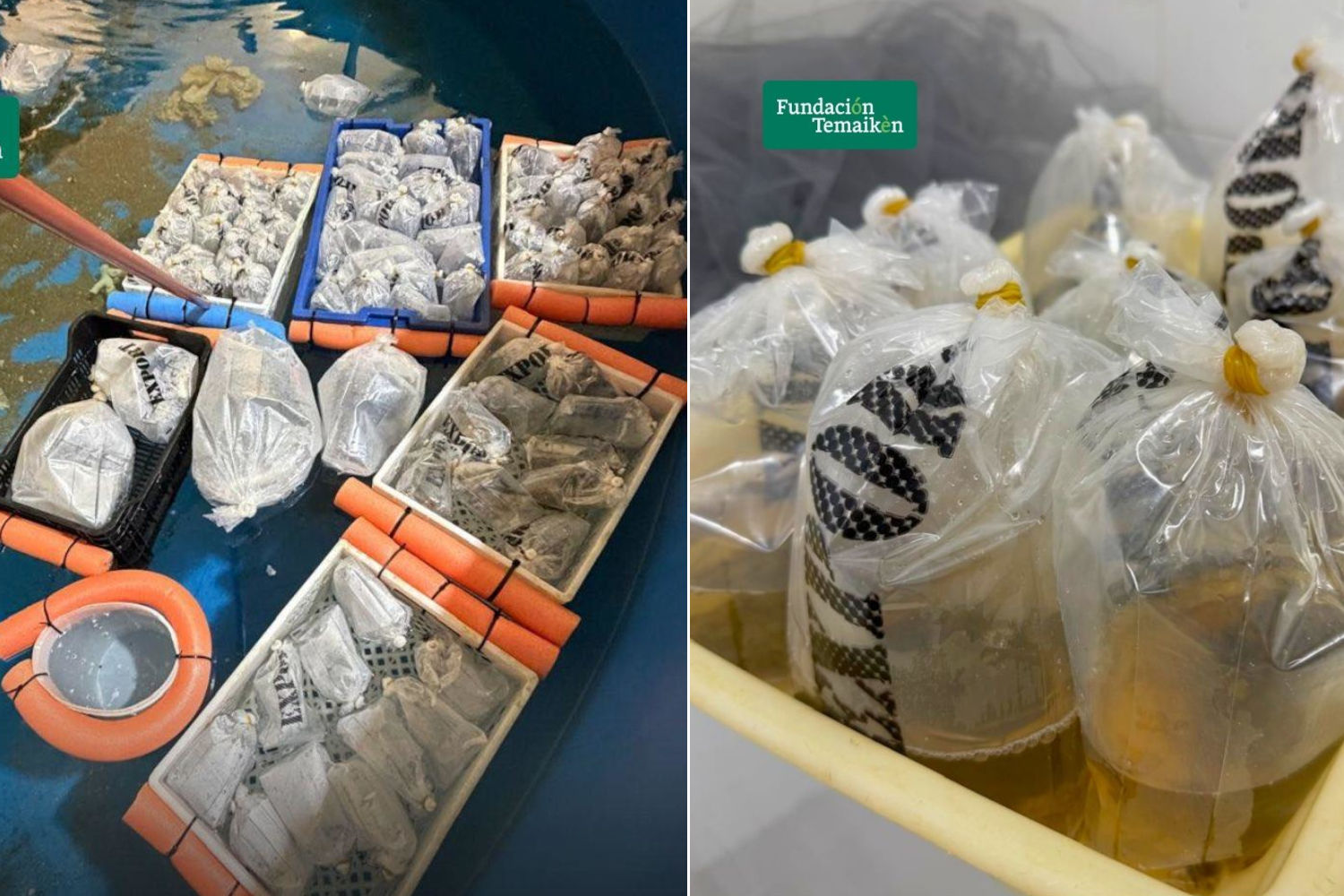
More than 700 exotic marine animals crammed into boxes and bags for over five days, many already dead and others in desperate conditions. This is the scenario found by the Argentine authorities at the international airport of Ezeiza, Argentina, where a massive operation led to the seizure of one of the most delicate illegal shipments of marine fauna in recent years.
The traffic came from Kenya and included 102 different species of tropical fish and marine invertebrates. In the cargo there were puffer fish, surgeon fish, lion fish, starfish, crabs, octopuses and butterfly fish, destined for the clandestine trade of exotic animals. The specimens had been transported on an Ethiopian Airlines flight and had spent around 120 hours locked in individual bags, inside 33 crates stopped in the cargo area of the airport.
Illegal trafficking discovered during customs checks
The investigation was started by the checks carried out by the Argentine tax and customs agency together with SENASA, the national agri-food health service. Inspectors identified an irregular import directed at an unauthorized party and without the necessary environmental approvals required by Argentine wildlife conservation legislation.
Among the species recovered there was also the lionfish, an organism native to Asia considered highly invasive. In recent years this species has already colonized several areas of the Atlantic and the Caribbean, representing a serious threat to coral ecosystems and to the economies linked to fishing and marine tourism. Precisely for this reason the illegal entry of exotic fauna is considered not only an environmental risk, but also an economic and health one.
The race against time to save the surviving animals
After the seizure, the situation turned into a real veterinary emergency. The Temaikèn Foundation, the only Argentine structure equipped to welcome this type of tropical animals, organized an extraordinary recovery center in the Escobar headquarters in just a few hours.
The operation lasted over 28 consecutive hours and required the creation of ten new tanks with specialized filtration, heating and life support systems. Veterinarians and biologists carried out more than 500 individual adaptation procedures, slowly transferring the animals to the new water conditions to avoid thermal shocks and alterations in salinity.
A growing phenomenon that is increasingly worrying
According to the operators involved in the recovery, many specimens had reached the limit of survival after days of transport in extreme conditions. Each animal underwent a veterinary triage system, with teams dedicated to clinical stabilization, species identification and monitoring of the most fragile specimens.
The Temaikèn Foundation explained that this is already the third seizure of exotic aquatic fauna received in less than a year. A figure that confirms how illegal trafficking of ornamental marine species is becoming an increasingly vast and difficult to stem market.
You might also be interested in:
